Swing-State Alaska More Uneasy Than Hopeful Despite South Korean Investment [U.S. Midterm Elections Through Battlegrounds (3)]
- Input
- 2026-10-04 14:13:49
- Updated
- 2026-10-04 14:13:49
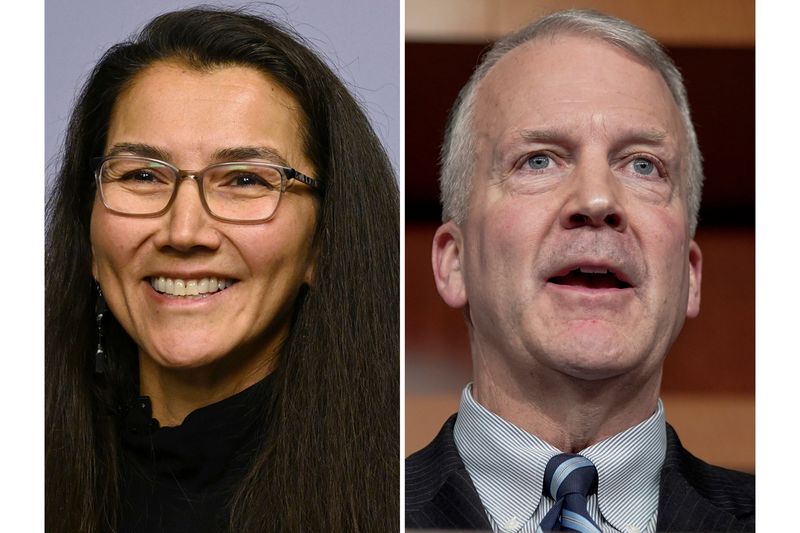
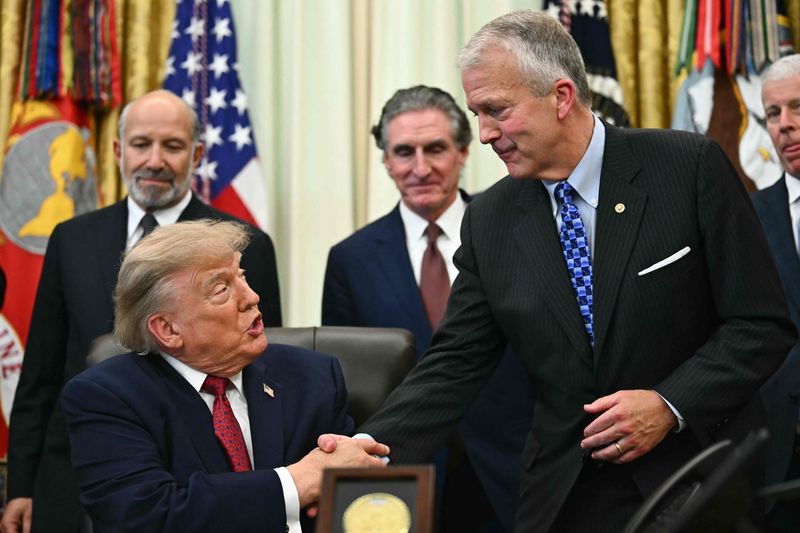

[Financial News] Alaska, a Republican stronghold in U.S. politics for more than half a century, appears to be heading in a different direction ahead of this November's midterm elections. Republican President Donald Trump has sought to win over Alaska voters by securing an investment worth tens of billions of dollars from South Korea, but the local response has been lukewarm.■ Democrats Ahead... Alaska Classified as a Swing StateAlaska is set to elect one senator, one representative, and one governor in the midterm elections on November 3 (local time). In the Senate race, incumbent Republican Senator Dan Sullivan is seeking a third term against Democratic candidate Mary Sattler Peltola. In the House race, incumbent Republican Representative Nick Begich III is competing against Democratic candidate Eric Hafner and independent candidate Bill Hill. In the governor's race, Republican candidate Bernadette Wilson is facing Democratic candidate Jonathan Kreiss-Tomkins, as incumbent Republican Governor Mike Dunleavy is unlikely to run again because of term limits.
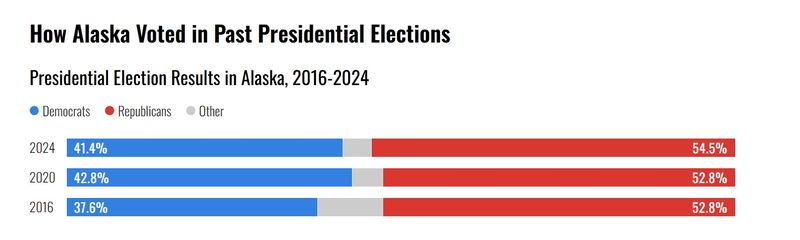
Since Alaska became the 49th U.S. state in 1959, it has voted for the Republican presidential candidate in every election except one, when it backed Lyndon B. Johnson in 1964. Alaska has not elected a Democratic governor since 2002. Nevertheless, U.S. media outlets have classified Alaska as a swing state in this year's midterm elections.
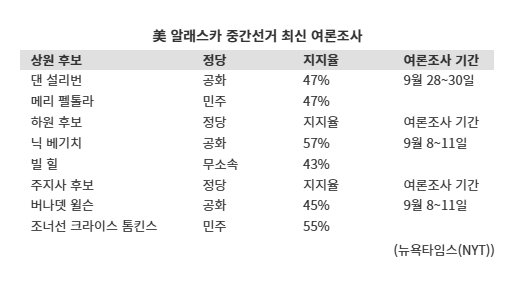
Polls showed the Senate race tied, with both parties' candidates at 47% in a survey conducted from the 28th to the 30th of last month. In the House race, according to a poll conducted from the 8th to the 11th of last month, Republican Nick Begich III led independent Bill Hill by 14 percentage points with 57% support, rather than the Democratic candidate running from prison. In the governor's race, Democratic candidate Jonathan Kreiss-Tomkins led Republican candidate Bernadette Wilson by 10 percentage points, with 55% support, in the same polling period.
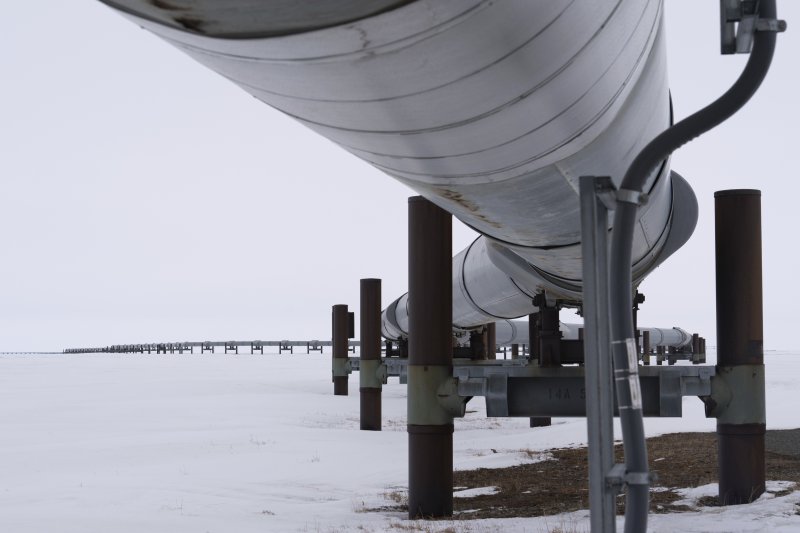
According to a poll conducted by U.S. polling firm Navigator Research from August 18 to 29, 59% of Alaska voters said they did not support Trump's economic policies. In addition, 48% of respondents said Trump and the Republican Party were responsible for rising prices in the state. U.S. media outlets have pointed to growing discontent in Alaska over higher oil and consumer prices since the start of Trump's second administration. At the same time, Alaska Natives, who account for approximately 51.5% of the local population, believe their living environment has deteriorated because of the federal government's aggressive approval of resource development and the repeal of environmental protections on public lands.■ South Korean LNG Investment Brings More Anxiety Than HopeLocal politicians welcomed the Trump administration's announcement on the 30th of last month that it had attracted investment for a liquefied natural gas (LNG) pipeline project. However, Kathy Giessel, the Republican leader in the state Senate, told local broadcaster KTUU that "the announcement itself has very few details." She added, "If a foreign country is investing $54 billion, that means it will take an ownership stake in the pipeline." Referring to the state government's 25% stake in the pipeline project, Giessel warned, "Does the state government still own 25%? We may have to buy our own natural gas, produced on our own land, from South Korea." She also told Alaska Daily News (ADN) that if the South Korean government brought Korean workers to build the pipeline, it could hurt local jobs and raise energy costs.
Alaska media outlets reported in real time on the 1st that South Korea's trade and industry ministry had announced it had not finalized its investment in the pipeline. Senate Majority PAC, a political action committee supporting Democrat Mary Sattler Peltola, issued a statement calling Trump's investment announcement a "huge lie." Larry Persily, who served as the Alaska LNG pipeline project coordinator during the Barack Obama administration, told ADN on the 2nd that Trump's announcement was merely a political activity intended to help Sullivan in the Senate election. He noted that no South Korean officials were present at the White House announcement on the 30th of last month, saying, "If they had really written a $54 billion check, they would have been there too."
Pipeline officials also said that amending the law was more urgent than securing South Korean investment. Alaska currently imposes an annual property tax equal to 2% of the assessed value of oil and gas facilities. Glenfarne, which owns a 75% stake in the pipeline project, has repeatedly asked the state government to defer the pipeline's property taxes until the project begins generating revenue, but has faced opposition from the state legislature each time. Glenfarne maintains that even construction cannot begin unless the property tax issue is resolved. Democratic candidate Jonathan Kreiss-Tomkins, who is favored to win the next governor's race, has pledged to raise corporate taxes to secure state revenue.
In a report on the 2nd, U.S. political outlet Politico argued that although Trump has announced major regional projects, including the Alaska pipeline and a steel mill in Iowa, it would be difficult to reverse the course of the midterm elections. The outlet noted that Trump's construction projects would not become operational until at least 2030. Iowa Republican strategist Luke Matz said, "Whether it's a new pipeline in Alaska or a steel mill in Iowa, these are fantastic projects, but there is very little time to use them politically." A former Trump administration official, speaking anonymously, said, "These are only announcements," adding, "They may make good headlines, but they won't lower inflation or oil prices."
[email protected] Park Jong-won Reporter