Retail Investors Dumped KRW 18 Trillion in Samsung Electronics and SK hynix... Securities Firms Saw It Differently
- Input
- 2026-10-03 13:00:00
- Updated
- 2026-10-03 13:00:00
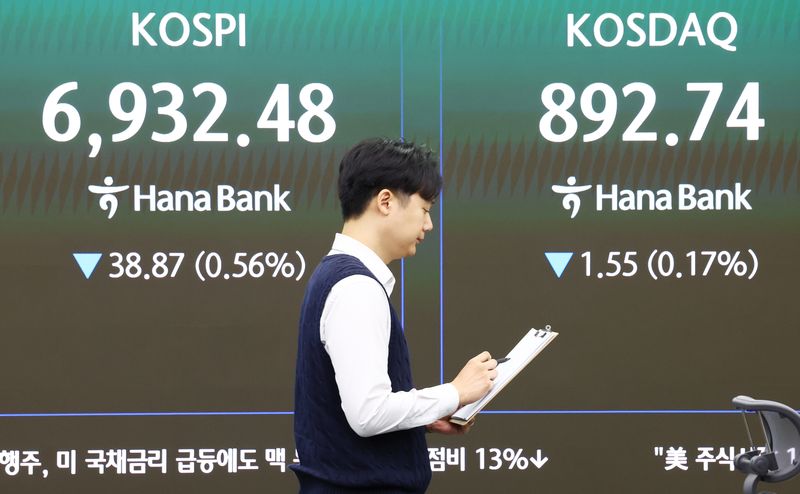
[Financial News] Retail investors sold more than KRW 18 trillion worth of Samsung Electronics and SK hynix shares last month. The two stocks ranked first and second in individual investors' net selling, respectively, yet their prices rose. Analysts say a semiconductor-focused investment strategy remains valid despite the burden of high interest rates, citing memory demand driven by artificial intelligence (AI) investment and improving earnings.
According to the Korea Exchange (KRX) on the 3rd, individual investors were net sellers of SK hynix shares worth KRW 9.688 trillion and Samsung Electronics shares worth KRW 8.622 trillion last September. Their combined net selling totaled KRW 18.31 trillion. During the same period, individual investors' total net selling in the KOSPI market amounted to KRW 14.1971 trillion. Their selling was concentrated in large semiconductor stocks.
Both stocks rose despite the massive selling by individual investors. Samsung Electronics gained 3.27% over September, while SK hynix climbed 6.09%. With retail selling moving in the opposite direction from stock prices, attention is turning to whether future earnings can support further gains.
Analysts are focusing on whether the memory supply shortage will persist. U.S. memory-chip maker Micron Technology expects the memory supply-demand balance in 2027–2028 to be tighter than this year. More than 75% of next year's production has already been allocated through long-term contracts and other arrangements, while some supply agreements extend through 2031. The effort by customers to secure supplies well into the future is viewed as a factor supporting the sustainability of improving conditions for domestic memory-chip makers.
Earnings forecasts are also improving. Shin Eol, a researcher at Sangsangin Investment & Securities, said, "The 12-month forward earnings per share (EPS) estimates for the 17 largest U.S. semiconductor stocks by market capitalization have been raised by 24.8% over the past three months, far outpacing the 7.6% increase for 28 large-cap stocks excluding semiconductors." Shin added, "Semiconductors are the only sector where improved cash flow, upward earnings revisions and valuation are all evident."
Micron Technology's revenue for the fourth quarter of fiscal 2026 also came to USD 54.23 billion, exceeding the market estimate of USD 51.51 billion. The company projected revenue of USD 60 billion to USD 63 billion for the following quarter. Rising spot memory prices, an upgraded price outlook for the fourth quarter and strong semiconductor exports are also supporting expectations for the industry.
However, high interest rates and the burden of capital expenditures are seen as factors requiring caution. Rising U.S. long-term Treasury yields are increasing corporate financing costs, while semiconductor makers must also invest substantial funds to expand production capacity. Analysts say stock-price gains could be limited if investment costs rise or profit margins fall short of expectations, even if revenue increases.
Nevertheless, analysts continue to view a semiconductor-centered investment strategy as valid. Expectations of a memory shortage and rising prices are supporting hopes for improved earnings. They explain that as the burden of high interest rates persists, semiconductors may become more attractive investments because their actual demand and earnings growth are being confirmed.
Lee Jae-won, a researcher at Yuanta Securities Korea, said, "Micron Technology's results and guidance for the following quarter both exceeded expectations, and the memory supply-demand balance in 2027–2028 is expected to be tighter than this year." He added, "This is a period in which the presence or absence of earnings capable of withstanding high interest rates, rather than high interest rates themselves, will determine performance across sectors."
[email protected] Bae Hangeul Reporter