"It only comes out when I press with my hand"... The bowel movement problem she was too embarrassed to talk about [Health Talk]
- Input
- 2026-10-02 11:32:04
- Updated
- 2026-10-02 11:32:04
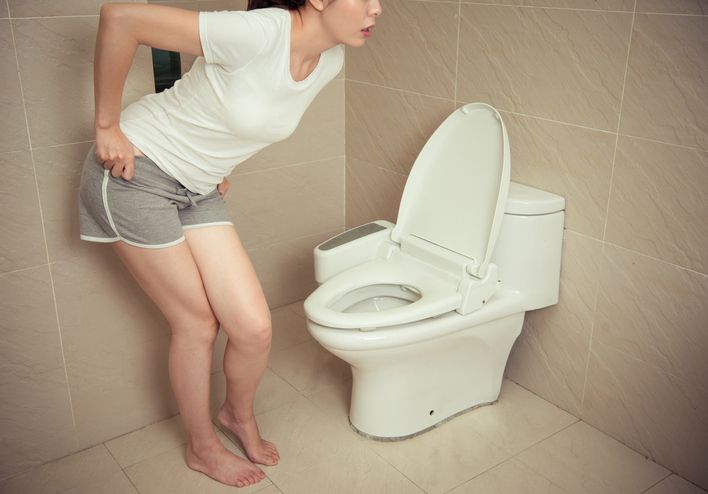
[Financial News] Many women who have relied on laxatives and enemas for years, assuming they had severe constipation, are unable to disclose their actual symptoms because of embarrassment. However, if the blockage occurs at the final stage of defecation, pelvic floor disorders, including rectocele, should be considered.
Jeong Seong-woo, chief of surgery at Incheon Sejong Hospital, explained, "A condition often mistaken for constipation is rectocele (Rectocele). It is a defecation disorder that can occur even when nothing protrudes from the anus, and it is a pelvic floor disorder commonly seen in women."
Women who visit surgical clinics complain of difficulty defecating, saying, "It feels as if the stool is stuck at the anus" and "I have to press on my buttocks or vaginal area for the stool to come out." In severe cases, some patients have even reported inserting a finger into the anus to remove the stool.
Why stool does not come out even though the anus appears normal
Rectocele is a condition in which the supporting tissue between the rectum and vagina weakens, causing the front wall of the rectum to bulge into the vagina. It can develop when the tissues supporting the pelvic floor weaken because of pregnancy and childbirth, aging, chronic constipation, or repeated straining during bowel movements.
The problem is that it does not end with a slight protrusion of the rectum. Stool descending into the rectum can become trapped in the bulging space, causing obstructed defecation and preventing it from passing smoothly through the anus. As a result, patients report symptoms somewhat different from ordinary constipation, such as, "It feels as if the stool has reached the anus, but it won't come out at the end." If these symptoms recur, simply increasing the use of laxatives may not resolve them.
In particular, because no tissue protrudes outside the anus, patients may easily assume they have simple constipation. Although the anus appears normal and they believe the problem is neither hemorrhoids nor rectal prolapse, they may experience severe discomfort every time they have a bowel movement and repeatedly engage in specific behaviors, such as pressing on the vaginal area with a hand to remove the stool.
Jeong explained, "When rectocele is present, the front wall of the rectum protrudes toward the vagina, creating a space where stool can temporarily remain. As a result, some patients press on the vaginal area to support the protruding rectal area or apply pressure to the perineum in order to have a bowel movement. If the use of one's hands to have a bowel movement becomes repetitive, it is important to consider not only simple constipation but also a structural problem involving the pelvic floor."
Not everyone needs surgery... A detailed evaluation comes first
Not everyone with rectocele needs surgery. If symptoms are mild, medication and lifestyle modifications are prioritized. When constipation is also present, doctors monitor changes in symptoms while adjusting the patient's diet and bowel habits alongside appropriate medication.
If symptoms are severe or obstructed defecation persists despite treatment, the decision about surgery is made after a detailed evaluation. The assessment may include magnetic resonance defecography (MR defecography), which can examine the structure of the pelvic floor and rectum, as well as movement during defecation.
If surgery is needed, doctors may return a prolapsed rectum or pelvic organs to their proper positions and secure them to supporting structures, depending on the shape of the rectocele and accompanying pelvic floor disorders. The procedure can also be performed using minimally invasive approaches, such as laparoscopy or da Vinci SP single-port robotic surgery.
Jeong said, "Patients with pelvic floor disorders often hide their symptoms for a long time because they are embarrassed. The absence of tissue protruding outside the anus does not mean that there is no pelvic floor disorder. If stool does not pass easily, you have to press a specific area with your hand to have a bowel movement, or you repeatedly experience 'a feeling that something is falling out below,' you should consider rectocele and other pelvic floor disorders."
[email protected] Jeong Myeong-jin, medical correspondent Reporter