Jeju Olive Cultivation Expands from 0.2 Hectares to 6 Hectares, a 30-Fold Increase in Nine Years
- Input
- 2026-10-02 10:30:50
- Updated
- 2026-10-02 10:30:50
【Financial News, Jeju — Jeong Yong-bok, reporter】 Jeju's olive cultivation area has increased 30-fold, from 0.2 hectares in 2017 to 6 hectares this year.
The Rural Development Administration (RDA) will hold the “Symposium for the Development of Korea's Olive Industry and Regional Cooperation” at 1:30 p.m. on the 2nd at the Agricultural Research Center for Climate Change of the National Institute of Horticultural and Herbal Science in Jeju.
The symposium will provide an opportunity to share cultivation experiences and research findings from Jeju, Gyeongsangnam-do and other regions, while seeking technologies and regional cooperation measures that can connect production with processing and industrialization.
According to RDA estimates, Jeju's olive cultivation area expanded from 0.2 hectares in 2017 to 6 hectares this year. In terms of area alone, that represents a 30-fold increase over nine years.
However, the sharp growth rate is largely attributable to the small starting point of just 0.2 hectares. Rather than indicating that Korea's olive industry has entered a full-scale phase of expansion, the increase is closer to an initial stage of verifying cultivation feasibility, suitable varieties and stable production technologies.
Olive production does not end with growing the fruit. The harvested olives must be pressed at the right time and their quality managed before they can be commercialized. This requires not only cultivation technology but also processing facilities, oil-pressing operations and a quality-control system.
At the symposium, Moon Jun-gwan, a professor at Hankyong National University, will discuss global trends in the olive industry and directions for the development of Korea's domestic industry.
Lee Jeong-seok, CEO of Olive Standard, will present the current status of olive cultivation in Jeju and its potential for regional specialization. Ahn Jong-hyeon, a researcher at the Geoje Agricultural Technology Center, will introduce olive cultivation and industrialization cases from Gyeongsangnam-do. Research findings on different varieties cultivated in Jeju will also be unveiled.
From 2023 through last year, the RDA analyzed the fatty-acid composition of eight olive varieties cultivated in Jeju.
The analysis found that the Koroneiki variety had an average oleic acid content of 79.5%, the highest among the varieties examined. Frantoio showed relatively little year-to-year variation in oleic acid content, indicating a comparatively stable fatty-acid composition.
Lee So-mi, a researcher at the Agricultural Research Center for Climate Change, will present the current state of research, including evaluations of the cultivation adaptability and quality characteristics of olive varieties suited to Korea's domestic environment.
The assessment is that identifying which varieties can reliably bear fruit in Jeju's climate and maintain consistent quality is a prerequisite for industrialization, more so than simply expanding the cultivation area.
Jeju-produced olive oil and processed products will also be showcased. A food-tasting experience featuring olive-based dishes will highlight the potential uses of domestically produced olives in food and processing.
The symposium will conclude with a panel discussion on regional cooperation, field needs, and directions for research and technical support, based on cultivation cases from Jeju and Gyeongsangnam-do, domestic and international industry trends, and research findings.
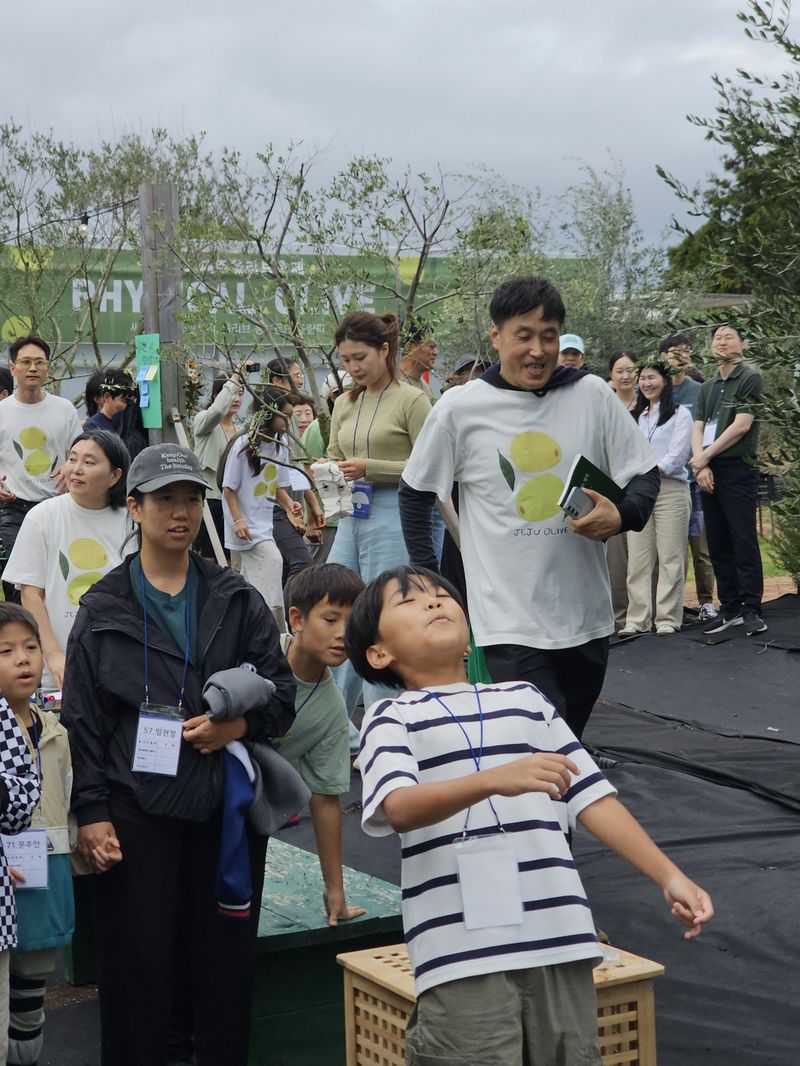
The event will also be linked to the “2026 Jeju Olive Festival,” which will be held in Andeok-myeon, Jeju, from the 3rd to the 5th. The aim is to connect discussions among research institutions and producers with consumer experiences and raise awareness of domestically produced olives.
Moon Gyu-cheol, director of the Agricultural Research Center for Climate Change at the RDA's National Institute of Horticultural and Herbal Science, said, "As climate change alters areas suitable for crop cultivation, establishing varieties and cultivation technologies for subtropical crops suited to Korea's domestic environment is becoming increasingly important. We will establish a stable production and processing base and strengthen cooperation between local cultivation sites and research institutions."
The next stage of Jeju's olive industry will depend not on the 30-fold increase in cultivation area alone, but on how effectively its 6-hectare base can be expanded into stable production, processing and sales. The RDA also plans to continue developing varieties and cultivation and quality-management technologies suited to Korea's domestic environment in cooperation with local producers.
[email protected] Jeong Yong-bok Reporter