Korea Astronomy and Space Science Institute (KASI) Joins National Aeronautics and Space Administration (NASA)'s Next-Generation Space Telescope 'PRIMA' Mission
- Input
- 2026-10-02 10:25:45
- Updated
- 2026-10-02 10:25:45
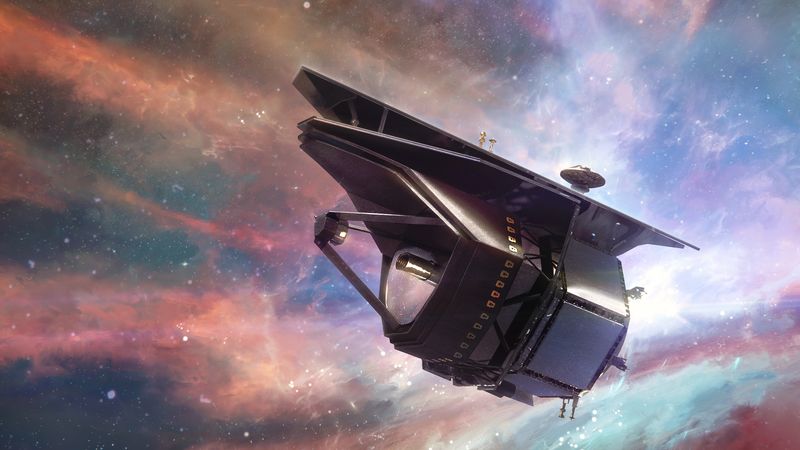
[Financial News] The Korea Astronomy and Space Science Institute (KASI) will participate as an international cooperation partner in PRIMA, selected as the National Aeronautics and Space Administration (NASA)'s next-generation space telescope mission.
According to the Korea AeroSpace Administration (KASA) on the 2nd, PRIMA (PRobe far-Infrared Mission for Astrophysics) is a NASA mission that will observe the universe in far-infrared wavelengths. The space telescope is scheduled to launch in 2033.
PRIMA is a space telescope equipped with a 1.8-meter primary mirror, a high-performance far-infrared spectrograph, and an imager. It will precisely observe cold, dust-obscured regions of the universe that are difficult to study in visible or near-infrared light. The Probe-class next-generation far-infrared mission is being developed to study the chemical evolution of galaxies, the coevolution of galaxies and supermassive black holes, the formation of stars and planetary systems, and the origin of water. NASA selected PRIMA as the first newly established Probe-class mission, with launch planned for 2033 and a five-year science mission.
Probe-class missions have a budget ceiling of $1.2 billion (approximately 1.6 trillion won) and fall between NASA's large strategic missions and small- and medium-sized missions. They aim to deliver world-class observational performance and significant scientific impact on specific core science topics.
Korean researchers plan to participate across the PRIMA mission, building on their experience in cryogenic testing, spectroscopic calibration, data analysis, and scientific research gained through international cooperation on NASA's infrared space telescope SPHEREx. In particular, KASI has agreed to provide key infrastructure and technical support for calibrating and verifying the performance of PRIMA's spectroscopic payload by significantly upgrading the cryogenic performance-testing chamber previously used for SPHEREx's spectroscopic calibration.
In scientific research, Korean researchers also plan to conduct extensive multiwavelength collaborative studies by combining SPHEREx's all-sky near-infrared spectroscopic data with PRIMA's far-infrared observations. This effort is expected to generate Korean-led research results on major topics, including the physical and chemical properties of star-forming regions and interstellar matter; the formation and evolution of water and dust in protoplanetary disks; and the growth and evolution of starburst galaxies and active galactic nuclei.
Park Jang-hyun, president of KASI, said, "Through this participation, we will further advance our research and development capabilities in the field of space telescopes and build the capacity for South Korea to lead next-generation space telescope missions in the future."
Oh Tae-seok, administrator of KASA, emphasized, "Participating in the PRIMA mission is highly significant because it will expand our space telescope cooperation network with NASA into a world-class far-infrared space telescope mission." He added, "We will actively support our researchers so they can produce independent scientific achievements through a world-scale space exploration mission and further strengthen South Korea's capacity for international cooperation in space science."
[email protected] Yeon Ji-an Reporter