'250,000,000,000,000 won'... Will Home Prices Soar If This Continues? Why Warnings Are Growing Louder [Real Estate AtoZ]
- Input
- 2026-10-03 14:00:00
- Updated
- 2026-10-03 14:00:00
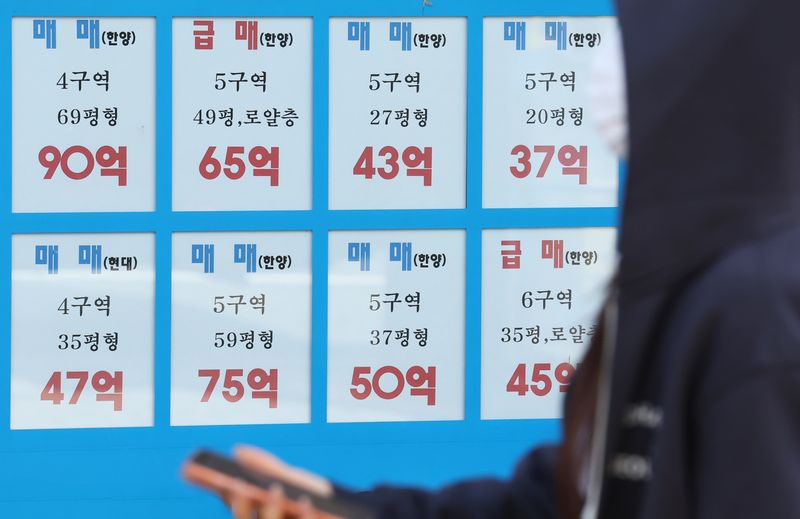
[Financial News] One of the key variables affecting home prices is the money supply, or liquidity. Many experts cite the sharp increase in the money supply as a major reason Seoul home prices have been on an upward trend since the new administration took office. The indicator used to assess how much money has been injected into the economy is broad money (M2). An unprecedented amount of money was put into circulation under the Moon Jae-in administration. The situation is no different under the new administration.
Excess liquidity... Up 250 trillion won since the new administration took office
M2 generally refers to the amount of money in circulation. It is a broad monetary indicator that includes money market funds, time deposits and installment savings with maturities of less than two years, beneficiary certificates and repurchase agreements (RPs), in addition to narrow money (M1), which consists of cash, demand deposits and savings deposits with unrestricted deposits and withdrawals.
According to the Bank of Korea's (BOK) "Monetary and Liquidity Indicators," broad money (M2), based on seasonally adjusted average balances, totaled 4,225 trillion won last July. The money supply indicator has traced an upward curve since the new administration took office.
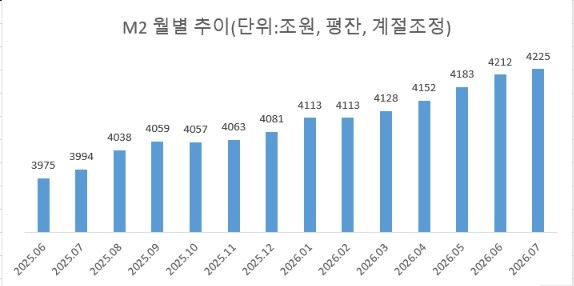
In detail, total M2 stood at 3,975 trillion won in June last year, when the Lee Jae Myung administration took office. It continued to rise, reaching 4,225 trillion won. The money supply increased by 250 trillion won over 13 months.
Compared with previous administrations, the increase in the money supply is noteworthy. Among recent administrations, the largest increase occurred under the Moon Jae-in administration. BOK data show that M2 rose from 2,321 trillion won in May 2017 to 3,531 trillion won in May 2022, an increase of 1,210 trillion won. That amounts to an annual surge of about 242 trillion won over five years.
One expert said, "The scale of the increase in the money supply under the new administration is similar to that under the Moon Jae-in administration," adding, "With that much money being put into circulation, the value of money is falling, while money is generating more money."
Excess liquidity... Will it ultimately drive home prices higher?
Market analysts expect the increase in the money supply to continue. The government's decision to draw up a record-high expansionary budget of 820.9 trillion won for next year is one example. Such an increase in the money supply is likely to affect home prices. Excess liquidity is being cited as a key variable behind forecasts that home prices will continue their upward trend.
Park Won-gap, a senior real estate expert at KB Kookmin Bank, said, "Apartment prices, particularly those of complexes in large cities, tend to respond sensitively to the money supply." Even if interest rates rise, an increase in the money supply weakens the effect of rate hikes. One official said, "If the money supply continues to grow, it will offset the shock of interest rate increases." Ko Jun-seok, a professor at Yonsei University, said, "An increase in the money supply is highly likely to ultimately translate into asset-price inflation."
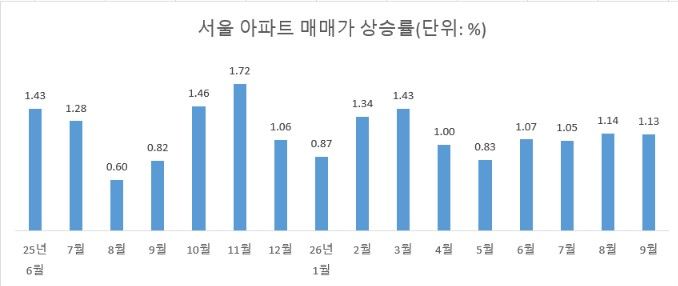
According to KB Real Estate statistics on changes in Seoul apartment prices by administration, prices rose by about 62% under the Moon Jae-in administration, marking the largest increase. Excess liquidity was one factor behind the surge in home prices. KB Real Estate statistics show that Seoul apartment prices rose 18.17% from June last year through September this year under the new administration. Jeonse prices also increased by 11.62% during the period.
[email protected] Lee Jong-bae Reporter