Daegu Public Facilities Corporation Delivers Management Innovation Results Four Years After Integration
- Input
- 2026-10-05 13:00:00
- Updated
- 2026-10-05 13:00:00
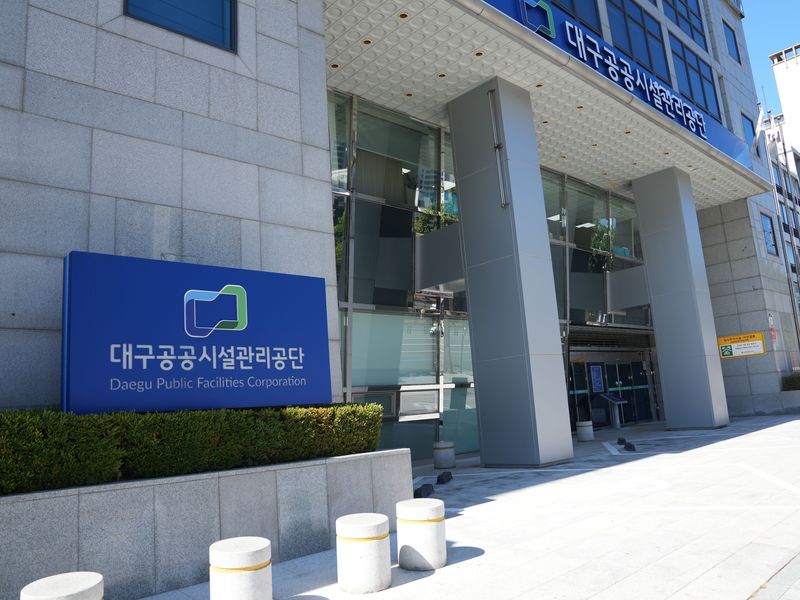
[Financial News, Daegu = Reporter Kim Jang-wook] Daegu Public Facilities Corporation, the nation’s first corporation to integrate environmental and facilities management, has ranked first among environmental public corporations nationwide in a management evaluation just four years after its integrated launch. The achievement demonstrates the results of its organizational and management innovation efforts.
The corporation ranked first among environmental public corporations nationwide after receiving Grade A, the highest rating, in the 2026 Local Public Enterprise Management Evaluation conducted by the Ministry of the Interior and Safety (MOIS) based on 2025 management performance.
The achievement is seen as the result of turning the synergies created by the integration into tangible management results. Since launching on October 1, 2022, by becoming the nation’s first organization to combine the functions of an environmental corporation and a facilities corporation, Daegu Public Facilities Corporation has pursued organizational stabilization and management efficiency, as well as AI-based safety management, financial innovation, and technological innovation in the environmental and energy sectors.
Moon Ki-bong, president of the corporation, said, "The past four years since the integration have been a period of connecting different organizations and functions into one and creating a new management system." He emphasized, "We will not be satisfied with ranking first among environmental public corporations nationwide. We will further strengthen our competitiveness in AI and technological innovation, financial innovation, and the environmental and energy sectors, turning it into changes that citizens can actually feel."
The innovations pursued since the integration have led not only to strong management evaluation results but also to various external evaluations and awards.
The corporation received the top award in the special category at the Korea Local Autonomy Awards in August, an excellence award at the Daegu City Best Practices in Proactive Administration Competition in June, the top award at the Public Institution Innovation Best Practices Competition held during a summer academic conference, and the top award at the MOIS Local Public Institution Innovation Best Practices Competition in September. It has also received consecutive positive evaluations in information disclosure and integrity, strengthening its accountability and transparency as a public institution.
The corporation plans to use this achievement not as the completion of its integration, but as a new starting point.
It plans to turn the results of its management innovation into changes in public services that citizens can experience firsthand by advancing AI-based facility and safety management, improving environmental and energy efficiency, strengthening financial soundness, and expanding ESG management.
The corporation initially focused on the stable settlement of its organization and operations after the integration. It then pursued greater operational efficiency by strengthening the links among personnel, facilities, and tasks based on expertise in environmental management, transportation, sports, and urban management.
One of the most notable changes has been the use of AI for safety management. The corporation introduced closed-circuit television (CCTV) powered by a vision-language model (VLM) for public facility safety management, laying the groundwork for real-time detection and response to abnormal situations at sites.
In the financial sector, it also turned the synergies from the integration into tangible results. By consolidating the management of aging underground shopping arcades, improving vacant spaces, and enhancing facility operating methods, the corporation increased management efficiency. It also pursued the localization of equipment parts and energy savings, generating annual management budget savings of approximately 15 billion won.
In the environmental sector, the corporation continues to pursue technological innovation for the efficient operation of sewage treatment facilities and energy savings. It is making the most of its expertise in environmental management and facility management, leveraging its organizational structure integrating the two areas.
Internal integration has also advanced further. In March, the corporation merged its two labor unions, further strengthening the foundation for labor-management communication and cooperation that it has built since the organizational integration.
Beyond the physical integration of organizations and functions, the corporation has also achieved internal integration by fostering cooperation and a sense of community among its members, laying the foundation for sustainable innovation.
Moon again emphasized, "We will make every effort to strengthen synergies among the corporation’s diverse functions, including environmental management, transportation, sports, and urban management, and create public services that support citizens’ daily lives and the sustainability of the city."
[email protected] Kim Jang-wook Reporter