Trump's Make America Great Again (MAGA) Power Sweeps the Primaries—Will It Hold in the General Election? [United States Midterm Elections Through Battleground States (5)]
- Input
- 2026-10-06 14:13:51
- Updated
- 2026-10-06 14:13:51
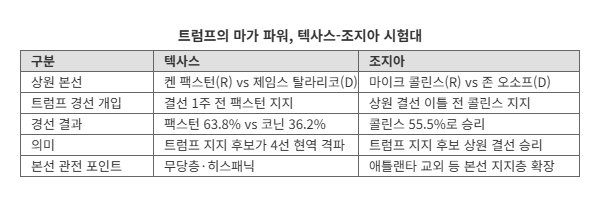
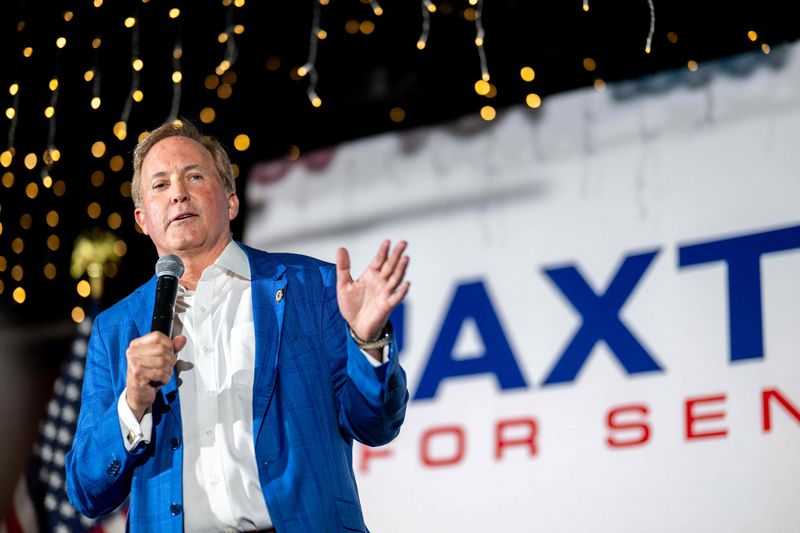
Texas and Georgia are the testing grounds. In Texas, a candidate endorsed by Trump defeated a four-term incumbent senator in the primary. However, the Senate seat Republicans had held for more than 30 years has become a toss-up. In Georgia, a candidate backed by Trump won the Senate runoff. On the same day, a candidate endorsed by Trump lost the gubernatorial runoff.■ Trump's Pick, Paxton, Defeats Four-Term CornynThe Texas Senate race pits Republican Texas Attorney General Ken Paxton against Democratic state Representative James Talarico. Trump won Texas by more than 13 percentage points in the 2024 presidential election. Democrats have not won a Senate election in the state since 1988. Texas has consequently become one of the biggest Senate battlegrounds this year.
The primary demonstrated Trump's influence within the party. Four-term Senator John Cornyn, who was first elected in 2002, worked hard to repair his relationship with Trump. He emphasized that his votes aligned with Trump's positions more than 99% of the time and introduced a bill to name a highway after Trump. He even supported a "talking filibuster" and changes to Senate rules to pass the SAVE America Act sought by Trump.
In the March primary, Cornyn led Paxton by about 1.5 percentage points. Trump endorsed Paxton on May 19, one week before the May 26 runoff. Paxton defeated Cornyn, 63.8% to 36.2%. The margin was nearly 28 percentage points.
The general election is different. The Cook Political Report changed its rating for the Texas Senate race on Aug. 20 from "Lean Republican" to "Toss Up."
Polling also shows a close race. Marist University surveyed registered voters from Sept. 17 to 20 and found Talarico at 50% and Paxton at 44%. Talarico received 55% among independent voters. However, this poll was relatively more favorable to the Democrats than other recent surveys.
A shift in Hispanic voter sentiment is another factor. Trump led among Texas Hispanics by 10 percentage points in 2024. A joint poll by the Cook Political Report and TelevisaUnivision of 1,000 likely Hispanic voters conducted from Aug. 26 to Sept. 3 found Talarico at 63% and Paxton at 30%. Trump's job approval rating among Hispanics was 33%. Among Hispanics who voted for Trump in 2024, 18% said they currently disapproved of his job performance. The survey was jointly conducted by Republican-leaning and Democratic-leaning polling organizations.
In the primary, the candidates' distance from Trump was decisive. In the general election, they must attract independent and Hispanic voters as well.■ Trump's Mixed Record in GeorgiaThe Georgia Senate race pits Democratic incumbent Jon Ossoff against Republican U.S. Representative Mike Collins. The Republican primary was a contest between the MAGA wing and the party establishment centered around Governor Brian Kemp.
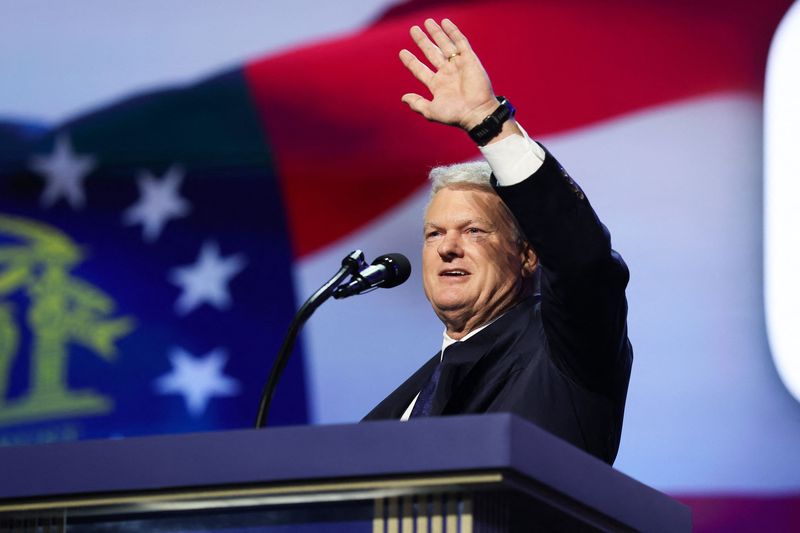
Collins placed first with 40.5% in the May 19 primary. Derek Dooley, a former football coach backed by Kemp, came in second with 30.2%. Because no candidate won a majority, a runoff was held on June 16. Trump endorsed Collins two days before the runoff. Collins received 55.5% and became the Republican nominee.
However, Collins had already led Dooley by about 10 percentage points in the primary. It is unclear how much Trump's endorsement influenced the runoff result.
The gubernatorial runoff held on the same day produced a different result. Lieutenant Governor Burt Jones, who was endorsed by Trump, lost to businessman Rick Jackson by about 53% to 47%. Jackson spent more than $100 million of his own money on the election. Trump's endorsement did not guarantee victory, and Jackson's enormous financial resources were also a factor.
The general-election dynamics differ from those in Texas. Texas is a defensive race in which Republicans must protect their seat, while Georgia is an offensive race in which they must unseat a Democratic incumbent. The Cook Political Report adjusted its rating for the Georgia Senate race on Sept. 23 from "Lean Democratic" to "Likely Democratic."
Collins is trailing Ossoff in fundraising and faces the challenge of expanding his support in the general election. Republicans once viewed Georgia as a key opportunity to capture a Democratic seat, but they now have to devote resources to areas requiring defense, including Texas and Ohio. The Cook Political Report has identified New Hampshire and Michigan as states to watch for Republican chances to reclaim Democratic seats.
Georgia chose Joe Biden in 2020 before Trump won the battleground state back in 2024. The choice of general-election voters, including those in the Atlanta suburbs, will be decisive.
The Republican primaries in Texas and Georgia showed that Trump still wields strong influence over the process of selecting the party's candidates. However, the electorate in the general election differs from that in the primaries. In Texas, Republicans must defend a seat they have held for decades, while in Georgia they must defeat a Democratic incumbent. The November results in the two states are expected to test how far Trump's influence within the party extends to general-election voters.
[email protected] Byung-cheol Lee, Correspondent Reporter