Kashkari: "Inflation Remains Too High"—Warns of AI Overinvestment
- Input
- 2026-10-01 22:18:09
- Updated
- 2026-10-01 22:18:09
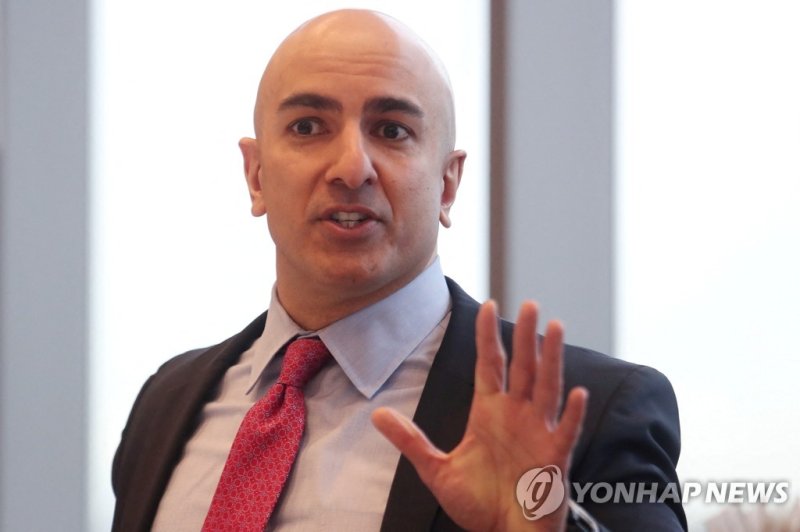
Speaking with CNBC at a Council on Foreign Relations (CFR) event in New York on Sept. 30 (local time), Minneapolis Fed President Neel Kashkari said, "Inflation is still too high."
Core personal consumption expenditures (PCE) inflation, which excludes food and energy, rose 3.0% year on year in August, according to data released that day, coming in below market expectations. Kashkari noted, "There are multiple ways to measure inflation, but it is running at around 3%," adding, "It has remained at a high level for more than five years." He continued, "I don't think today's inflation data has significantly changed that situation."
He described the U.S. economy, including consumption and gross domestic product (GDP), as "resilient." He assessed the labor market as "quite healthy, but not at an exceptionally good level." ADP reported that U.S. private-sector employment increased by 90,000 in September, exceeding market expectations.
The Federal Reserve raised its policy rate last month for the first time in three years. It has also left the door open to further rate hikes.
Kashkari said the U.S. economy has recently shown resilience despite various shocks, prompting him to raise his estimate of the neutral interest rate to 3.25%. He particularly suggested that massive demand for investment capital driven by the AI boom may be temporarily pushing the neutral rate higher.
He said AI infrastructure investment could boost productivity in the U.S. economy if successful. However, he noted that it remains unclear whether the large-scale investments currently being made by companies will produce tangible results.
Kashkari said, "The benefits have not yet materialized," adding, "If this turns out to be a massive investment that fails to boost productivity as much as we assume, it will be malinvestment, and it could have major repercussions across the economy."
Ni
[email protected] Reporter Lee Byung-chul Reporter