As Loan-Restricted Gangnam Slumps, Buyers in Their 30s and 40s Flock to 'This Area,' Where Prices Jumped 360 Million Won in Seven Months [House Signal]
- Input
- 2026-10-04 18:00:00
- Updated
- 2026-10-04 18:00:00
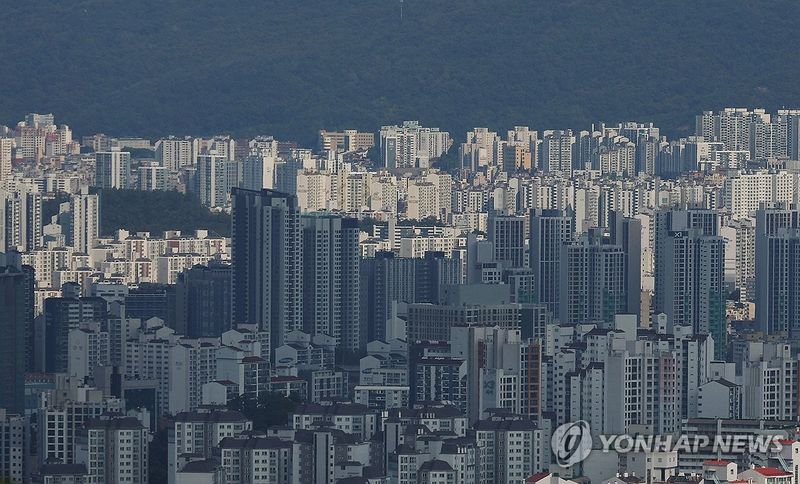
[Financial News] Seoul apartment prices rose for 86 consecutive weeks, setting a record for the longest upward streak ever. But a closer look at the market reveals an unusual trend. Traditional real estate powerhouse Gangnam was not the force driving this record. As home prices fell across the three Gangnam districts, non-Gangnam areas such as Seodaemun and Seongbuk surged sharply, supporting the overall rise in Seoul home prices.
According to the weekly apartment price trends released by the Korea Real Estate Board (KREB) on the 1st, Seoul apartment sale prices rose 0.09% from the previous week during the fourth week of September, as of September 28. Although the increase slowed slightly from 0.13% the previous week, prices continued to rise for 86 consecutive weeks after turning upward in the first week of February last year, breaking the longest-running record since KREB began compiling the statistics. The figure surpassed the previous record of 85 weeks, set from June 2020 to January 2022. Prices rose a cumulative 17.6% during this period, more than double the 7.71% increase recorded during the previous 85-week streak.
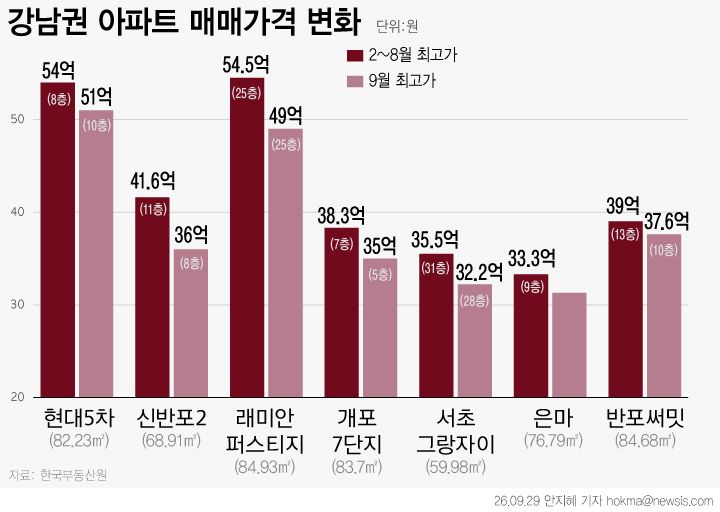
The most notable feature was the sharp difference in market conditions across Seoul. Gangnam-gu, which had led the rise, fell 0.56% this week, marking its steepest decline in roughly seven years and eight months since the fourth week of January 2019. Seocho District, down 0.33%, and Songpa District, down 0.19%, also declined, sending all three Gangnam districts into negative territory. Yongsan District also turned downward, falling 0.01%.
By contrast, non-Gangnam areas north of the Han River showed a markedly different market trend. Seodaemun District surged 0.41% in a single week, recording the highest increase among Seoul's 25 autonomous districts. It was followed by Dongdaemun District at 0.36%, Seongbuk District and Nowon District at 0.34% each, and Gangbuk District at 0.31%.
As a result, the 14 districts in northern Seoul posted an overall increase of 0.24%, while the 11 Gangnam-area districts fell 0.04%. The gap between the two areas widened to 0.28 percentage points, the largest difference in more than 14 years since August 2012. The center of gravity for home price increases has effectively shifted from Gangnam to northern Seoul.
This catch-up effect is also clearly visible in actual transaction prices. A 59-square-meter unit at Gileumnyu Town 8 Raemian in Seongbuk District had sold for less than 1 billion won last year, but set a record high of 1.4 billion won in June. An 84-square-meter unit in the same complex also jumped from 1.23 billion won at the end of last year to 1.59 billion won in July, an increase of 360 million won in just seven months.
Experts cite the government's strong lending restrictions and soaring jeonse prices as the reasons for this reversal. Their analysis is that end-user demand shifted in large numbers to mid- and lower-priced apartments, where loans are relatively easier to obtain, after financing difficulties blocked entry into the high-priced Gangnam market. The jeonse market, which rose another 0.16% this week and continued to show signs of instability, is also believed to have fueled home-buying sentiment among people without homes.
Still, it would be difficult to say that the market has entered a broad-based surge. Weekly price growth has continued to slow after peaking at 0.29% in the fourth week of August, while discounted quick-sale listings have increasingly been spotted in areas where more people believe prices have peaked. KREB officials also assessed, "Higher-priced transactions are occurring only in limited areas, mainly involving large apartment complexes with steady demand, apartments near subway stations, and small- and medium-sized units."
The routes taken by real estate funds are changing. Market attention is focused on whether the 'decline of Gangnam and rise of non-Gangnam areas' hidden behind the flashy 86-week record will end as a temporary balloon effect or lead to a fundamental reshaping of Seoul's real estate landscape.
[email protected] Jeon Sang-il Reporter