[Editorial] Using Excess Tax Revenue to Pay Down National Debt Is Also an Investment in Future Generations
- Input
- 2026-10-01 18:48:51
- Updated
- 2026-10-01 18:48:51
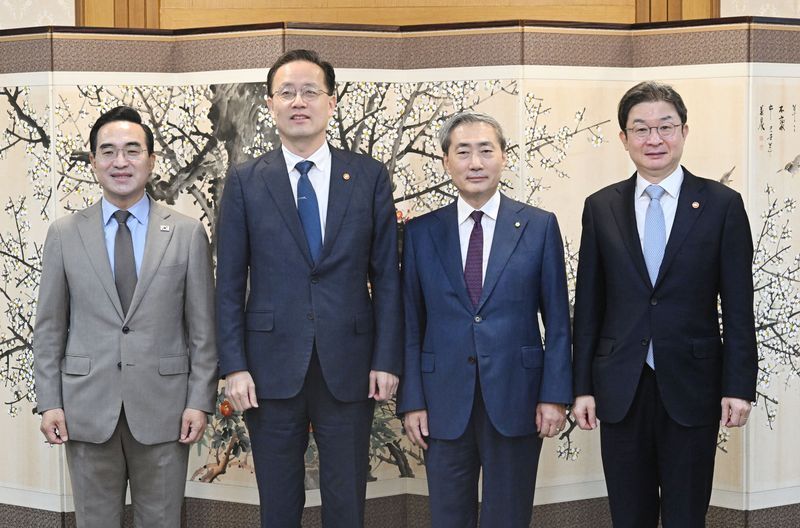
At the Expanded Macroeconomic, Fiscal and Financial Meeting on the 30th of last month, Deputy Prime Minister and Minister of Economy and Finance Lee Hyoung-il said that if interest rate increases became excessive, the government would take market-stabilization measures, including reducing government bond issuance by using part of the excess tax revenue. He also said it would undertake an "emergency buyback" of government bonds already issued before maturity. This means the government intends to manage even the supply already released into the market. Market voices are calling for bond issuance to be reduced by at least 10 trillion won by the end of the year.
However, participants placed greater emphasis on investing the excess tax revenue in livelihood areas such as housing, jobs, and financial support for low-income households. Next year's budget proposal also allocates 162.3 trillion won in additional tax revenue—revenue above the long-term trend—to the Future Response Fund, while assigning only 12.5 trillion won to reducing government bond issuance.
The country's fiscal position is far from comfortable. National debt is expected to reach 1,519.8 trillion won next year, exceeding 1,500 trillion won for the first time. Although the debt-to-GDP ratio is expected to fall to 48.3%, some critics say this is an optical illusion caused by the temporary expansion of nominal GDP amid the semiconductor boom. Interest costs on the national debt will also rise from 36.5 trillion won this year to 42.8 trillion won next year. Higher interest rates mean a greater burden for future generations.
It should not be forgotten that excess tax revenue is temporary income dependent on the semiconductor cycle. In 2021 and 2022, tax collections significantly exceeded the initial budget estimates, followed by tax shortfalls of 56 trillion won in 2023 and in the 30-trillion-won range in 2024. It would be prudent not to treat this as a permanent source of revenue and use it to expand rigid spending that is difficult to reverse once increased or consumption-oriented support.
President Lee Jae Myung said at a Cabinet meeting that support for discounts on agricultural, livestock, and fishery products during the holidays should be increased to nearly 1 trillion won for next year's Lunar New Year and Chuseok combined, adding, "It could be funded through the Future Response Fund." That is six times the government's proposed 160 billion won. The rationale is understandable, but the Future Response Fund is intended for medium- to long-term projects involving young people, growth engines, regional development, and education. Using it for short-term programs repeated every year could blur the fund's purpose. Discount support could also stimulate demand and instead drive up agricultural prices.
It is advisable to use increased tax revenue first to reduce debt and secure fiscal space. Paying down debt is also an investment in the future. Preparing for external shocks, low birth rates, and an aging population is closer to the true meaning of "future response." The government should also consider establishing a fiscal rule to prevent fiscal management from being swayed by political schedules. For example, it could require that a certain percentage or more of any excess tax revenue be used to repay debt. If the government reduces bond issuance to stabilize the market while pursuing large-scale budget increases, policy consistency will inevitably be undermined. The government should use the 63 trillion won in excess tax revenue as a tool to restore fiscal soundness.