Beyond disaster relief to self-reliance... “Helping people make a fresh start is also our responsibility”
- Input
- 2026-10-01 18:35:25
- Updated
- 2026-10-01 18:35:25
According to Good Neighbors, a global NGO specializing in children's rights, the organization carried out emergency relief activities this year in disaster areas including Nepal, Venezuela, Japan, Colombia and Indonesia. In Nepal, it is supporting flood victims and children, while in Malawi, Africa, it is implementing projects to increase agricultural production and strengthen the livelihoods of refugees and local residents.■ Response level determined within 24 hoursGood Neighbors determines the level of response within 24 hours of a disaster. It activates its response system after determining whether the affected country and surrounding regions can respond on their own or whether global support is needed.
When necessary, emergency relief response teams are dispatched and typically arrive at the scene within 36 hours to assess the damage and procure relief supplies. They connect resources through local networks and discuss areas of support and cooperation with international organizations and NGOs at meetings of the United Nations Office for the Coordination of Humanitarian Affairs (OCHA).
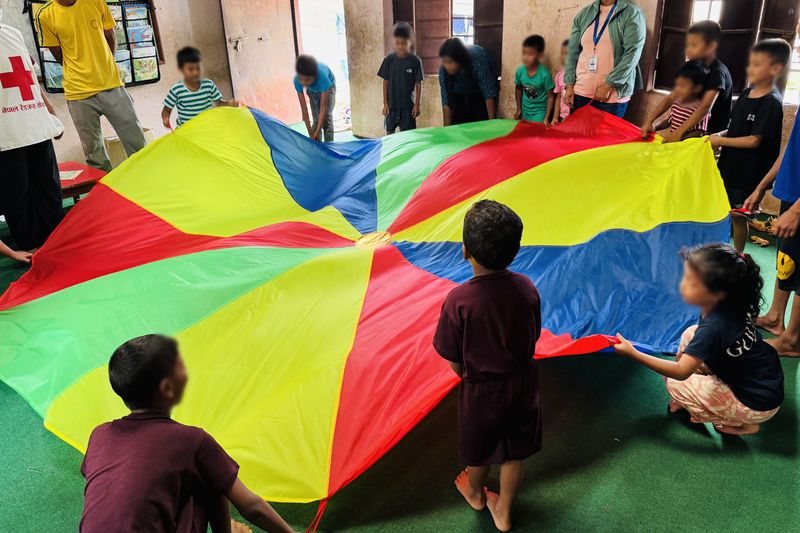
Good Neighbors' emergency relief program began in 1993. Food and essential supplies provided immediately after a disaster lead to psychological and emotional recovery, as well as improvements in education, livelihoods and housing conditions. To support children's emotional recovery, the organization has also developed four psychosocial support (PSS) programs using cognitive behavioral therapy, art and play.
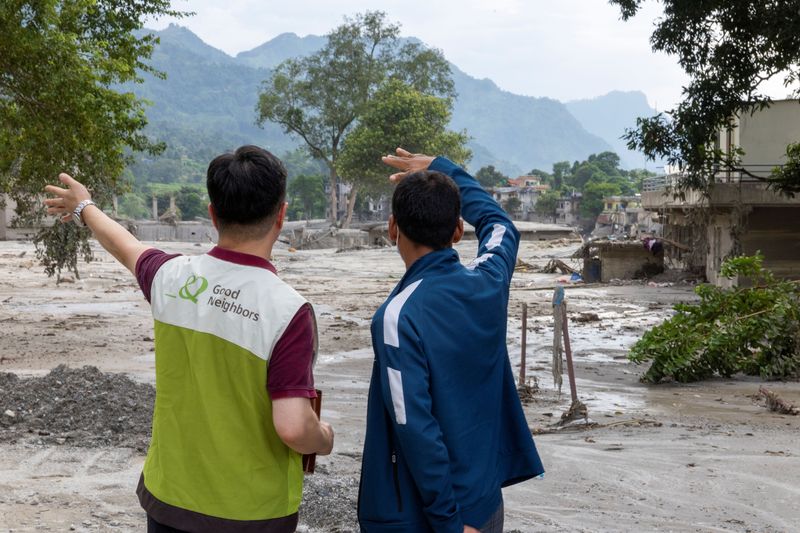
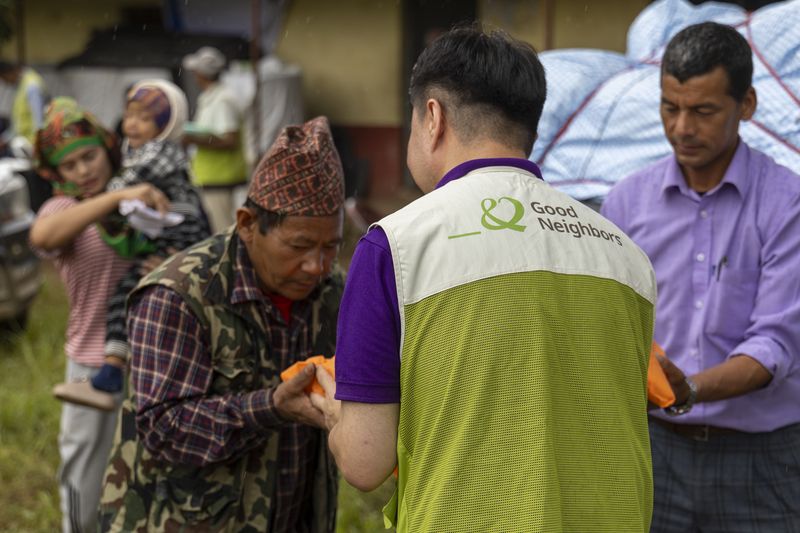
Food, essential supplies and hygiene items were delivered to approximately 3,100 displaced households, focusing on temporary shelters, schools and hospitals. Health programs are also being carried out to provide temporary accommodation, drinking water and basic medical services.
The disaster also disrupted children's living spaces. Schools were destroyed, while those that escaped damage were being used as temporary shelters, leaving children with few safe places to stay. This is why children's safety and emotional recovery must be addressed alongside the distribution of relief supplies.
"Residents lost both their homes and their livelihoods in the floods," said Gu Yang-heun, head of Good Neighbors' Humanitarian Assistance Team. "Because winter arrives immediately after the monsoon, rapid relief and reconstruction are necessary."
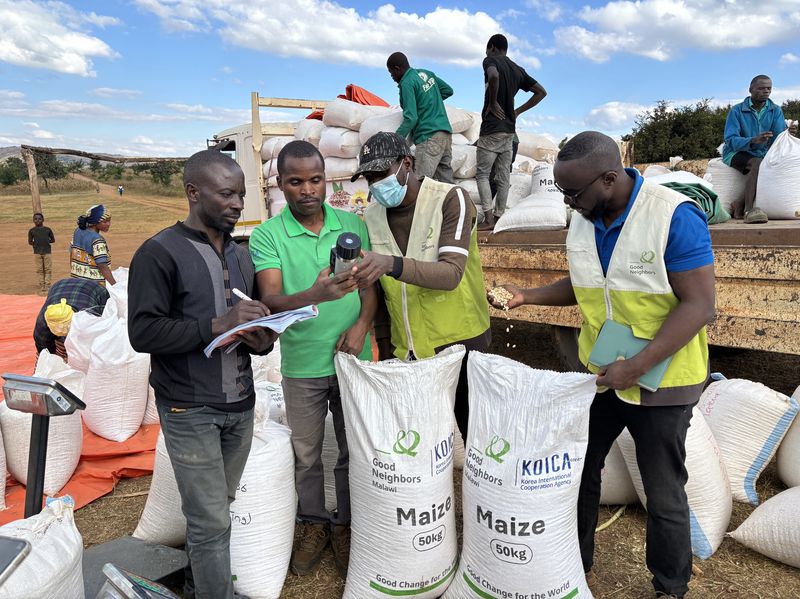
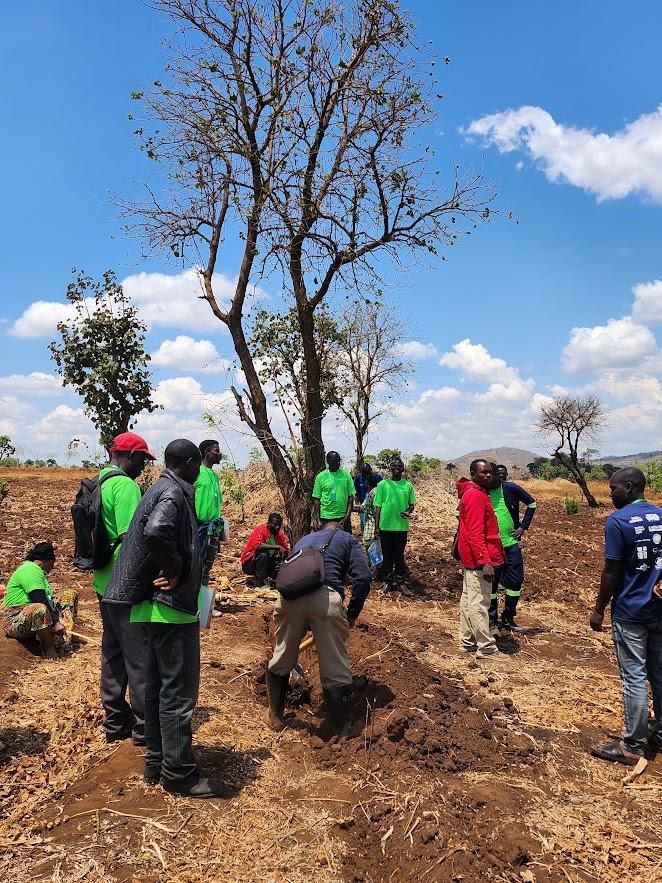
Good Neighbors is implementing a food crisis response project in partnership with the Korea International Cooperation Agency (KOICA). Launched in 2025, the project will continue through 2027. It has 210 direct participants and 1,710 indirect beneficiaries, including family members. The project is strengthening the agricultural production base by repairing irrigation facilities, installing grain storage warehouses, and providing seeds, fertilizer and farming equipment.
Twenty-three agricultural clubs were organized with the participation of refugees and local residents, and agricultural technology training was provided. 'Lead farmers' are selected from among the club members and trained to pass on what they have learned to other participants. This structure enables residents to participate as agents who share knowledge and experience. Chagantila Odiliya, a local resident and agricultural club member, said, "By farming with refugees, we were able to share farming methods that we had not known before."
"As complex crises involving climate change, poverty and conflict converge, countries and local communities with weak response capacity are suffering greater damage," said Jeon Mi-seon, secretary-general of Good Neighbors. "Good Neighbors will expand prevention programs to reduce disaster damage while continuing to provide professional humanitarian assistance wherever help is needed."
[email protected] Jang In-seo Reporter