FSC Signals Major Cut in Credit Information Act Administrative Fine Rates to 1%-30%
- Input
- 2026-10-01 18:32:41
- Updated
- 2026-10-01 18:32:41
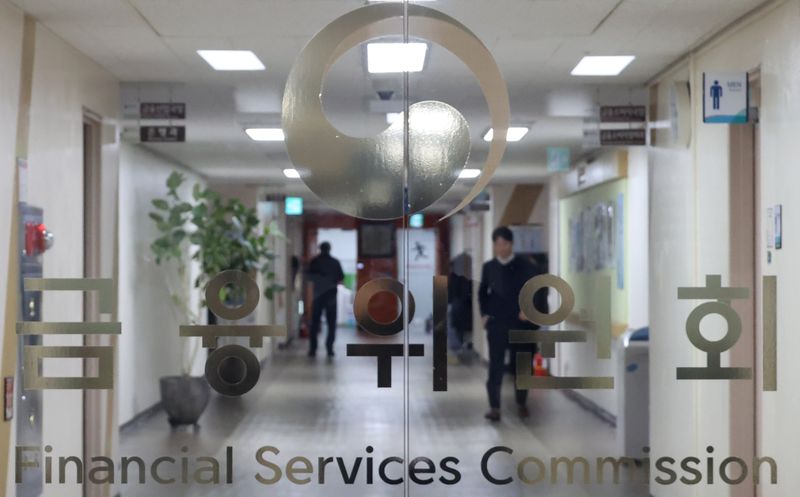
On the 1st, the FSC announced a proposed amendment to the Supervisory Regulation on Credit Information Business that would lower the assessment rate for administrative fines for violations of the Credit Information Use and Protection Act from the current 50% to 1%-30%. Under the amendment, administrative fines for minor violations would be significantly lower than before.
The amendment divides the assessment rates for administrative fines into three levels based on the severity of the violation. Very serious violations will carry rates of 65% to 100%, serious violations 30% to less than 65%, and less serious violations 1% to less than 30%. The basic administrative fine is calculated by multiplying the assessment rate by the maximum fine, which is 3% of total revenue. The previous rigid system used rates of 50%, 75%, and 100%, but the amendment adjusts them to levels similar to those under the Act on the Protection of Financial Consumers.
The detailed evaluation criteria will reflect the content and severity of the violation, as well as its duration and frequency. The type and nature of personal credit information, the scale of harm to data subjects, and the impact on the market will also be newly taken into account. The assessment rate may be increased or reduced by up to 10 percentage points depending on the case, while the rate calculated for minor cases may be reduced by up to half.
The amendment also specifies the grounds for mitigation and aggravation at the basic administrative-fine adjustment stage. Increases will be capped at 50% and reductions at 75%, while the adjusted fine may not exceed the maximum. If the unfair profit gained from a violation exceeds the basic fine, the fine may be increased by the difference. Intentional or grossly negligent violations with significant social impact, such as repeated violations within three years after an administrative fine is imposed or cases involving at least 10 million victims, will be treated as aggravating factors only when recognized by the FSC. By contrast, voluntary correction or reporting, the establishment of an internal control system, and a strong level of information protection will be recognized as mitigating factors.
The FSC has been discussing improvements to the administrative-fine calculation criteria through a task force since last month. A controversy recently arose over the criteria after Tongyang Life Insurance was fined about 7 billion won for violating the Credit Information Use and Protection Act, a sharp reduction from the 140 billion won calculated by the Financial Supervisory Service. Some matters were excluded from the fine during the FSC's deliberations, but concerns were raised that the initial fine had been excessive in relation to the case under the existing criteria.
An FSC official said, "We established the criteria for imposing administrative fines to ensure transparency and reasonableness in sanctions under the Credit Information Use and Protection Act. As relevant cases accumulate, the predictability of sanctions will increase."
The amendment also includes provisions allowing Korea Credit Information Services to handle information-linkage work among financial institutions and expanding institutions using technology credit information to all financial sectors to promote technology finance. The FSC will collect comments through the 12th, after which the amendment will go through a resolution by the FSC and could take effect as early as this month.
[email protected] Park Moon-soo Reporter