Korea Blockchain Week 2026 (KBW 2026) with Upbit concludes successfully... "A Meeting of Hoodies and Suits" [KBW 2026]
- Input
- 2026-10-01 16:26:49
- Updated
- 2026-10-01 16:26:49
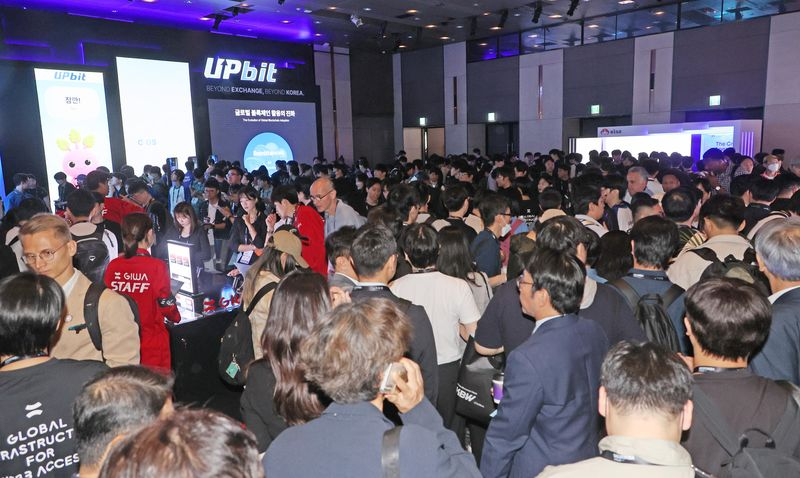
[Financial News] Asia's largest blockchain event, Korea Blockchain Week 2026 with Upbit, wrapped up its two-day main conference. This year's event stood out as an institutional-focused conference connecting traditional finance with the digital asset industry, driven by the participation of speakers from the financial and policy sectors as well as institutional partners. It was also praised for bringing together a "hoodie event" for developers and a "suit event" for traditional finance.
According to KBW organizer FACTBLOCK on the 1st, a total of 290 speakers participated in the main conference held at WALKERHILL HOTELS & RESORTS in Seoul's Gwangjin District from the 30th of last month through the 1st. They held 120 sessions across three stages. Total attendance reached 12,500. Of the speakers, 115 were affiliated with the financial, policy, digital asset investment or digital asset services sectors, accounting for 39.7% of the total.
The event featured continued discussions on the direction of digital asset institutionalization and regulatory design. Harry Jung, former deputy director of the White House Presidential Digital Asset Advisory Council, shared his experience with the passage of the U.S. stablecoin law, the GENIUS Act, during a session titled 'The First Year of the GENIUS Act: What Comes Next?' He stressed that when establishing a basic digital asset law, South Korea must first clearly define how digital assets will be used in its domestic market and what the ultimate goal of the system will be. He also added that the views of industry practitioners should be actively reflected in the legislative process.
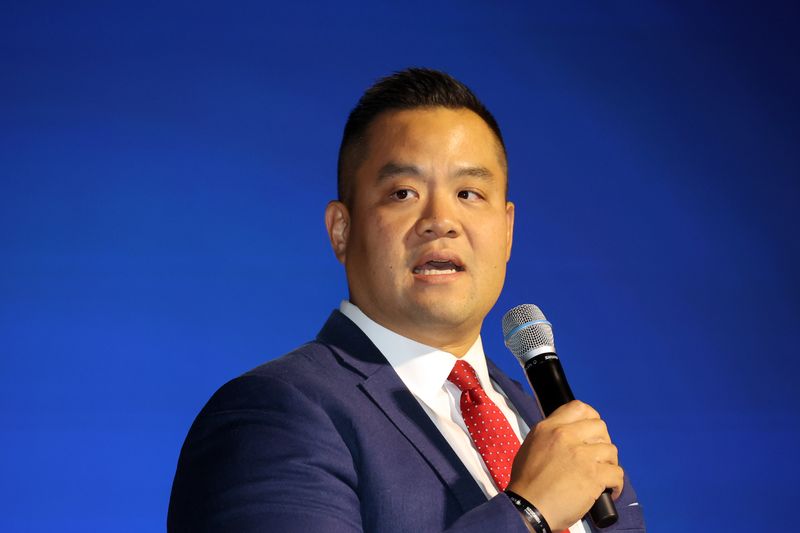
Brian Quintenz, former commissioner of the U.S. Commodity Futures Trading Commission (CFTC), emphasized that the role of regulators is not merely to eliminate risk at its source, but also to create an environment in which market participants can recognize and manage risk.
The conference also outlined the conditions needed to use tokenized assets in actual financial transactions. Monica Long, president of Ripple, predicted that opportunities to trade tokenized real-world assets around the clock or use them as collateral will expand over the next five years. She emphasized the need to connect asset issuance with settlement and collateral use on-chain, as well as to establish a legal framework that allows financial institutions to recognize tokenized assets as collateral.
Global financial institutions highlighted the investment foundations and valuation frameworks of the digital asset market. Gene Fang of Moody's, one of the world's three major credit rating agencies, Charles Jansen of S&P Global, and Chetan Karkhanis of global asset manager Franklin Templeton discussed the data and valuation frameworks required for institutional digital asset investment during a session titled 'From Market Data to Credit Ratings: Crypto's New Institutional Infrastructure.'
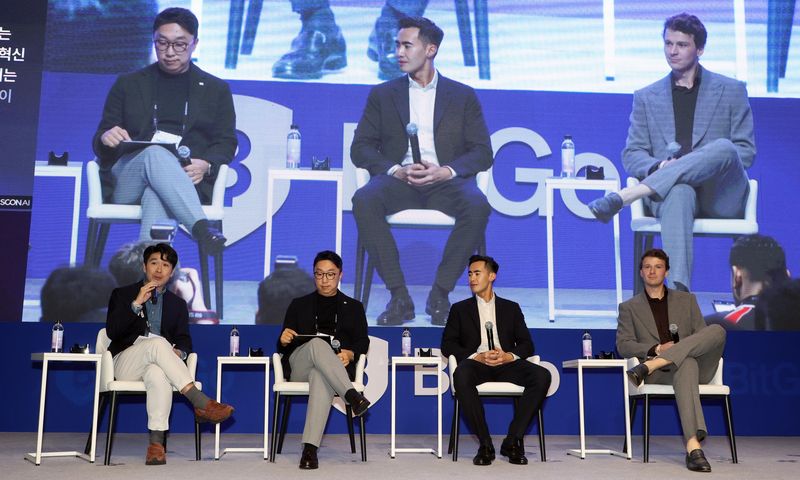
The event also addressed the challenge of linking tokenization to actual financial products and services beyond pilot projects. Ryo Kato of Japanese financial group SBI Group participated in a session titled 'Scaling Institutional Tokenization: From Proof of Concept to Real-World Adoption.' Park Gu-bin, an executive vice president of Mirae Asset Global Investments, discussed the connection between asset managers and real-world asset (RWA) tokenization infrastructure in a session titled 'Tokenizing the Fund Industry: Bridging Traditional Asset Managers and RWA Protocols.'
The conference also offered predictions about what could drive greater institutional participation in the market. Tom Lee, chairman of Bitmine, the world's largest Ethereum treasury company, said during a session titled 'Ethereum's Wall Street Moment' that the tokenization of traditional financial assets will encourage institutions to enter the digital asset market. He also analyzed how the growing use of digital currencies by AI agents for payments and transactions could create new demand.
Other global industry leaders also took the stage, including Arthur Hayes, chief investment officer of Maelstrom; Bo Hines, CEO of Tether USA₮; and Balaji Srinivasan.
Institutional participation was also reflected in the event's partner lineup. Newly established institutional partners included Korea Investment & Securities, Samsung Securities, Kyobo Life Insurance, Hyundai Card, LG CNS, Korea Investors Service (KIS), and EY Hanyoung. The participation of financial institutions and professional services firms broadened the foundation for discussions on bringing digital assets into the regulated financial system.
Upbit participated as the presenting partner, while 0G and BRV joined as official conference partners. BitGo was the official institutional sponsor, and Stable, Tria, and GOAT Network participated as diamond sponsors. Gold sponsors included Ripple, Hana Financial Group, SK Telecom (SKT), AhnLab Blockchain Company, Mirae Asset Global Investments, HeyElsa, Trumpcoin ($TRUMP), and BTQ.
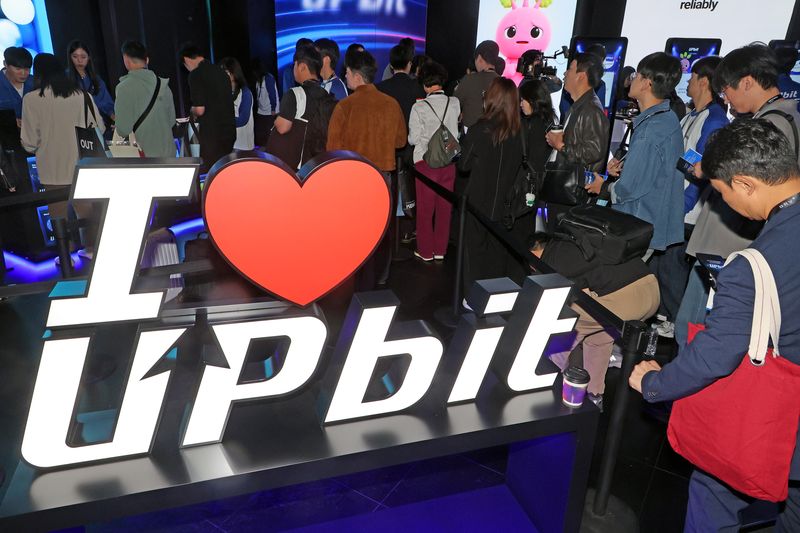
The exhibition showcased real-world applications of digital assets through technology demonstrations and hands-on programs by partner companies. Dunamu, the operator of Upbit, created an Upbit Zone and held a GIWA Accelerator Showcase. The showcase introduced projects in five areas: decentralized finance (DeFi), real-world assets (RWA), consumer and social services, zero-knowledge (ZK)-based authentication, and AI and Web3. Dunamu's booth also offered programs allowing visitors to experience the Upbit and GIWA ecosystems firsthand.
NHN KCP demonstrated payment and settlement technology based on won-denominated stablecoins, showing how digital assets can be applied to actual commerce. Through demonstrations covering payment, transaction confirmation, merchant management, and settlement, the company presented the infrastructure needed to put stablecoins into practical use.
Park Wi-ik, head of FACTBLOCK, said, "This year's KBW featured concrete discussions on how digital assets can be introduced into actual financial products and payment services," adding, "We will continue developing KBW into a forum where financial institutions, policymakers, and technology companies can meet, find points of convergence between regulation and business, and turn them into practical cooperation."
[email protected] Han Young-jun Reporter