Maintaining the fundamental principles of total investment volume and commercial viability for investment in the U.S. ... 50:50 profit sharing until total principal and interest are recovered
- Input
- 2026-10-01 16:00:00
- Updated
- 2026-10-01 16:00:00
In addition, the government agreed to a 'risk-pooling' mechanism that maintains a '50-50' profit split until the total principal and interest are repaid. The plan is to defend profitability until the principal and interest of the entire project are repaid.
■ Grand Principle of Commercialism: "The Same for Alaska"
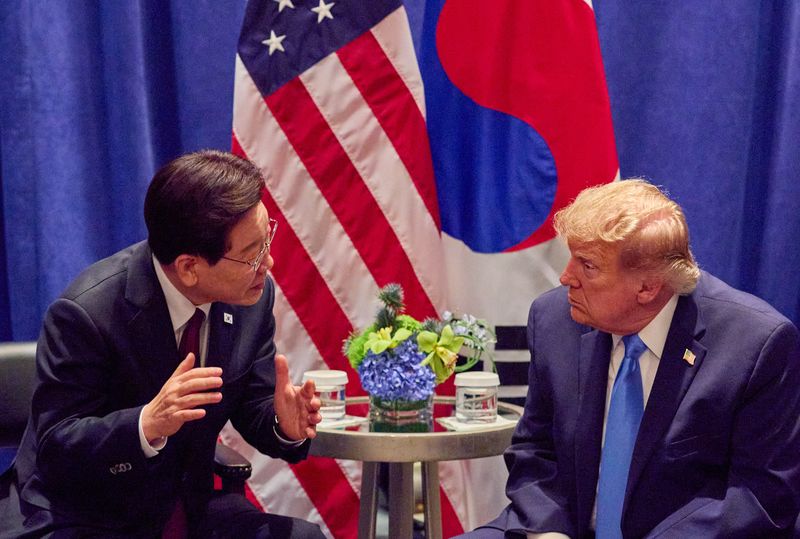
On the 1st, the Ministry of Trade, Industry and Energy and the Ministry of Finance and Economy announced the details of the follow-up plan for the 'Korea-U.S. Strategic Investment Memorandum of Understanding (MOU),' which includes these contents. The general principle of the safeguards prepared by the government is to maintain the total investment volume and annual investment limit at $200 billion and $20 billion, respectively, and to proceed with projects based on commercial rationality.
Minister of Trade, Industry and Energy Kim Jeong-kwan explained, "We view the judgment on commercial rationality as being made on the premise that both sides agree," adding, "The annual $20 billion agreed upon by both sides is legally binding."
Discussions on the scale of investment for the Alaska LNG project, as announced by U.S. President Donald Trump and the U.S. government, are also set to proceed under this overarching principle. The South Korean government maintains that even if it participates in the Alaska LNG project, the investment will remain within the total limit of $200 billion. Accordingly, the investment scale disclosed by the U.S. side today (in the $50 billion range) is expected to be adjusted during future negotiations.
Minister Kim emphasized, "It is the agreement between the two governments that the Alaska LNG project will be pursued on the premise that it is commercially viable," adding, "Under no circumstances will Korea's investment in the U.S. exceed the total of $200 billion and the annual remittance limit of $20 billion originally agreed upon with the U.S."
According to the government's principles, excluding the $142.3 billion already tentatively agreed upon, the scale of South Korea's investment is not expected to exceed $57.7 billion even if the Alaska project proceeds.
■ 50/50 profit sharing until principal and interest are recovered
Along with the principle of total investment volume, the government included safeguards to guarantee principal and interest and maintain business viability. First, a risk-pooling mechanism was established. The allocation ratio for individual projects will be maintained at 5:5 until Korea recovers all principal and interest on the total project investment. The explanation is that a transition to a 1:9 ratio (Korea to the U.S.) is possible only after the principal and interest have been recovered.
The Korean government stipulated that if the profits of some projects fall short of initial expectations, the 50/50 profit-sharing period for other projects would be extended. This is a method in which, even if the principal and interest are recovered from a specific project, if the total principal and interest are not repaid, the 50/50 distribution ratio for other projects is maintained to offset the losses of the project with delayed recovery using the profits from other projects.
It was decided to apply the imputed interest rate, which serves as the basis for calculating the principal and interest on the Korean side, by adding a spread determined by agreement between Korea and the U.S. for each project to the 20-year U.S. Treasury yield. Income-related taxes paid by Korea to the U.S. side were added to Korea's distribution to ensure the after-tax distribution ratio between Korea and the U.S.
In addition to this, they also agreed on the right to request and inspect project-related information (financial statements, business reports, etc.) and Korea's right to consent to changes in the project. Minister Kim explained, "The biggest difference from the U.S.-Japan negotiations is that profits and losses are shared through risk pooling," adding, "Until the entire principal and interest are recovered, the 50-50 split continues even if the principal and interest of a specific project are recovered."
[email protected] Kim Jun-hyeok Reporter