The '78-Year System' Ends as the Public Prosecution Office and Serious Crimes Investigation Agency Launch; Normal Operations Face an Uphill Battle
- Input
- 2026-10-01 15:11:14
- Updated
- 2026-10-01 15:11:14
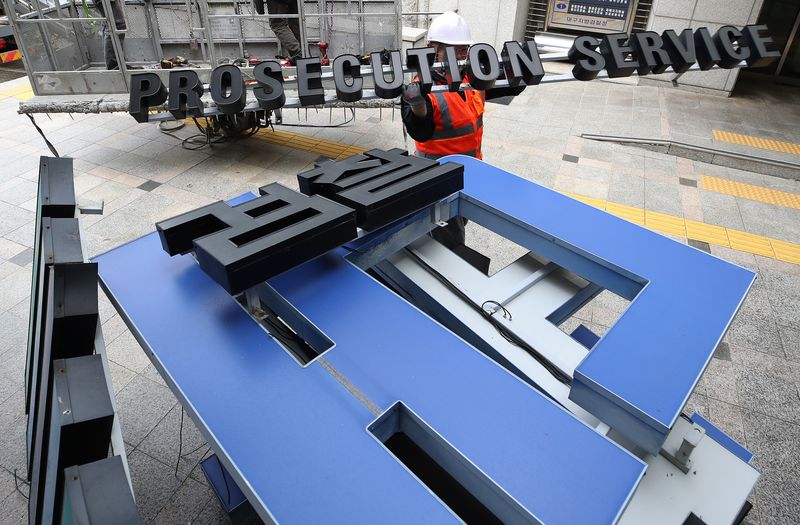
[Financial News] The 78-year prosecution service system is coming to an end as the Public Prosecution Office and Serious Crimes Investigation Agency launch simultaneously. The system in which prosecutors handled both investigations and indictments will disappear, ushering in a full-scale separation of investigations and prosecutions. Investigative agencies such as the police and the Serious Crimes Investigation Agency will conduct investigations, while the Public Prosecution Office will handle indictments and maintain public prosecutions.
However, both agencies will launch without official heads, effectively opening for business in an incomplete state. The Serious Crimes Investigation Agency, in particular, has yet to fully establish its staffing, leadership, offices and information systems. It is expected to take considerable time to form investigation teams, assign cases and begin actual investigations.
Investigations Shift to the Police and Serious Crimes Investigation Agency; Public Prosecution Office to Provide 'Judicial Oversight'
According to legal sources on the 1st, the existing prosecutors' offices will be abolished starting on the 2nd. The Public Prosecution Office, under the Ministry of Justice, and the Serious Crimes Investigation Agency, under the Ministry of the Interior and Safety (MOIS), will open their doors.
The police will become the center of first-stage investigations. In principle, the police will handle ordinary complaints and accusations, while the Serious Crimes Investigation Agency will investigate serious crimes involving corruption, the economy, the defense industry, drugs, national security and cyberspace. The Corruption Investigation Office for High-ranking Officials (CIO) will handle crimes related to the duties of high-ranking public officials.
Economic crimes will also be divided according to their scale. The police will investigate fraud, embezzlement and breach of trust cases involving losses of less than 500 million won, while the Serious Crimes Investigation Agency will handle cases involving 500 million won or more. If the police receive a case that falls under the agency's jurisdiction, they must notify the Serious Crimes Investigation Agency. The agency can decide within seven days whether to investigate the case itself and request that it be transferred.
Instead of conducting direct or supplementary investigations, Public Prosecution Office prosecutors will focus on 'judicial oversight,' including seeking warrants, requesting supplementary investigations and reinvestigations, and reviewing cases the police decide not to refer. In particular, a newly established Non-Referral Review Division will reexamine cases not referred by the police. After reviewing records and verifying facts with people involved in the case, prosecutors may request a reinvestigation if they determine that the decision not to refer the case was unlawful or unjust.
The existing prosecution service's direct-investigation units will be abolished. Cases that the prosecution service was investigating will generally be transferred to the police or Serious Crimes Investigation Agency. However, under transitional provisions, Public Prosecution Office prosecutors may continue investigating some cases for up to 90 days, including cases in which the statute of limitations is about to expire.
To minimize confusion during its early days, the Public Prosecution Office chose to retain as much of the existing workforce as possible. In the final prosecution personnel appointments on the 29th of last month, the Ministry of Justice minimized new appointments and assigned existing mid-level managers to divisions handling cases subject to 90-day continued investigations. It also assigned senior prosecutors with extensive investigation and criminal case experience to the Non-Referral Review Division. The ministry plans to increase trial staff and strengthen the agency's public prosecution functions.
The leadership remains a problem. Lee Jung-hyun, the acting prosecutor general, will lead the organization for the time being, but the post of prosecutor general is vacant and the justice minister is also absent. Leadership responsible for addressing issues that arise during implementation of the new system and for spearheading institutional improvements will therefore remain in a transitional arrangement for the foreseeable future.
Serious Crimes Investigation Agency Faces an Even Tighter Situation; Leadership, Staffing and Offices All 'Incomplete'
Preparations for the Serious Crimes Investigation Agency, which will handle serious crime investigations, are even more strained. The agency will launch with an authorized headcount of 2,874 and oversee serious economic crimes such as antitrust and financial crimes, as well as defense procurement, drug, national security and cybercrime cases. Its specialized investigative organization is considerably larger than the former prosecution service, with around 120 staff assigned solely to antitrust investigations.
Yet recruitment has not been completed. Even after combining applicants from the first and second rounds of special appointments, the total stood at 1,962, falling short of the authorized headcount. For positions at grade 5 or above, in particular, there were only 212 applicants for 629 authorized positions. After the launch, the agency will have to continue recruiting experienced personnel from the police, the legal profession and the accounting profession.
The leadership structure is also incomplete. The personnel hearing for Kim Ji-yong, the nominee to become the agency's first chief, has been delayed, forcing the Serious Crimes Investigation Agency to launch without a chief. The selection of key officials, including the deputy chief and regional office chiefs, continued until just before the agency opened. For the time being, the organization will have to rely mainly on an advance team and personnel hired through special appointments.
The physical environment for investigations is not fully ready either. Interior construction was still underway immediately before the opening at Reune Square Building in Jung-gu, Seoul, where the agency's headquarters and Seoul office will be located. Its own Korea Information System of Criminal Justice Services (KICS) is also not ready, so plans are underway to initially use the police system. Concerns have also been raised that investigative activities in areas far from the agency's offices, such as Incheon and Jeju, could face restrictions because of jurisdictional and logistical challenges.
[email protected] Kim Dong-gyu and Choi Eun-sol Reporter