Ruling Party Says "National Interest Protected" After U.S. Investment Announcement; Opposition Demands Explanation for Alaska's $54 Billion Figure
- Input
- 2026-10-01 15:29:40
- Updated
- 2026-10-01 15:29:40
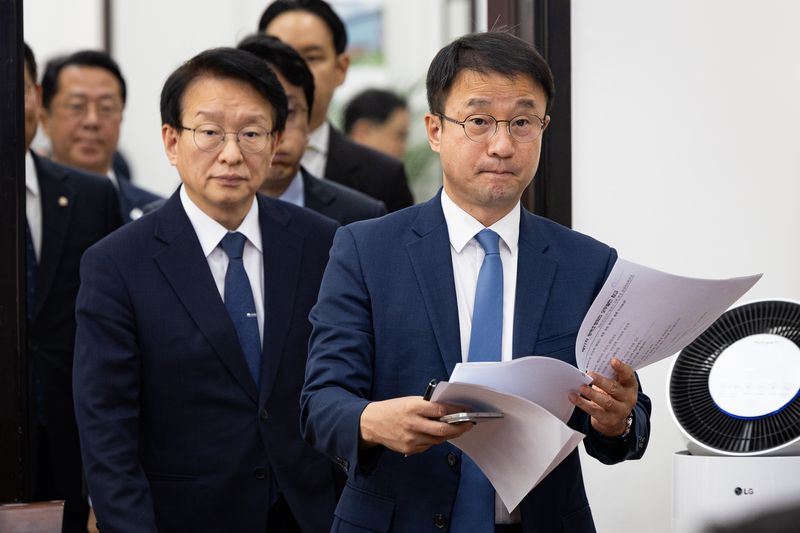
At a policy coordination meeting that day, Kwon Chil-seung, policy committee chairman of the Democratic Party of Korea, described the agreement as "a meaningful achievement that protected the national interest on the basis of commercial viability." Regarding the first project, the Texas Encinal gas combined-cycle power project, he offered an optimistic outlook, saying that an investment of $22.3 billion, approximately 30 trillion won, "is expected to allow recovery of the principal and interest within 20 years after commercial operations begin."
He also announced that the National Assembly of the Republic of Korea would verify the investment process. Kwon said, "We must manage the process so that the safeguards agreed upon by South Korea and the United States—including the annual investment limit, recovery of principal and interest, profit distribution and foreign-exchange market safeguards—function properly throughout the implementation of the actual projects," adding, "We will continuously review whether investments are being made in accordance with the principles and procedures stipulated in the special act."
The National Assembly of the Republic of Korea's involvement in investment in the United States varies depending on whether each individual project has secured commercial viability. The Texas Encinal project was reported to the National Assembly of the Republic of Korea on the 22nd of last month, based on the government's determination that it had achieved commercial viability. The Alaska LNG project, by contrast, remains at the review stage, with its commercial viability yet to be confirmed. Under the special act, projects that have not secured commercial viability may be pursued for strategic reasons, including economic security, only after obtaining the consent of the National Assembly of the Republic of Korea's Finance, Economy and Planning Committee and Trade, Industry, Energy, SMEs and Startups Committee before consultations with the U.S. side.
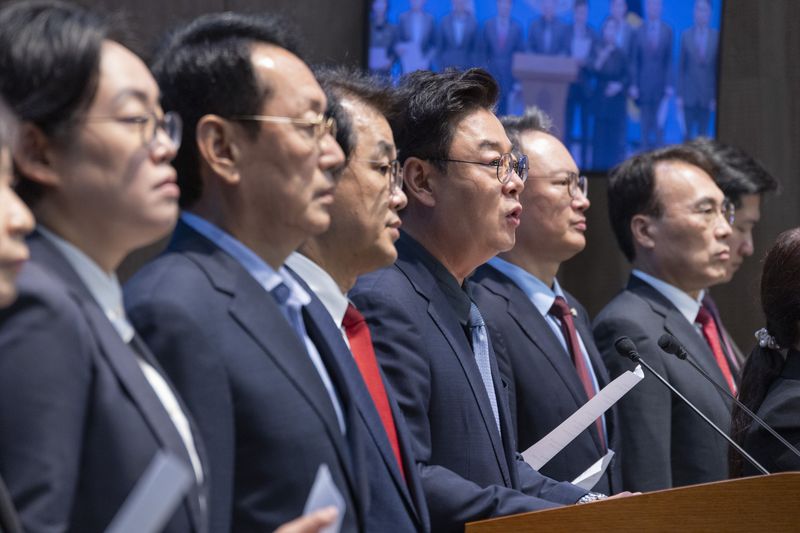
Citing this procedural distinction, the People Power Party questioned how the specific figure of $54 billion emerged in connection with the Alaska LNG project. People Power Party lawmakers from the Trade, Industry, Energy, SMEs and Startups Committee and the Finance, Economy and Planning Committee held a press conference that day and demanded an explanation of the negotiations, saying, "There is a discrepancy between the report submitted to the National Assembly of the Republic of Korea and the announcement by the U.S. side." Kim Sung-won, chairman of the Trade, Industry, Energy, SMEs and Startups Committee, claimed, "When the matter was initially reported to the National Assembly of the Republic of Korea, the Texas project was presented, while the nuclear power and Alaska projects were to undergo further review before being reported to the National Assembly of the Republic of Korea."
With the ruling and opposition parties taking opposing positions, the circumstances surrounding the presentation of the $54 billion Alaska LNG figure, compliance with the National Assembly of the Republic of Korea's consent procedures under the special act, and the commercial viability of follow-up projects are expected to face full-scale scrutiny when the Parliamentary Inspection of the Administration begins next week.
[email protected] Song Ji-won and Lee Hae-ram Reporter