"Regulation Is Not a Roadblock but a 'Throttle'—Korea Can Gain a Global Edge with the Digital Asset Basic Act" [KBW2026]
- Input
- 2026-10-01 16:19:25
- Updated
- 2026-10-01 16:19:25
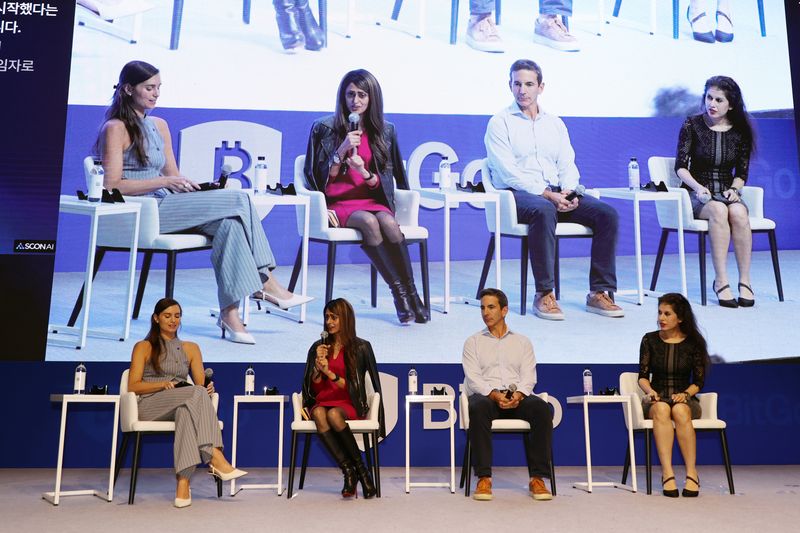
[Financial News] As the convergence of traditional finance and the on-chain ecosystem gains momentum, experts have urged the industry to seize the market through swift execution rather than wait for perfect regulations.
A panel discussion examining the current state of policy and infrastructure needed to establish blockchain technology within the institutional mainstream was held at Korea Blockchain Week 2026 (KBW2026), Asia's largest blockchain event, at WALKERHILL HOTELS & RESORTS in Seoul on the 1st.
The discussion was moderated by Laura Estefania Conquista, a PR representative, and featured Sunayna Tuteja, former CIO of the Fed; Yesha Yadav, a law professor at Vanderbilt Law School; and Todd McDonald, co-founder of R3.
Tuteja, the former Fed CIO, said, "There is a widespread misconception that regulation is an obstacle to innovation, but regulation is actually like a 'throttle'—a device that adjusts engine output—so it can be a major help if it is used to control the pace appropriately." She stressed the importance of a 'Perpetual Beta' mindset, in which regulations are continuously revised and refined rather than created once and left unchanged.
Professor Yadav also called for a fundamental overhaul of regulatory agencies. She noted, "It is difficult to deal with rapidly changing technology using the DNA of existing regulatory agencies, which are bureaucratic and confined to their respective domains," and added, "New approaches are needed, including the introduction of chief innovation officers who can break down barriers between departments and respond flexibly to technological change."
Todd McDonald, co-founder of R3, said, "Today's policies and regulations are being designed to enable innovators to transform markets." He added, "In the past, financial companies used regulatory uncertainty as an excuse to delay adopting technology, but the environment has now been created in which that can no longer serve as an excuse."
Korea's potential was also highly rated amid the divergent regulatory approaches of major economies, including the United States and Europe.
Professor Yadav analyzed, "Europe proactively established regulations that no one else had enacted, but it sometimes showed rigidity by becoming trapped in specific cases, while the United States appeared somewhat fragmented but is still responding flexibly." She continued, "I hope Korea will quickly emerge as a global leader through steps such as introducing a won-based stablecoin."
The former CIO Tuteja also praised Korea's regulatory efforts. She said, "Looking at the Digital Asset Basic Act that Korea is preparing, I get the impression that regulation and technology are being connected elegantly," and predicted, "These moves will give Korea an edge in global markets." At the same time, she urged, "Consumers and end users will not wait until regulations become perfect, so we must not stand still while waiting only for perfect regulation."
Meanwhile, the discussion also covered stablecoins and real-world asset tokenization (RWA), which are regarded as key infrastructure for the future of finance.
Professor Yadav stressed absolute safety as a prerequisite for stablecoins, highlighting the importance of securing safe assets such as government bonds and cash, as well as infrastructure capable of providing liquidity around the clock. Tuteja, the former CIO, said consumers are interested in solving practical problems rather than in the type of technology itself, and that developers and policymakers should focus on market demand.Special Reporting Team[email protected] Kang Jung-mo Reporter