Three Major U.S. Investment Projects Unveiled... U.S.: “$54 Billion for Alaska”; South Korea: “Not Yet Decided”
- Input
- 2026-10-01 16:00:00
- Updated
- 2026-10-01 16:00:00
[Financial News]
South Korea and the United States officially announced three major projects for strategic investment in the United States worth $200 billion. Starting with Project Star, a gas-fired power project in Encinal, Texas, the two countries plan to pursue Project Power, involving eight U.S. nuclear reactors, and Project North, the Alaska LNG Project.
However, unlike the United States, which treated South Korea’s investment in the $54 billion Alaska LNG Project as a fait accompli, the South Korean government stressed that neither the decision to invest nor the investment amount had been determined. It said a final decision would be made after assessing the project’s commercial viability.
On October 1, the Ministry of Trade and Industry said that South Korea and the United States had officially announced plans to pursue strategic investment projects under their strategic investment memorandum of understanding (MOU). Project Star, the first project, is a $22.3 billion undertaking to build a 6,472-megawatt gas combined-cycle power plant in Encinal, Texas. Project Power involves building eight large nuclear power plants in the United States, with up to $120 billion expected to be invested.
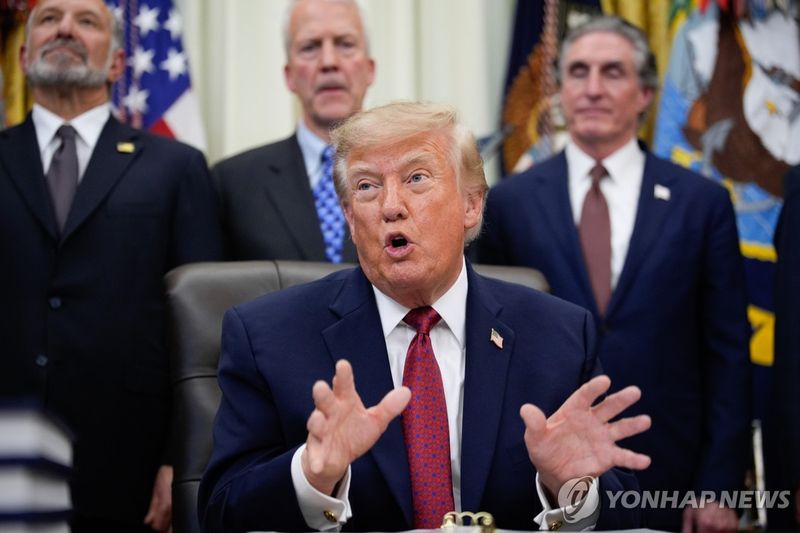
U.S. President Donald Trump said at the White House on September 30 local time, “The South Korean government will invest up to $200 billion in the United States,” highlighting the Alaska LNG Project as a key initiative. The White House put the investment amount for the Alaska LNG Project at $54 billion. The project involves building an approximately 1,300-kilometer pipeline from Alaska’s North Slope to Nikiski in the south and connecting LNG liquefaction and export facilities. President Trump emphasized that the project would create up to 12,000 construction jobs and 1,000 operating jobs.
Speaking to reporters, Minister Kim Jung-kwan said, “Everything contained in the fact sheet is the entirety of what the two countries agreed on regarding Alaska,” clarifying that $54 billion was not an agreed investment amount. Regarding the U.S. announcement, he stated, “Expressions that cite a figure or make it sound as though the matter has been decided go far beyond what was agreed,” adding that he had expressed regret to U.S. Commerce Secretary Howard Lutnick.
By the end of last year, the South Korean government had determined that the Alaska LNG Project did not appear to have commercial viability. However, the United States created room for a review by proposing to shift the project from one led primarily by private-sector operators to one involving the federal government. The South Korean government plans to obtain detailed project materials from the United States and reassess permits and approvals, workforce availability, costs, and other factors.
The United States said it would offer South Korea favorable conditions regarding equipment tariffs and tax benefits, participation by South Korean companies, and LNG prices and supply and demand to improve the project’s viability. Minister Kim emphasized, “South Korea and the United States share the understanding that the project will not proceed if it lacks commercial viability,” adding, “We will make a decision after reviewing the materials sent by the United States.”
President Lee Jae Myung also said that day, “Regarding the Alaska LNG Project, we have decided to begin ‘working’ on it on the condition that its commercial viability is confirmed and that it complies with South Korea’s legal procedures.” Regarding the nuclear power project, he said, “Commercial viability must be guaranteed for each specific power plant,” reaffirming that commercial viability is a prerequisite for investment decisions across South Korea’s investments in the United States.
[email protected] Park Ji-young, Lee Byung-chul, Choi Jong-geun Reporter