Trump Declared South Korean Investment in Alaska a Done Deal—but U.S. Official Document Says It Is 'Conditional'
- Input
- 2026-10-01 14:34:17
- Updated
- 2026-10-01 14:34:17
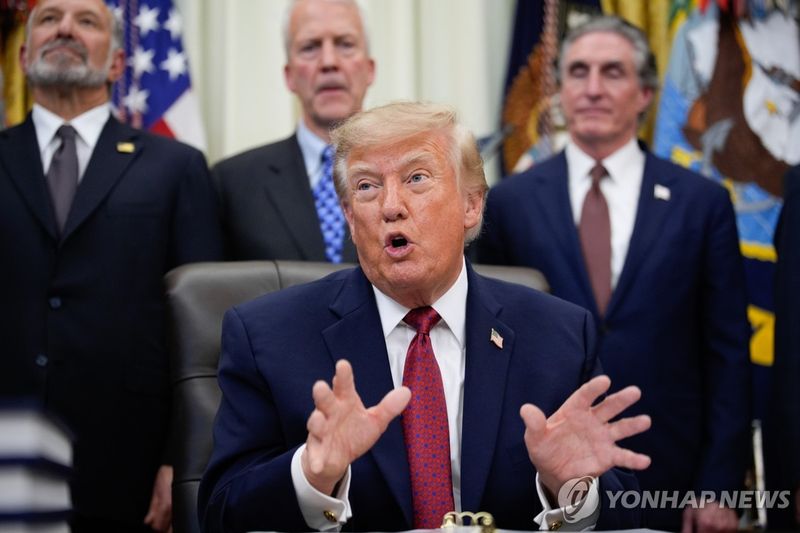
[Financial News] Donald Trump presented South Korea's investment in the Alaska liquefied natural gas (LNG) project as a done deal, but official U.S. government materials did not use such definitive language.
Trump's remarks differ significantly from the official U.S. government wording, which specifies commercial rationale and other requirements as preconditions for moving forward with the project. They have also prompted speculation that he may have exaggerated the achievement for political purposes, given that Alaska, the region set to benefit, is a battleground in the November midterm elections.
According to the U.S.-South Korea Strategic Investment Projects Fact Sheet released by the United States Department of Commerce on the 30th (local time), the two countries agreed to "commence working on the Alaska LNG Project, subject to commercial rationale under the strategic investment memorandum of understanding (MOU) and fulfillment of all domestic legal requirements."
The U.S. fact sheet's description of the Alaska LNG Project is identical to the South Korean government's announcement.
In its fact sheet in Korean, the South Korean government said the two countries had "agreed to begin reviewing the Alaska LNG Project," subject to the same conditions.
Although there are slight differences in translation, both the U.S. and South Korean fact sheets clearly describe cooperation as conditional on commercial viability and fulfillment of domestic legal requirements, rather than definitively confirming South Korea's participation in the Alaska LNG Project.
Like the South Korean government's announcement, the fact sheet from the United States Department of Commerce also states that the United States will support the participation of South Korean companies and suppliers in the project.
It also says the United States will guarantee, to the extent possible, that South Korea can sign purchase agreements for LNG produced by the project at prices that ensure economic viability.
However, the fact sheet does not say that South Korea has decided to invest in the Alaska LNG Project or that a specific investment amount has been set.
The content of the official U.S. government document stands in marked contrast to the more definitive remarks repeated in Trump's related announcement and subsequent social media post.
Earlier that day, at the Oval Office, Trump announced a gas-fired power plant in Texas, the construction of eight nuclear power plants, and the Alaska LNG Project as South Korean investment projects in the United States, saying, "The South Korean government plans to invest up to $200 billion."
Regarding the Alaska LNG Project in particular, he said, "This alone will be one of the largest energy projects in American history," adding that South Korean investment funds would be invested in the project.
Trump later wrote on Truth Social, "The United States and South Korea have agreed to commence working together on the $50 billion Alaska LNG Project," specifying an amount as well. The post also made no mention of the preconditions for the project stated in the U.S.-South Korea fact sheet.
Brendan Duval, CEO of Glenfarne Group, the project's developer, said at the White House announcement event that construction could begin as soon as financing was secured. He also presented a timeline of three years for pipeline construction and about five years before LNG exports begin.
The Alaska LNG Project is a major energy project that has been pursued and delayed repeatedly for decades. Financing and procedures including a final investment decision (FID) still remain before actual construction can begin.
As a result, analysts say Trump may have highlighted the conditional U.S.-South Korean agreement as a more definitive achievement than it actually was, mindful of the closely contested race for Alaska's Senate seat with the midterm elections just one month away.
[email protected] Lee Seok-woo, International Affairs Correspondent Reporter