The Pros and Cons of Gangseo-gu Office's Relocation: Benefits for Magok Commercial District, Concerns Over Hwagok-dong Slowdown
- Input
- 2026-10-02 06:00:00
- Updated
- 2026-10-02 06:00:00
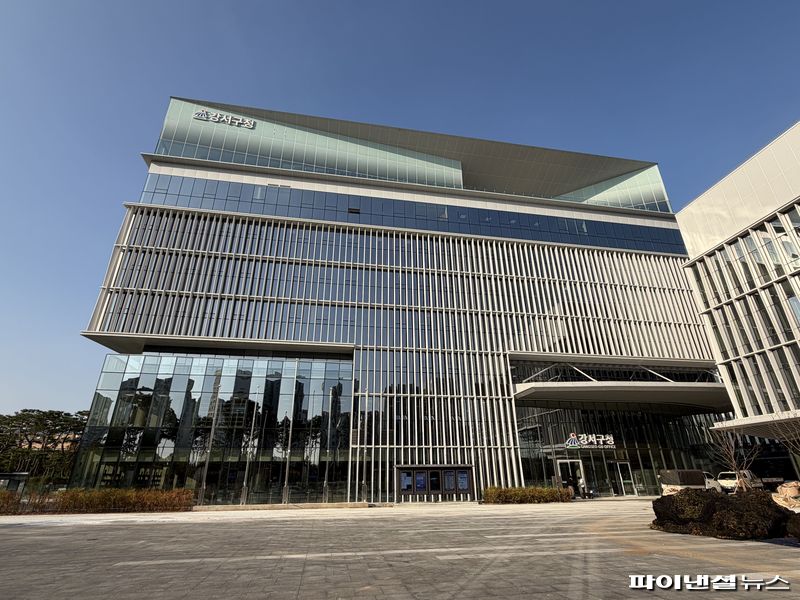
Construction workers and cleanup crews are working side by side at the site. The building's exterior is nearly complete—so much so that it would not seem strange if employees started reporting to work there immediately. Nearby real estate agencies have also become busier following news that the district office will soon open. Inquiries about leasing space in commercial buildings have surged. A commercial property broker said, "Inquiries have increased sharply, especially recently," adding, "Compared with before the district office moved in, they have increased about tenfold."
The area around the district office, once limited primarily to administrative services, is emerging as a hub of urban development. As office buildings that had been scattered across different locations are consolidated at one site, foot traffic is also rising. Rents are trending upward as demand grows.
■ Rents Jump 40% on News of District Office Opening
Commercial property brokers near Gangseo-gu Office said in unison that "the district office is giving the commercial district a major boost." They said that while they received only one or two inquiry calls a day as recently as the end of last year, more than 10 are now coming in.
Rents are rising as demand increases. A broker near Gangseo-gu Office said, "As recently as October last year, monthly rent for a ground-floor shop was around 2.5 million won, but it has now risen to as much as 3.5 million won," adding, "With about 2,000 civil servants expected to move in and the on-site cafeteria reportedly able to accommodate around 300 people, the shops are highly sought after."
It is difficult to find a vacant ground-floor shop in Building A right next to Gangseo-gu Office. Some shops there were vacant as recently as last year. A broker near Magok Station explained, "The number of vacant commercial units has fallen since news broke that the district office would move in, so the opening is clearly having an effect," adding, "By contrast, the commercial district around the former Gangseo-gu Office site is likely to contract."
In fact, the commercial district around the former Gangseo-gu Office site is showing signs of contraction. A real estate broker in Hwagok-dong predicted, "Once the district office closes completely, some commercial units are likely to become vacant," adding, "Rents are also expected to decline in that case."
■ Commercial Districts Near Gwangjin and Dongjak District Offices Also Thrive
Commercial property demand has also surged around Gwangjin-gu Office and Dongjak-gu Office, which opened new office buildings last year, pushing up nearby rents. According to the Seoul Commercial District Analysis System, building rent per 3.3 square meters in Jayang 2-dong, where Gwangjin-gu Office is located, was 118,936 won in the second quarter of this year, up 32.7% from 89,618 won in the same period a year earlier. By contrast, rents in Jayang 1-dong and Jayang 3-dong, where no district office is located, fell by 14.9% and 7.7%, respectively.
Over the same period, building rents excluding the first floor in Sangdo 2-dong, where Dongjak-gu Office is located, rose 16.3%. The first floor is generally known to have the highest rents in a building. Rents in nearby Sangdo 1-dong rose 10%, while those in Sangdo 3-dong fell 46%.
Dongjak-gu Office has become a "neighborhood attraction" that draws visitors even on weekends, thanks to its many activities and rest areas. The increased foot traffic has spilled over into nearby shops, reviving the commercial district, analysts say.
A real estate industry official said, "Nearby shops are directly benefiting from the opening of the district office," adding, "If an integrated new office building is established, as with Gangseo-gu Office, the effect will be even greater."
[email protected] Kwon Jun-ho Reporter