Police adopt emergency response system ahead of criminal justice system transition: "We will stop case ping-pong"
- Input
- 2026-10-01 14:00:00
- Updated
- 2026-10-01 14:00:00
[Financial News] With the new criminal justice system, which separates investigation from prosecution, set to take effect tomorrow, the police will shift to an emergency response system. To minimize confusion in the field during the early stages of implementation, police station chiefs will review the handling of major cases and prosecutor-requested cases every day. A multilayered monitoring system will also be put in place to prevent victims' rights from being delayed by so-called "case ping-pong."
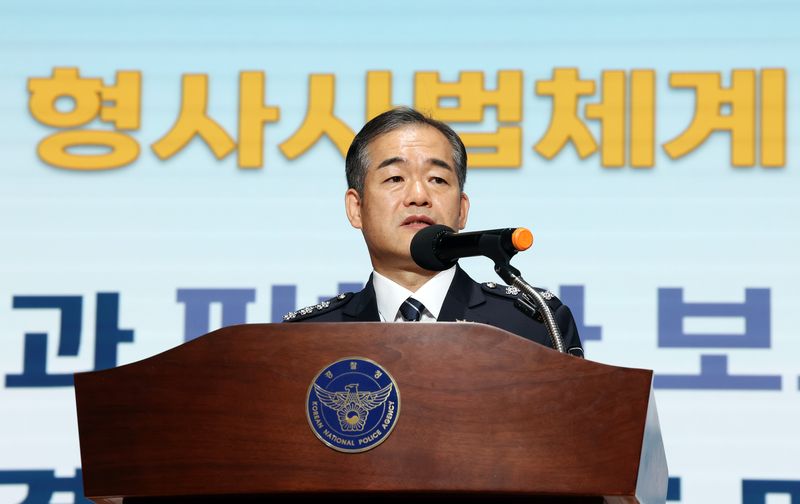
The Korean National Police Agency held a nationwide meeting of police investigation commanders on the 1st, attended by Kim Jongcheol, acting commissioner general of the Korean National Police Agency; the head of the National Office of Investigation; investigation deputy chiefs and investigation bureau chiefs from metropolitan and provincial police agencies; superintendent-level division chiefs; and police station chiefs. The meeting was organized to establish the new system around human rights and victim protection, one day before the criminal justice system undergoes major changes. It was the first time in 25 months that commanders at or above the rank of police station chief from across the country had gathered in one place.
In his opening remarks, Kim said, "Tomorrow, our criminal justice system will undergo its most significant transformation in 78 years," adding, "With investigations and prosecutions being separated, the police have been given the weighty responsibility of providing even stronger protection for the rights and interests of the public." He also noted that the police had strengthened their investigative capabilities and expertise since the National Office of Investigation was launched in 2021, and that about 4,000 frontline investigators had recently been added.
Starting today and continuing until the new criminal justice system is firmly established in the field, the police will operate an emergency response system. Checks on the entire case-handling process will be strengthened, from individual police stations to metropolitan and provincial police agencies and the headquarters of the Korean National Police Agency. In particular, police station chiefs will review the status of major cases and prosecutor-requested cases every day, while metropolitan and provincial police agencies and the National Office of Investigation will conduct additional reviews.
Kim pledged, "To ensure that not a single victim suffers an injustice and that not even the smallest gap emerges, we will conduct overlapping checks of the entire case-handling process, from frontline police stations to metropolitan and provincial police agencies and the headquarters, and immediately correct any problems." He added, "We will ensure that outcomes do not vary depending on the police unit or the investigator in charge."
The police also decided to place an even greater focus on protecting victims during investigations. Alongside establishing the truth of what happened, they will make the protection of crime victims the first principle of investigations and strengthen procedures to safeguard victims' rights throughout the process, from receiving reports of harm through investigations and follow-up measures. Notifications about the progress and conclusion of cases will be improved, and online notifications will be expanded so that the parties involved can directly check the status of their cases and exercise their rights.
Kim emphasized, "The question the police ask themselves will be, 'Is the victim safe?' Our focus will always be on the victim." He added, "We will protect victims proactively so that recurring warning signs, such as stalking, dating violence and child abuse, do not lead to tragedy. We will not only conduct thorough investigations but also listen closely to victims and provide more attentive care until they recover their daily lives."
Internal controls will also be strengthened to improve the fairness and accountability of investigations. Serious misconduct that affects the substance of a case, including fabricating or concealing cases and accepting bribes, will be investigated rigorously. As a rule, such misconduct will result in disciplinary action excluding the offender from service, including dismissal or removal. Kim stressed, "For serious misconduct such as corruption, bribery, case fabrication and concealment, and shielding colleagues, we will apply dismissal or removal as the rule and hold those responsible to an even stricter account."
At the meeting, the head of the National Office of Investigation gave a lecture on the roles and responsibilities of investigation commanders under the changed criminal justice system. The human rights inspector shared measures to respond to investigative misconduct and strengthen human rights protections, while the chief of the Public Safety and Traffic Bureau presented measures to protect socially vulnerable people and crime victims. The Criminal Affairs Bureau and the Police Reform Task Force also explained plans to improve the missing-person investigation system and advance police reform.
The police plan to review difficulties related to staffing, budgets and facilities raised during field discussions and incorporate them into policy. Kim urged the commanders, saying, "The success or failure of establishing the new criminal justice system depends on the field." He added, "There must be no delays in victims' access to remedies because of so-called 'case ping-pong.' Field commanders should conduct checks to ensure that the inadequate or unfair investigations the public fears cannot take root within the police."
On the morning of the 2nd, the police will also hold a meeting of the heads of investigation divisions at metropolitan and provincial police agencies and police stations, chaired by the chiefs of 18 metropolitan and provincial police agencies, to share response measures under the new criminal justice system.
[email protected] Kim Yeji Reporter