On the Final Day of the Prosecution's Investigation, 16.3 Trillion-Won Petrochemical Collusion Case Leads to Mass Indictments ... Collusion Cases Designated as a Joint Task
- Input
- 2026-10-01 14:07:10
- Updated
- 2026-10-01 14:07:10
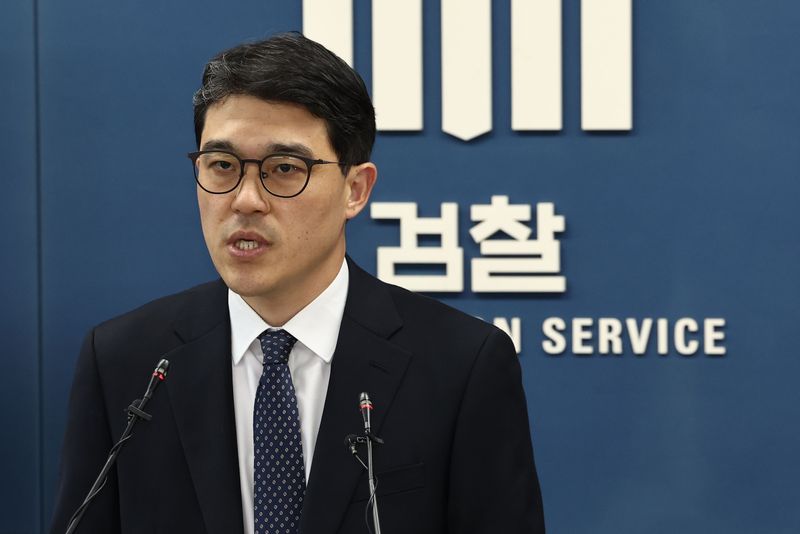
[Financial News] Prosecutors have indicted major domestic petrochemical companies and their former and current executives after determining that they engaged in price-fixing and bid-rigging involving more than 16 trillion won over more than five years. It is the largest collusion case investigated by prosecutors to date.
Having concluded the case two months after launching a compulsory investigation, prosecutors said cooperation on future collusion cases would be crucial as the system will shift to the Public Prosecution Office the following day.
The Fair Trade Investigation Division, Seoul Central District Prosecutors' Office, headed by Chief Prosecutor Na Hee-seok, indicted six corporations—including LG Chem, PKC, OCI, Aekyung Chemical, LOTTE Fine Chemical and Unid—and 37 individuals, including former and current chief executive officers, on the 1st for allegedly violating the Fair Trade Act. The total number of defendants, including the corporations, is 43. A person identified as A, the current head of LG Chem's China BS Group, and the head of PKC's sales division were sent to trial in custody.
Seven companies, including Hanwha Solutions, were found to have participated in the collusion. Hanwha Solutions, however, was excluded from indictment after receiving leniency under the criminal penalty reduction program.
Prosecutors believe the companies agreed in advance on the timing and extent of price increases for eight key petrochemical products—including polyvinyl chloride (PVC), plasticizer, caustic soda and hydrochloric acid—from January 2021 through April this year. In bids by some large customers, they also allegedly colluded on the winning bidder and bid prices.
Prosecutors determined that the companies used meetings of managers responsible for each product to set the timing and extent of price adjustments, then imposed the agreements on customers. To conceal the collusion, they even agreed on the sequence for sending official price-increase notices. Prosecutors also explained that they found evidence that the companies predetermined the winning bidder and bid prices in purchasing tenders held by large customers in order to maintain existing market shares and agreed price levels.
Prosecutors estimated the total scale of the collusion at approximately 16.3961 trillion won. This exceeds the amounts involved in previous collusion cases investigated by prosecutors, including approximately 10.1520 trillion won in the starch-sugar industry, 5.9913 trillion won in flour and 3.2715 trillion won in sugar.
The products involved were basic raw materials used throughout industry, ranging from PVC, a material for various types of piping, to caustic soda used in semiconductors and water treatment, and plasticizer used in automobile interiors. Prosecutors determined that higher raw-material prices raised manufacturing costs for related companies, with the resulting losses ultimately passed on to consumers through higher prices for finished products.
Prosecutors said that some companies continued to collude on prices even as the government provided approximately 146.5 billion won in assistance to certain petrochemical companies to help purchase raw materials in response to surging international prices following the U.S.-Iran war.
Prosecutors concluded the case 57 days after conducting search and seizure operations at seven companies and against related individuals on August 5. Recent collusion cases involving flour, starch-sugar products and sugar investigated by the Fair Trade Investigation Division were also concluded within 47 to 71 days of the launch of compulsory investigations.
However, starting on the 2nd, the Serious Crime Investigation Agency will handle investigations while the Public Prosecution Office will be responsible for indictments and maintaining prosecutions. Whether such swift investigations can continue under the new system is considered a challenge.
A prosecution official said, "After investigating collusion cases for more than a year, we reduced the investigation period to about two months," adding, "It remains to be seen whether the same pace can be maintained under the Serious Crime Investigation Agency–Public Prosecution Office system."
An Antitrust Investigation Bureau with around 120 personnel is expected to be established within the Serious Crime Investigation Agency. Although it will have significantly more staff than the existing Fair Trade Investigation Division, prosecutors said cooperation between the Serious Crime Investigation Agency, which will conduct the actual investigations, and the Public Prosecution Office, which will make the final decisions on indictments, will be crucial because investigative and prosecutorial functions will be separated.
A prosecution official said, "It will be difficult to carry out work in the same manner as the Fair Trade Investigation Division, where investigation and prosecution are integrated," but added, "The key is how to establish a cooperative relationship between prosecutors at the Public Prosecution Office and the Antitrust Investigation Bureau of the Serious Crime Investigation Agency."
Leniency cases were also identified as a major task. The prosecution official said that because criminal penalty reductions are linked to indictments and sentencing recommendations, a structure is needed in which Public Prosecution Office prosecutors remain involved while matters requiring investigation are promptly transferred to the Serious Crime Investigation Agency for consultation between the two agencies.
After the Public Prosecution Office is launched, existing cases eligible for continued investigations of up to 90 days will be concluded mainly through relatively simple collusion cases in which only the issues requiring judgment remain, rather than large-scale cases requiring lengthy investigations.
[email protected] Choi Eun-sol Reporter