"If Services Were Actually Provided, Inflating Payments Is Not Embezzlement"... Former Saehwa IMC Chairman and Son's Suspended Sentences Finalized
- Input
- 2026-10-01 11:32:09
- Updated
- 2026-10-01 11:32:09
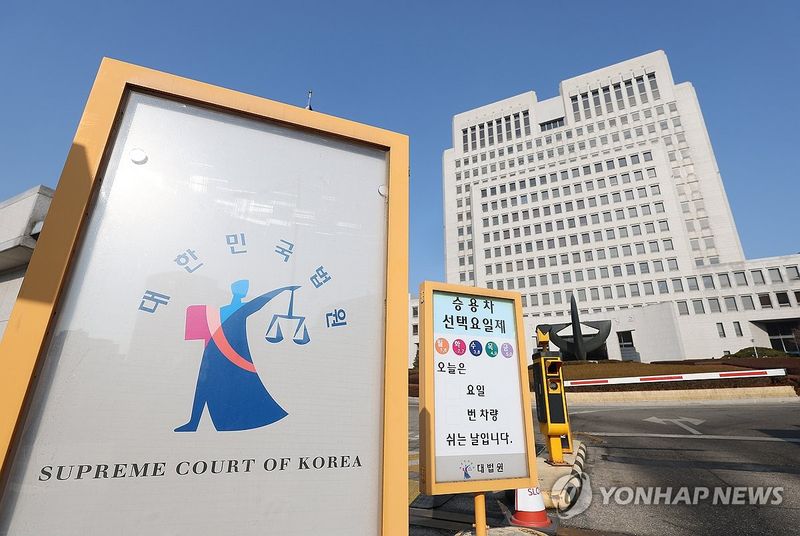
The First Petty Bench of the Supreme Court of Korea, with Justice Cheon Dae-yeob presiding, dismissed on the morning of the 1st all appeals filed by A, the former chairman of tire-mold manufacturer Saehwa IMC; his son, B, the former vice chairman; C, the former vice president; and the prosecution. It upheld the lower court ruling. The finalized sentences are two years and 10 months in prison, suspended for five years, for A; three years in prison, suspended for five years, and a fine of 1 billion won for B; and two years and six months in prison, suspended for four years, and a fine of 420 million won for C.
A and the others were indicted for siphoning off company funds from September 2006 to January 2018 through schemes including so-called "back margins," in which inflated transaction payments were returned to them; false advance payments to subcontractors; agent commissions paid through shell companies; and false salaries. C was also accused of creating slush funds after receiving 3 billion won as severance pay. The case was heard separately on embezzlement and tax charges. In February 2020, the first trial in the embezzlement case found all the charges proven and sentenced A to three years in prison, B to five years, and C to three years and six months.
The key issue was a supply contract with Jin Tech, which B operated under a borrowed name. The contract guaranteed a minimum monthly payment of 500 million won for five years, regardless of defects or quantity. A special-purpose company established by Jin Tech borrowed 23 billion won from eight financial institutions using the receivables under the contract as collateral. Prosecutors alleged that the actual monthly transaction amounted to only 200 million to 250 million won and charged the defendants with embezzlement, deeming the 10.679 billion won paid in 40 installments from October 2014 to January 2018 to be payments for fictitious transactions.
The two trial courts reached opposite conclusions about the same transaction. The first trial in the embezzlement case deemed it a fabricated transaction and handed down guilty verdicts, but the first trial in the tax case, in November 2023, found that the services had actually been provided and acquitted the defendants of the charges of receiving the related tax invoices. That court sentenced B to three years in prison, suspended for five years, and a fine of 3 billion won, and C to two years in prison, suspended for three years, and a fine of 800 million won.
The First Criminal Division of the Gwangju High Court, which consolidated the two cases, concluded on February 5 that the transaction was genuine. The panel stated, "As Saehwa entered into a contract with Jin Tech and Jin Tech performed the work required under the contract, the act of entering into a contract at the inflated price described above may be regarded as a breach of the defendants' duties in the course of their work or as an act violating the MONOPOLY REGULATION AND FAIR TRADE ACT by unfairly supporting a specific company. However, it appears difficult to regard the act as embezzlement."
The 1 billion won paid to a subcontractor through an electronic promissory note was also found not guilty. The court reasoned that issuing a note merely creates a liability for the issuer and does not itself cause money to leave the company, making it difficult to view the defendants as having appropriated the "property" that can be the object of embezzlement. The 724.44 million won in repair costs for Acro Country Club, a golf course operated by A, was also acquitted on appeal because it had been mixed with factory construction costs, making the amount impossible to determine.
The defendants were not found to have intentionally evaded value-added tax. The basis for this finding was that Saehwa had actually paid its counterparties amounts including VAT, while investigators had failed to verify whether those counterparties had paid the tax. Because the recalculated amount of corporate tax evasion based on the tax invoices for which guilty verdicts remained was less than 500 million won per year, the tax charges under the Act on the Aggravated Punishment of Specific Crimes were no longer established. B and C's fines were consequently reduced to 1 billion won and 420 million won, respectively.
The Supreme Court of Korea dismissed the prosecution's appeal, stating, "There was no error in violating the rules of logic and experience and exceeding the limits of the principle of free evaluation of evidence," nor was there "any error in misunderstanding the legal principles concerning the establishment of each offense, the recognition of reduced facts, or the relationship among offenses." The court also rejected the appeals filed by A and the others, which challenged joint criminal liability and their intent to unlawfully appropriate the funds. Eight years passed from their indictment in 2018 to the final ruling.
[email protected] Kim Dong-gyu Reporter