Daebong Life Science Achieves Series of Industry-Academia Collaboration Milestones with Incheon National University and Pusan National University
- Input
- 2026-10-01 11:07:10
- Updated
- 2026-10-01 11:07:10
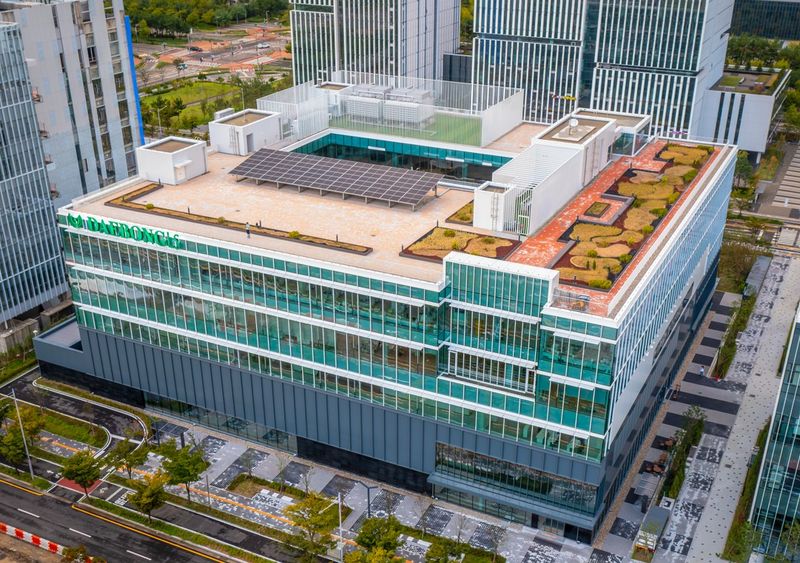
[Financial News] Daebong Life Science's beauty and biotechnology technologies developed through industry-academia collaboration are gaining recognition in domestic and overseas markets.
According to industry sources on the 1st, Daebong Life Science won the Minister of Education Award in the Technology Collaboration category at the 2026 Industry-Academia Collaboration Best Practices Competition. The award recognized the company's joint research on red cabbage-derived exosomes with the research team led by Lee Won-jong, a professor in the biotechnology program at Incheon National University.
Based on the foundational technologies developed with Lee Won-jong's research team, Daebong Life Science established platforms for the production, purification and analysis of plant-derived exosomes. After applying them to its own production infrastructure, the company expanded the technologies into industrial-scale-up processes and secured mass-production capabilities along with a quality-control system.
This enabled the company to launch the cosmetic ingredient 'Red Cabbage ExoSkin,' which uses extracellular vesicles (EVs) derived from red cabbage. The research conducted with Lee Won-jong's team was published in the SCI-indexed journal 'Journal of Industrial and Engineering Chemistry.'
Daebong Life Science also signed an exclusive supply agreement for 'Red Cabbage ExoSkin' with a leading domestic pharmaceutical company. It plans to supply the related technology to overseas markets through global distribution channels. The company also plans to apply the technology to next-generation biotechnology materials.
Earlier, Daebong Life Science secured new beauty technology through a collaboration with Pusan National University (PNU). Specifically, it developed technology for high-performance cosmetic ingredients using beta-glucan derived from the marine microalga Euglena.
The research was conducted as part of the Technology Development Program for the Localization of Marine Bio-industry Materials, led by the Ministry of Oceans and Fisheries and carried out by the Korea Institute of Marine Science and Technology Promotion. Daebong Life Science and PNU participated in the program as the lead institution and joint research institution, respectively.
Daebong Life Science was responsible for beta-glucan extraction and purification, its conversion into cosmetic ingredients, formulation, and efficacy and safety assessments. PNU collaborated by handling Euglena cultivation and production-process technology. These efforts led to the commercialization of 'Lipo β-glucan-U,' a nano-emulsion liposomal ingredient containing 35% beta-glucan extract.
A Daebong Life Science official said, "We will continue to identify differentiated beauty and biotechnology materials through industry-academia collaboration," adding, "We will expand commercialization so that our research achievements can lead to products and global markets."
[email protected] Kang Kyung-rae Reporter