"I'm Keeping My Pay-TV Subscription but Not Watching It... Deregulation and Service Improvements Urgently Needed"
- Input
- 2026-10-01 11:35:59
- Updated
- 2026-10-01 11:35:59
Keeping the Subscription While Watching on OTT
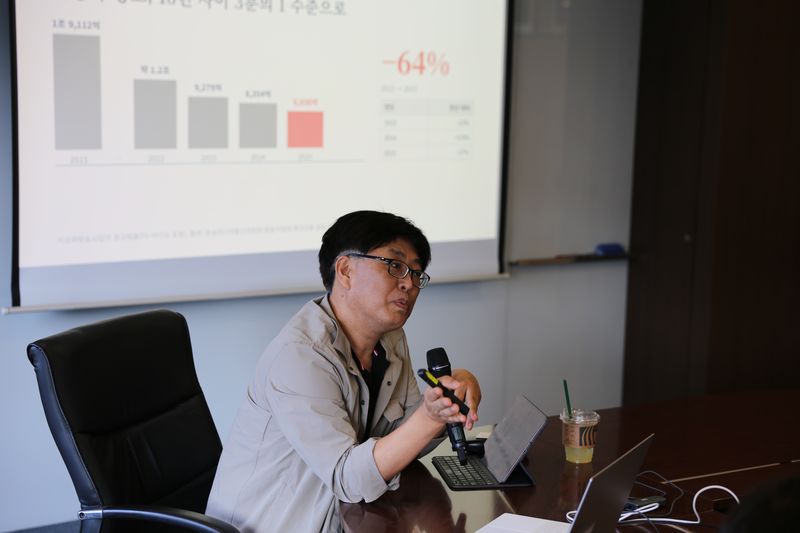
Youngshin Cho, CEO of the Media & Entertainment Research Institute C&X, emphasized at a seminar hosted by the Korea Cable TV Association on the afternoon of the 29th of last month, "We need to find out why people are not watching television."Cho described South Korea's pay-TV market as a "quasi-cord-cutting market." Cord-cutting refers to the phenomenon of canceling pay-TV subscriptions and switching to OTT services or other alternatives. He explained that while subscription cancellations have occurred on a large scale in North America, viewers in South Korea are leaving by keeping their subscriptions while no longer watching the services.
According to the Ministry of Science and ICT and other sources, the domestic pay-TV subscription rate is 97.5%, with 36.15 million subscribers in the second half of last year. By contrast, 36.4% of users watched OTT services on television sets, up 12.6 percentage points from a year earlier. The television screen remains the same, but the services consumed on it are shifting from traditional broadcasting to OTT.
Cho explained, "Although viewers have not canceled their subscriptions, the act of watching television itself is almost identical to what occurs in markets where cord-cutting has taken place. That is why advertising is disappearing."
Advertising revenue for terrestrial broadcasters reportedly fell by about 64%, from 1.9112 trillion won in 2015 to 693.6 billion won last year, combining television and radio. Cho said that increasing the number of products eligible for advertising or extending advertising hours would be unlikely to lead to a sustained recovery in revenue while viewership continues to decline.
He said, "Advertising is the shadow of viewership," adding, "Advertising exists only when there are viewers, yet regulations are being relaxed only for advertising while saying that viewers have left."
Cho ruled out a lack of content competitiveness as the main reason for viewers' departure. Domestic dramas that recorded low ratings on television can rank among Netflix's most popular titles, he noted, suggesting that the industry should examine why viewers consume the same content through different services.
"Pay-TV Is Less Convenient and More Expensive Than OTT"... Call for Joint Action by Platforms and Channels
Cho identified the competitiveness of pay-TV services as the key problem. He pointed out that pay-TV is less convenient than OTT in areas such as starting a program from the beginning after missing its scheduled start, video-on-demand (VOD) pricing and simultaneous viewing on multiple devices.He gave the example of turning on the television 15 minutes after a drama had started. In the past, viewers would watch from the middle and catch up on what they had missed through a rerun. Now, he said, they switch to TVING, Wavve's quick VOD services or Netflix to watch from the beginning.
Cho asked, "If you can watch something more cheaply and more quickly by using a streaming service, why should you have to watch it later and pay more on IPTV or cable?"
He identified conflicting interests between platform operators and programming providers (PPs) as the reason service improvements have been slow. Expanding start-from-the-beginning viewing or simultaneous viewing on mobile devices would require adjustments to content-use rights and revenue sharing, but the parties have been reluctant to act because they fear a decline in existing revenue.
Cho also regarded the characteristics of South Korea's market, where a subscription base remains in place, as a factor slowing change. If revenue from subscription-fee sharing remains stable even as advertising revenue declines, there is a strong incentive to stay in the existing market. As a result, the motivation to enter new markets such as free ad-supported streaming TV (FAST) is relatively weak.
Cho emphasized that platforms and channel operators must work together to change the service structure. They should allow viewers to watch a program from the beginning even when they join partway through, establish pricing that can compete with OTT and create a viewing environment accessible across multiple devices. He also proposed jointly calling for improvements to the technical standards and systems that obstruct these changes. The idea is to use deregulation to buy time, while improving services during that period so that policy measures can lead to a recovery in the market.
Cho said, "If we can buy two or three years, pay-TV operators and channel operators should join forces during that time and consider how to enhance the competitiveness of this service compared with OTT."
[email protected] Yoon Hong-jip Reporter