Treatment Made from Natural Ingredient 'Cassia Cinnamon' Hits the Market... Chong Kun Dang Targets the Gastritis Treatment Market
- Input
- 2026-10-01 10:35:08
- Updated
- 2026-10-01 10:35:08
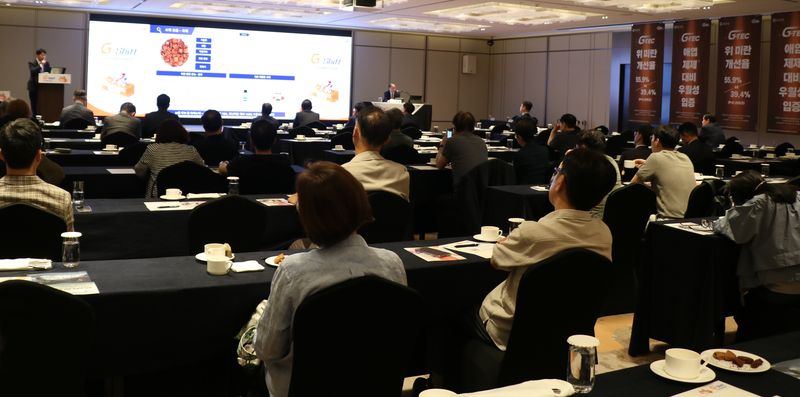
Chong Kun Dang said on Oct. 1 that it had held a launch symposium on Sept. 30 at the Parnas Hotel in Gangnam-gu, Seoul, to mark the release of its gastritis treatment G-Tec (G-TEC; active ingredient: dried cassia cinnamon extract). About 100 people, including gastroenterology specialists and other healthcare professionals, attended the event to discuss G-Tec's clinical results and potential as a treatment.
G-Tec is a natural-product drug developed using cassia cinnamon, a medicinal material made by drying the stem bark of the cassia tree in the Lauraceae family. While exploring various medicinal plant materials starting in 2013, Chong Kun Dang focused on cassia cinnamon's potential to treat gastritis. Through nonclinical studies, the company confirmed anti-inflammatory effects and enhanced gastric mucosal defense functions, including the promotion of gastric mucus secretion.
For natural-product medicines, maintaining consistent raw-material quality and active-ingredient content is considered a key challenge during development. Chong Kun Dang managed G-Tec's quality by developing its own extraction process to secure stable levels of active ingredients and controlling potentially harmful substances such as benzopyrene.
Clinical trials also confirmed its efficacy compared with existing gastritis treatments. In Phase 2, G-Tec showed an improved endoscopic efficacy rate compared with the placebo group and the groups treated with rebamipide and 95% ethanol soft extract of mugwort leaf.
Based on these findings, a Phase 3 trial evaluated its superiority over existing treatments. The trial was conducted in a randomized, double-blind, multicenter format among 242 Korean patients with acute or chronic gastritis who had gastric mucosal erosions confirmed by endoscopy.
The G-Tec group showed a statistically significant improvement in the primary endpoint, the endoscopic efficacy rate, compared with the active-control group given 60 mg of 95% ethanol soft extract of mugwort leaf. In particular, the odds ratio (OR) for improvement in gastric mucosal erosions was 2.25. This means that erosion improvement was more likely to occur in the G-Tec group than in the control group.
The secondary assessments also confirmed improvements in the G-Tec group in the erosion cure rate, as well as major endoscopic findings such as edema, erythema and bleeding, and in gastrointestinal symptoms. The safety assessment found no significant difference between the two treatment groups, and no serious adverse events or adverse drug reactions were reported.
Lee, Oh Young, a professor at Hanyang University Hospital, said, "Clinical trials confirmed G-Tec's ability to improve erosions and its treatment efficacy compared with major existing gastritis treatment ingredients. It is significant that, in addition to being a natural-product-derived medicine, G-Tec has clinical evidence demonstrating its superiority over the control drug."
Starting with the Seoul launch symposium, Chong Kun Dang plans to continue academic activities aimed at informing healthcare professionals about G-Tec's clinical results and treatment information.
[email protected] Jung Sang-hee Reporter