The Bill for Trump's Tariffs... Even Republican Strongholds Become Toss-Ups [U.S. Midterm Elections Through the Battlegrounds (4)]
- Input
- 2026-10-05 14:22:49
- Updated
- 2026-10-05 14:22:49
[Financial News, New York = Lee Byung-chul, correspondent] The bill for the tariffs Donald Trump has revived is landing in battleground states for the November midterm elections.
In Maine, Republican Senator Susan Collins, who has held her seat since 1996, is locked in an extremely tight race. Even Iowa, where Trump won by more than 13 percentage points in the 2024 presidential election, has shifted from a Republican-leaning Senate race to a toss-up. Ohio, part of the manufacturing belt, is also seeing a close contest involving a Republican incumbent.
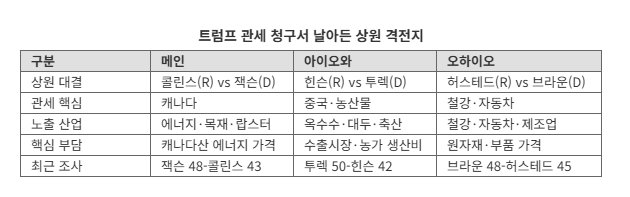
The three states have different industries, but tariffs are one of their common issues. Maine is tied to Canadian energy and local industries, Iowa to agricultural exports to China and farm production costs, and Ohio to steel and auto protection as well as the prices of raw materials and parts. The key question is how Trump's signature tariff policy will affect voter sentiment.
Even Collins, Who Held the Seat for 30 Years, Is Wavering... Canadian Tariffs Deliver a Direct Hit
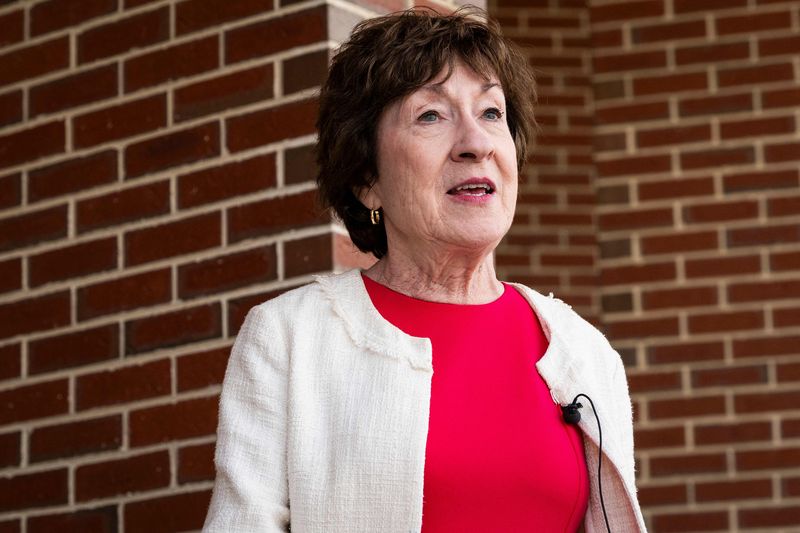
The most direct test is in Maine, where Republican incumbent Senator Susan Collins faces Troy Jackson, a Democrat and former president of the Maine Senate. Collins, who is seeking a sixth term, was first elected in 1996 and has never lost an election in 30 years.
The nonpartisan Cook Political Report has classified this election as a Toss Up. Recent polls have also produced mixed results. A University of Massachusetts Lowell-YouGov poll released on the 24th showed Jackson at 48% and Collins at 43%, while a poll by The New York Times (NYT) and Siena University put Collins at 49% and Jackson at 46%.
Maine is economically closely tied to Canada. According to foreign media reports citing data from the U.S. Census Bureau, 69% of Maine's imports and 41% of its exports in 2025 were linked to Canada. The state imports more than 80% of its heating oil and gasoline from Canada, and major industries such as blueberries, lobster and timber depend on cross-border trade.
After the United States imposed 50% tariffs on some Canadian products last month, Canada also introduced retaliatory tariffs. Even Collins, a Republican, criticized the U.S.-Canada tariff conflict as a "mistake" and voted four times against Trump's tariffs.
Even Iowa, Where Trump Won by +13 Percentage Points, Is a Toss-Up
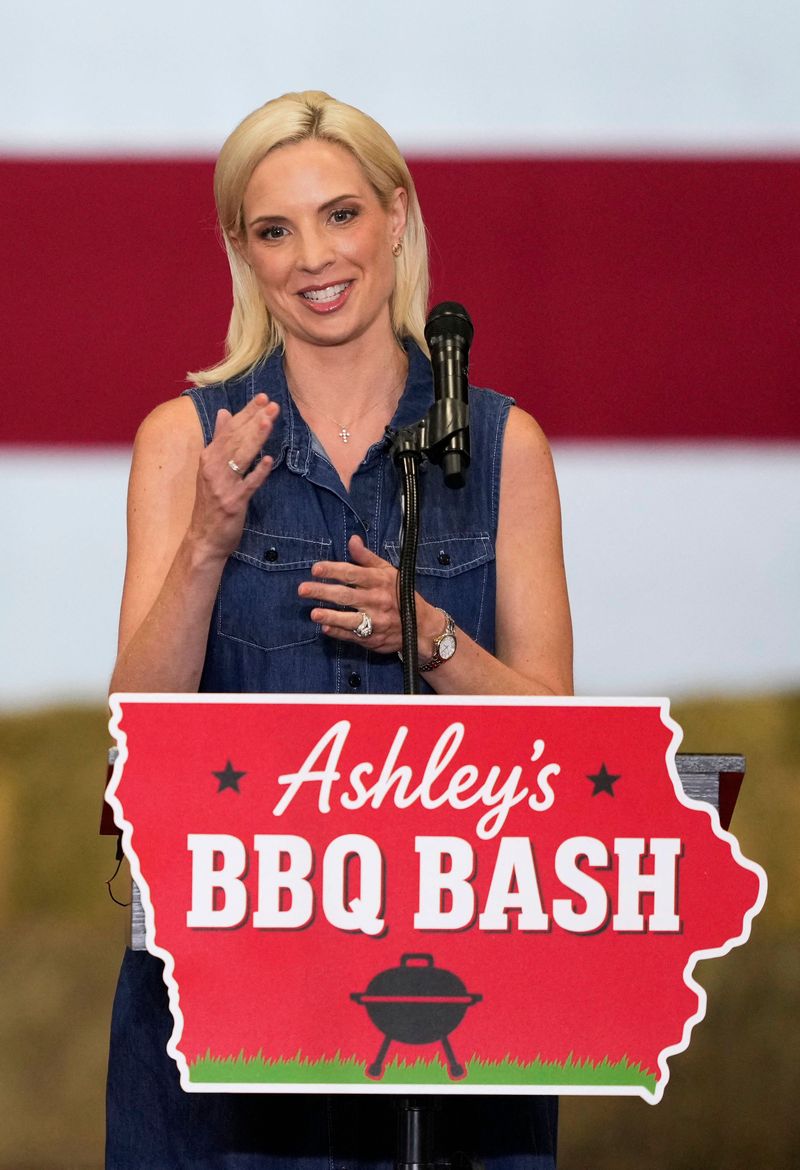
The change in Iowa is even more striking. Republican Representative Ashley Hinson and Democratic state Representative Josh Turek are competing for the vacant seat created by the retirement of Republican Senator Joni Ernst.
Trump won Iowa by more than 13 percentage points in 2024. However, the Cook Political Report changed its rating last month from Lean Republican to Toss Up. A Marist College poll released on the 22nd showed Turek at 50% and Hinson at 42%. Other polls have shown a narrower gap or Hinson in the lead, making the race close overall.
In Iowa, tariffs are closely tied to agriculture. China is a major overseas market for U.S. agricultural products. China has pledged to purchase at least $17 billion worth of U.S. agricultural products each year from 2026 through 2028, but uncertainty remains over actual purchases and future trade relations. Fuel costs have also risen amid the Iran war. For farmers who use diesel to operate agricultural machinery and trucks, that translates into higher production and transportation costs. Hinson recently said, "Iowans should not have to bear higher costs at gas stations and checkout counters because of the Iran war," and called for suspending the gasoline tax and restricting diesel exports.
Can Tariffs Save Factories? Ohio's Two Faces
Ohio is where the two sides of tariffs are most apparent. The state, where Republican Senator Jon Husted faces former Democratic Senator Sherrod Brown, has also been classified as a Toss Up by the Cook Political Report. A September YouGov-Bowling Green State University poll showed Brown at 48% and Husted at 45%, within the margin of error.
Ohio is a major part of the manufacturing belt. According to the U.S. Department of Labor, manufacturing employment stood at approximately 688,000 in August. The Office of the United States Trade Representative (USTR) reported that manufactured goods accounted for $53.2 billion of Ohio's $56.5 billion in goods exports last year. The rationale for high tariffs on steel and aluminum is to protect U.S. manufacturing. However, imported steel and auto parts are also raw materials needed for production at Ohio companies. This creates a situation in which tariffs can protect U.S. companies while simultaneously raising production costs.
Canada is Ohio's largest overseas market, accounting for $18.3 billion, or 32%, of the state's exports last year. The National Taxpayers Union Foundation (NTUF) estimated that additional tariffs imposed on imports into Ohio from 2025 through the second quarter of this year totaled approximately $11 billion. That amounts to $2,274 per household, although it does not represent the actual burden on each household.
The candidates' positions are not simply a matter of being for or against tariffs. Husted argues that U.S. manufacturing must be strengthened in response to unfair trade. Brown also opposes Trump's current tariff policy, but took a hard line on unfair trade involving Chinese steel and automobiles when he served as a senator.
In Maine, Iowa and Ohio, the same question is being raised through Canadian trade, agriculture and manufacturing, respectively. Which will voters feel more strongly: the protective effect of tariffs on U.S. industry, or the costs borne by companies, farmers and consumers?
[email protected] Lee Byung-chul, correspondent Reporter