Specialized long-term care hospital program for ALS patients to begin pilot operation in November
- Input
- 2026-10-01 16:35:21
- Updated
- 2026-10-01 16:35:21
[Financial News] A health insurance pilot project for specialized long-term care hospitals serving patients with ALS and other severe neuromuscular rare diseases will begin this coming November. The project aims to establish a separate reimbursement system so that patients dependent on ventilators or enteral feeding can receive stable medical, rehabilitation and long-term care services.
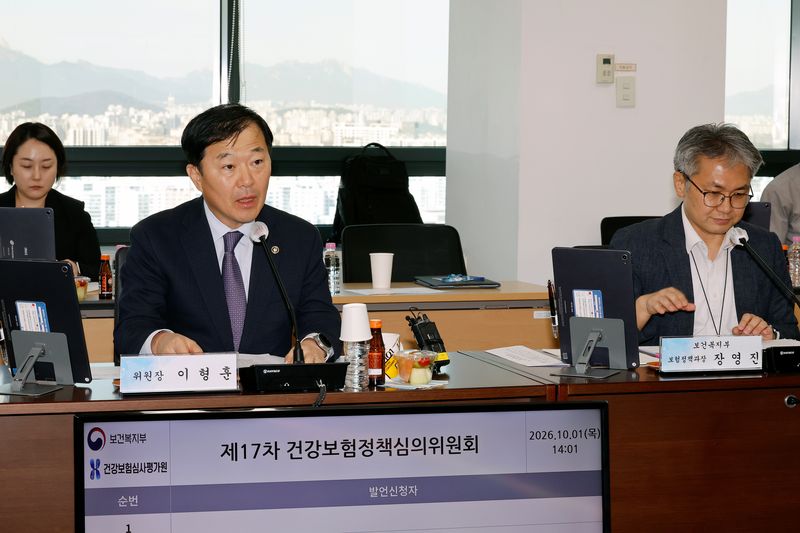
The Ministry of Health and Welfare held the 17th meeting of the 2026 National Health Insurance Policy Deliberation Committee on the first and received reports on a plan to launch the health insurance pilot project for specialized long-term care hospitals for patients with severe neuromuscular rare diseases, a draft implementation plan for follow-up subordinate legislation following the revision of the National Health Insurance Act, and the progress of the sickness benefit program and preparations for its full-scale implementation.
Introduction of Four Rare Disease-Specific Services
The pilot project is a follow-up measure to the 'First-Stage Innovation Plan for Health Insurance Coverage' announced on September 8. ALS and other severe neuromuscular rare diseases are progressive and difficult to treat. As the diseases advance, patients often become dependent on ventilators, tracheostomies or enteral feeding, requiring ongoing medical care as well as rehabilitation and long-term care services. MOHW determined that an appropriate reimbursement system reflecting the personnel and resources actually deployed was necessary.
The pilot project will operate four specialized services. These include a 'patient-tailored specialized care service,' in which a multidisciplinary team comprehensively assesses a patient's condition and provides customized medical care, nursing and caregiving, and communication support. It will also offer a 'short-term inpatient bed service' for patients who cannot return home immediately after acute treatment or who require medical management while receiving care at home.
The project will also operate an 'emergency response service' to detect and promptly address emergencies among inpatients in preparation for acute deterioration, such as respiratory muscle paralysis. A 'community linkage service' will connect patients with health management, life-sustaining treatment and family support to help them live in the community after discharge.
MOHW stated, "Through the pilot project, we will establish specialized long-term care services and a payment and reimbursement model for severe rare diseases, and lay the groundwork for easing the burden on patients and their families."
Defining Public Policy Benefits for Regional, Essential and Public Healthcare
The National Health Insurance Policy Deliberation Committee also received a report on a plan to implement subordinate legislation under the National Health Insurance Act, which was revised in May this year and will take effect next January, to strengthen regional, essential and public healthcare.
The revised Act adds the standards and costs of public policy benefits to matters requiring a resolution by the National Health Insurance Policy Deliberation Committee. It also provides for differentiated payments by region and medical institution for the costs of continuously providing health insurance benefits. In addition, it establishes a legal basis for paying public policy benefit costs through contracts to maintain the healthcare functions of regional, essential and public institutions and promote cooperation among medical institutions.
The meeting also discussed adding 'disaster response' to the public policy objectives.
The discussions covered defining 'disaster response' as a public policy objective, performance-based reimbursement for health insurance benefit costs, specifying percentage-based or fixed-amount differentiated reimbursement methods, and the types of public policy benefits that include institution-level compensation. Based on the discussions, MOHW plans to draft amendments to the subordinate legislation and gather public input, including through a legislative notice, later this month.
Sickness Benefit Pilot Moves Toward Full-Scale Program
The committee also discussed the progress of the sickness benefit pilot project, which has been underway since July 2022, and preparations for its full-scale implementation. Sickness benefit is a system that supports people who are unable to work because of a non-work-related injury or illness so they can receive timely treatment and return to their jobs. The pilot is currently operating in eight local governments, including Dalseo-gu in Daegu; Anyang-si and Yongin-si in Gyeonggi Province; Iksan-si and Jeonju-si in North Jeolla Province; Chungju-si in North Chungcheong Province; Hongseong County in South Chungcheong Province; and Wonju-si in Gangwon Province.
An evaluation of the pilot project found that it encouraged vulnerable workers, including those at small businesses with fewer than 30 employees, to take time off and had positive effects on recipients' timely use of medical services and reduction of financial insecurity. MOHW plans to build the systems needed for the full-scale program, establish a legal basis and gather opinions from stakeholders and experts on key issues.
MOHW stated, "We will make every effort to prepare for the full-scale program so that sickness benefit becomes an established system enabling people to receive sufficient treatment when they are ill, recover their health and return to work on time."
[email protected] Jeong Myeong-jin, medical correspondent Reporter