One Month After High-Speed Rail Integration, Average Daily Passengers Rise 11.9%
- Input
- 2026-10-01 11:00:00
- Updated
- 2026-10-01 11:00:00
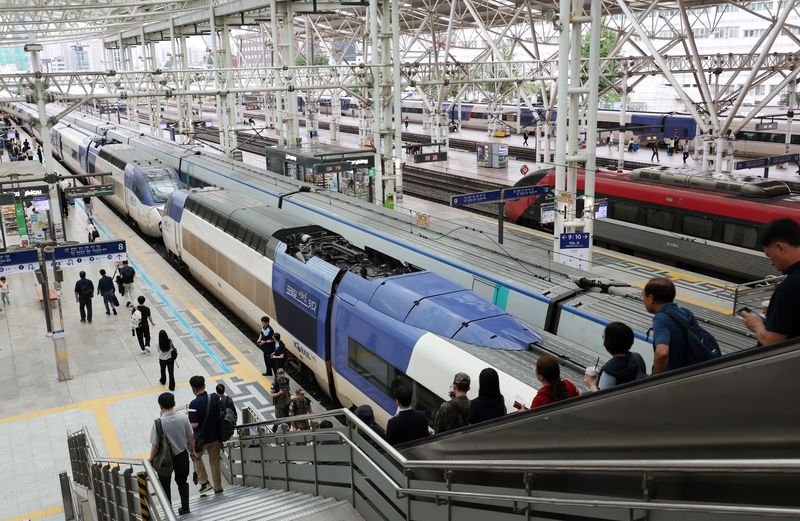
According to the Ministry of Land, Infrastructure and Transport (MOLIT) on the 1st, high-speed rail began integrated operations on September 1.
From September 1 to 27, average daily passengers increased by 11.9% from a year earlier, while passengers using the Suseo corridor rose by 27.8%. During the Chuseok peak travel period, 8.8% more seats were provided than during last year's Chuseok holiday.
In particular, Suseo Station expanded its seat capacity by about 16,000 seats, or roughly 30%, and added 10 services. As a result, the passenger-to-seat ratio fell by 4 percentage points, easing ticket shortages and train overcrowding, according to the analysis.
Weekday services increased by 23, while weekend services rose by 26. Average service intervals on the Jeolla Line, Donghae Line and Gyeongjeon Line were shortened by four minutes, and new routes via Seodaejeon Station and Gupo Station were introduced. The number of daily commuters and students using regular passes increased by 25.2%.
Membership in the integrated booking application KORAIL+ has reached about 20 million. MOLIT and Korea Railroad Corporation (KORAIL) plan to continue improving inconveniences that arise while using the app.
As part of the integration, high-speed rail fares were reduced by about 10%, and mileage benefits were introduced for KTX-Sancheon trains departing from Suseo. Public discounts for groups including pregnant women and young people were also expanded. September transportation cost savings totaled about 22.8 billion won and are projected to reach approximately 280 billion won on an annual basis.
As transfer discounts between high-speed and conventional rail were expanded to all high-speed trains, average daily transfer passengers increased by 64.9% from a year earlier, or by about 3,700 people. The number of foreign high-speed rail passengers rose by 79.5% year on year as of August.
Further improvements will be pursued to make rail travel more convenient for foreign visitors. Starting this month, the ticket-booking window was extended from one month before departure to two months, and foreign-language services are planned to expand from seven to 10 languages.
The safety management system will also be integrated. Separately operated safety management systems will be combined to prevent and manage risk factors comprehensively. In an emergency, response capabilities will be strengthened so that available resources in the rolling stock, facilities and electrical sectors can be deployed quickly under a single command structure.
Information systems at stations and on trains will also be reorganized to make them easier for passengers to understand. Measures will be pursued to improve regional mobility by organically connecting high-speed and conventional rail with connecting transportation, including buses.
On September 23, five KORAIL subsidiaries were reorganized into three specialized companies responsible for customer service, distribution and logistics, and maintenance. The integrated subsidiaries are pursuing 10 service-improvement initiatives, including introducing buy-one-get-one and buy-two-get-one-free promotions at Storyway convenience stores in railway stations.
MOLIT and KORAIL presented “One Railway, Changing People's Daily Lives” as their future vision. They plan to create a nationwide one-hour living zone by expanding track capacity and introducing new trains, while also expanding K-Rail's overseas presence based on operating and maintenance capabilities that include their subsidiaries.
Meanwhile, MOLIT and KORAIL will hold an event commemorating the rail integration at Seoul Station on the 2nd. They will announce the achievements of the first month of high-speed rail integration, the effects of integrating the subsidiaries, and their future vision for the railway industry. About 100 people, including the minister and executives and employees of KORAIL and its subsidiaries, will attend the event.
Hong Ji-seon, Minister of Land, Infrastructure and Transport, said, "The integration of high-speed rail and the subsidiaries is a meaningful achievement that fulfills a promise to the people as a core task of the government of popular sovereignty," and urged, "Together with KORAIL, I hope all employees of the Integrated Business Management Division (formerly SR) and the railway corporation's subsidiaries will write a new chapter in the history of Korea's railways with the pride and sense of responsibility of being 'one team' (One-Team)."
[email protected] Choi Ga-young Reporter