From Nursing and Health Care to AI and Eco-Friendly Industries: Women’s Junior Colleges Train Female Talent for New Industries
- Input
- 2026-10-01 09:22:36
- Updated
- 2026-10-01 09:22:36
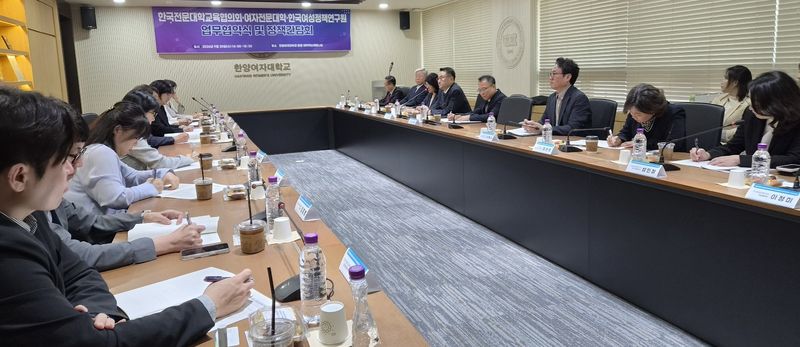
[Financial News] Seven women’s junior colleges nationwide, the Korean Council for University College Education (the council), and the Korean Women’s Development Institute (KWDI) are joining forces to train female talent in emerging industries such as artificial intelligence (AI) and eco-friendly fields. The initiative aims to expand women’s junior college education beyond service, nursing, and health care programs, helping young people find jobs and preventing career interruptions.
The council announced on October 1 that it had signed a memorandum of understanding (MOU) with seven women’s junior colleges nationwide—Kyung-in Women’s University, Baewha Women’s University, Busan Women’s College, Seoul Women’s College of Nursing, Suwon Women’s University, SoongEui Women’s College, and Hanyang Women’s University—and the Korean Women’s Development Institute at Hanyang Women’s University in Seoul on September 30.
Under the agreement, the participating institutions will jointly develop programs to strengthen young women’s employment and entrepreneurship skills. They will also work together on policy support to expand junior college graduates’ opportunities to enter the workforce and prevent career interruptions.
At a meeting held after the signing ceremony, participants agreed that the education system must be reformed to reflect changes in the industrial structure. They emphasized that women’s junior college education should expand beyond traditional service and health care fields into advanced areas such as AI, information and communications technology (ICT), and eco-friendly industries in response to the era of digital transformation and population decline.
Kim Young-do, chairman of the Korean Council for University College Education, said, "In a rapidly changing digital era, the role of female professionals with practical skills is becoming increasingly important." He added, "We will support women’s junior colleges in strengthening their competitiveness so that their graduates can grow into key talents who lead future industries."
Kim Jong-suk, president of the Korean Women’s Development Institute, also expressed optimism, saying, "Cooperation with junior colleges that provide field-oriented vocational education will lead to effective policies for young women and employment policies promoting gender equality."
The institutions plan to establish a working-level consultative body to pursue specific areas of cooperation. They will also continue joint projects to improve the rights and interests of junior college graduates and help them enter the workforce.
[email protected] Kim Man-ki Reporter