Japan Raises Permanent Residency Fee 20-Fold; Income and Pension Reviews Tightened
- Input
- 2026-10-01 09:29:03
- Updated
- 2026-10-01 09:29:03
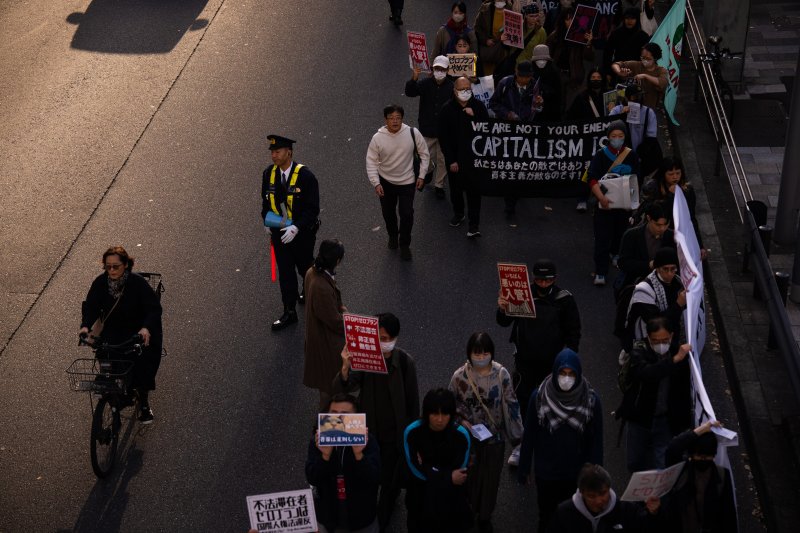
【Financial News Tokyo—Correspondent Seo Hye-jin】Japan has raised the fee for foreign nationals seeking Permanent Residency 20-fold this month and tightened the income requirements. Authorities will assess whether applicants can continuously maintain income above the average for Japanese households. From next year, they will also examine expected pension benefits and Japanese-language proficiency. The move raises both the financial burden and the screening threshold for foreign nationals seeking to settle in Japan long term.
According to The Asahi Shimbun and Japan Broadcasting Corporation (NHK) on the 1st, the Japanese government raised the Permanent Residency fee from 10,000 yen, approximately 86,200 won, to 200,000 yen, approximately 1.72 million won, effective that day. Fees for changing residence status and renewing periods of stay were also increased at different rates depending on the length of stay.
Previously, applications filed at a government counter cost 6,000 yen, approximately 51,700 won, while online applications cost 5,500 yen, approximately 47,400 won. Going forward, applicants with a one-year period of stay will have to pay 33,000 yen, approximately 284,500 won, at a counter or 27,000 yen, approximately 232,700 won, online.
For stays of five years or longer, the fees will rise to 75,000 yen, approximately 646,500 won, for counter applications and 65,000 yen, approximately 560,000 won, for online applications. For stays of three months or less, the fee will be 10,000 yen, approximately 86,200 won, regardless of the application method.
The new fees apply to applications accepted from that day onward. Partial reductions will be available for people facing financial difficulties, including those who have been recognized as refugees.
The guidelines for Permanent Residency have also been revised. The key change is that the ability to support oneself, which had previously been defined in abstract terms, will now be assessed using specific income criteria. The previous guidelines only required applicants to have "sufficient assets to support themselves independently," among other conditions.
The new guidelines assess whether a household's annual income has consistently reached a level above the average income of Japanese households. The income of the applicant and family members who share the household's livelihood will be combined, including family members living overseas. The benchmark is the average income of Japanese households based on the number of household members.
According to the Ministry of Health, Labour and Welfare (MHLW), the average income for all households is approximately 5.8 million yen, or about 50 million won. However, this amount will not be applied uniformly to all applicants; they must meet a benchmark based on the number of household members. The income requirement also applies to applications filed after April this year that have not yet been processed.
From next April, reviews of pensions and assets will also be strengthened. Authorities will check whether the applicant's projected future pension benefits would reach the amount that could be received after 30 years of enrollment in Employees' Pension Insurance at that income level, as well as whether the applicant has assets to cover any shortfall. Japanese-language proficiency at the intermediate B1 level, sufficient to understand key information in daily life and communicate basically, will also be considered.
In its comprehensive foreigner policy measures announced last January, the Japanese government said there were cases in which people failed to meet livelihood requirements after receiving Permanent Residency and announced plans to tighten the screening process. In response, the Immigration Services Agency of Japan released a revised draft last August.
A total of 8,030 comments were submitted during the public consultation on the revised draft. The Immigration Services Agency of Japan nevertheless retained the draft, saying the changes were necessary to properly operate the Permanent Residency system.
[email protected] Seo Hye-jin Reporter