Half a Century After Alaska Gas Field Discovery ... Oil Majors Pull Out Over Lack of Commercial Viability
- Input
- 2026-10-01 09:26:24
- Updated
- 2026-10-01 09:26:24
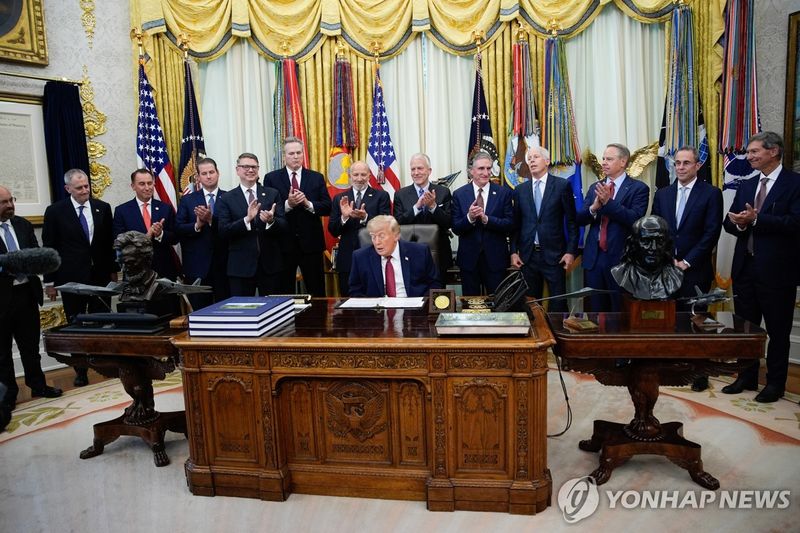
[Financial News] Although the administration of U.S. President Donald Trump announced on the 30th (local time) that more than $50 billion (approximately 68 trillion won) in South Korean investment funds would be directed to the Alaska liquefied natural gas (LNG) project, skepticism prevailed in the United States over the project's prospects for delivering economic returns.
The Alaska LNG project has been a priority for President Trump, who has repeatedly raised the possibility of investment from South Korea and Japan since taking office. Even within the U.S. industry, questions have been raised about its commercial viability because of the enormous construction costs and concerns over price competitiveness.
The project involves transporting natural gas produced on Alaska's northernmost North Slope through an approximately 800-mile (1,300-kilometer) pipeline to the southern port of Nikiski, where it will be liquefied and supplied to customers in the United States and overseas markets, including Asia.
The project aims to produce up to 20 million metric tons of LNG annually. Total costs are estimated at $44.5 billion to $54.5 billion (approximately 60 trillion to 74 trillion won). The plan calls for a final investment decision (FID) on the gas pipeline this year, an FID on the export facilities next year, and the first LNG exports in 2031.
Development Delayed for Half a Century Since the Gas Field Was Discovered in 1968
The FID on the gas pipeline was initially targeted for the end of last year but was postponed until this year. The delay came after Glenfarne Group, the U.S. energy infrastructure developer leading the project, failed to secure the targeted volume of LNG purchase agreements.
Brendan Duval, CEO of Glenfarne Group, said at the White House announcement event that day, "Pipeline construction will take three years, and we can begin construction as soon as financing is secured."
Duval forecast that Alaska could begin receiving inexpensive gas three years after construction starts, followed by the launch of LNG exports roughly two years later.
Plans to develop natural gas in northern Alaska have continued for more than half a century since the gas field was discovered in 1968.
The project gained momentum in 2014 as global oil majors, including ExxonMobil, BP and ConocoPhillips, joined it. However, the companies withdrew in 2017 because of the enormous costs and concerns over its economic viability. Controversy over environmental pollution and ecosystem damage also continued.
The Alaska Gasline Development Corporation (AGDC), an entity under the state of Alaska, subsequently continued the project. Glenfarne joined in March last year by acquiring a 75% stake in AGDC subsidiary 8 Star Alaska, which holds the project's assets. AGDC retains the remaining 25%.
Harsh Arctic Conditions and 1,300 Kilometers of Pipeline Make Economic Viability a Challenge
The Alaska LNG project is considered difficult to make economically viable because construction conditions are challenging due to frigid weather and frozen ground. It also requires the construction of a 1,300-kilometer pipeline, gas fields and liquefaction facilities.
The project, which had been delayed for decades, regained momentum after President Trump returned to the White House.
Shortly after taking office in January last year, President Trump issued an executive order designating Alaska LNG development as a top priority. He also directed officials to pursue the sale and transportation of the LNG produced there to other parts of the United States and Pacific allies.
Commerce Secretary Howard Lutnick also said in October last year that Alaska natural gas pipelines and related projects were included in South Korea's $200 billion strategic investment in the United States.
In January, President Trump also said, "We have started the Alaska pipeline project to export natural gas to Asia," emphasizing that he had "secured an unprecedented level of funding" through trade agreements with South Korea and Japan.
On the 2nd, while expressing his intention to visit Alaska to support a candidate for the U.S. Senate, he also said, "Japan and South Korea are there," suggesting that the two countries were heading to Alaska to help build the pipeline and pursue related projects.
Announcing South Korea's U.S. investment projects, including the Alaska LNG project, President Trump highlighted the initiative as an achievement of his own, saying, "For the last 50 years, politicians have been talking about the Alaska pipeline. I have heard about it since I was a little boy."
As the Trump administration accelerated efforts to advance the project, South Korean companies also continued exploring ways to participate.
In December last year, POSCO International signed a strategic partnership heads of agreement (HOA) with AGDC and Glenfarne. Under the agreement, it would purchase 1 million metric tons of Alaska LNG annually for 20 years, while POSCO would supply the steel needed to build the pipeline. An HOA is an agreement on key terms reached before a definitive contract.
One advantage of the project is that the shipping distance from Alaska to East Asia is shorter than the distance from LNG terminals on the U.S. Gulf Coast.
Gas pipeline construction costs alone: $13.2 billion to $16.9 billion (approximately 18 trillion to 23 trillion won)
Reuters reported that the LNG supply volume agreed upon so far with companies from South Korea, Japan, Taiwan, Thailand and France, among others, totals 13 million metric tons annually. However, the project must secure an additional 3 million metric tons and convert the existing agreements into binding contracts to obtain financing.
The fact that most of the supply agreements secured so far are non-binding has also fueled questions about whether sufficient commercial demand actually exists.
The enormous upfront investment is another burden for companies. Pipeline construction alone is estimated to cost $13.2 billion to $16.9 billion (approximately 18 trillion to 23 trillion won). As a large-scale infrastructure project, any significant cost overruns could raise LNG prices and reduce its price competitiveness.
Policy continuity is another variable for a project that will take years, given that U.S. policy on Alaska's resource development has changed with each administration. If the project is delayed and LNG production and supply do not proceed as originally planned, South Korea's LNG procurement plans based on long-term purchases could also be disrupted.
Secretary Lutnick said that South Korea would invest more than $50 billion in the Alaska LNG project, but the South Korean government maintains that it will proceed with the project only if its commercial viability is confirmed.
[email protected] Lee Seok-woo, International Affairs Specialist Reporter