1-2 → 1-2 → Korea again... Japanese media also cried, “Third time’s the charm”: “We will pour out all our pent-up frustration” [Nagoya Asian Games]
- Input
- 2026-10-01 10:30:00
- Updated
- 2026-10-01 10:30:00
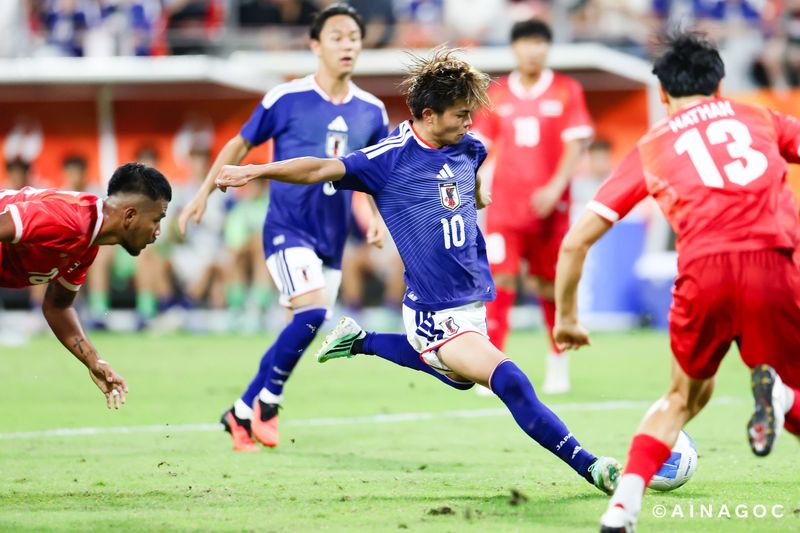
[Financial News] The Asian Games men’s football final will be a Korea-Japan matchup for an unprecedented third consecutive tournament. South Korea, seeking an unprecedented fourth straight title, and Japan, hoping to avenge its defeats in the previous two finals on home soil, will meet in a do-or-die showdown.
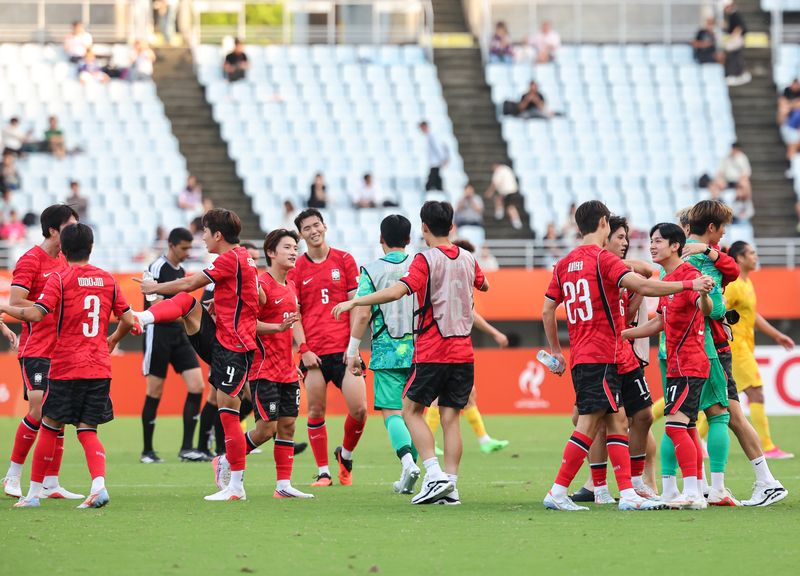
South Korea’s national under-23 football team defeated China 2-1 in the men’s football semifinal of the 2026 Aichi-Nagoya Asian Games on the 30th to advance to the final first. In the other semifinal, Japan drew 1-1 with Uzbekistan through extra time before securing its place in the final after a grueling penalty shootout, in which all 20 players from both teams took kicks. Japan prevailed 9-8.
As a result, men’s football at the Asian Games has produced an unprecedented Korea-Japan final for three consecutive tournaments, following the 2018 Jakarta-Palembang Asian Games and the 2022 Hangzhou Asian Games.
Japanese football is already boiling with a desire for revenge. Japan lost both of the previous two finals to South Korea by a 1-2 score and had to settle for silver medals. In 2018, Japan collapsed after conceding consecutive goals to Lee Seung-woo and Hwang Hee-chan following a tense extra-time battle. In 2022, Japan took the lead just two minutes into the match but suffered a comeback defeat after conceding consecutive goals to Jeong Woo-yeong and Jo Young-wook.
Japanese football outlet Gekisaka wasted no time expressing its anticipation after the final matchup was confirmed, writing, “A Korea-Japan final for three straight tournaments! Will this be third time’s the charm?” The outlet highlighted Japan’s painful history of losing 1-2 to South Korea in two consecutive tournaments and emphasized the chance to avenge those defeats on home ground.
Gō Ōiwa, who leads the Japan national team, was also fired up for the decisive showdown. Immediately after South Korea was confirmed as the final opponent, Ōiwa declared, “I want to properly pour out all the frustration I have felt over the years.” Midfielder Yuto Ozeki, who had just endured the penalty-shootout battle, also stated, “I definitely want to win and finish the tournament as champions.” For Japan, this is the ideal stage to reclaim the gold medal for the first time in 16 years since the 2010 Asian Games in Guangzhou and wash away the painful memories of two defeats.
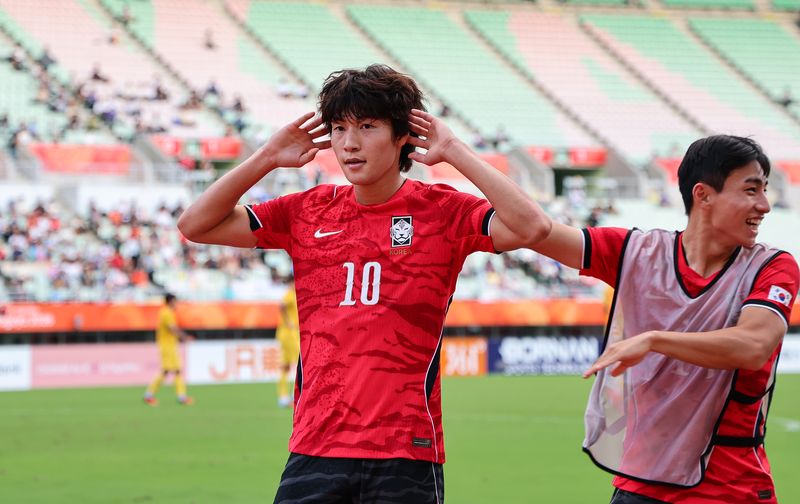
But Lee Min-sung’s team has even greater motivation. South Korea has remained at the top of Asian football since the 2014 Asian Games in Incheon. If it wins the final, it will achieve the unprecedented feat of winning the same tournament four consecutive times—an accomplishment rarely seen in the history of world football. South Korea’s attack has reached its peak, with Europe-based players such as Lee Young-jun and Bae Jun-ho overcoming China’s deep defensive block and the controversy over biased officiating through their individual quality.
South Korea’s defense is seeking an unprecedented fourth consecutive title, while Japan’s attack aims to repay its “two 1-2 defeats.” The final 90-minute showdown to determine the dominant power in Asian football is fast approaching.
[email protected] Jeon Sang-il Reporter