Ruling Democratic Party distances itself from Trump's Alaska LNG investment announcement, saying, "It is not confirmed"
- Input
- 2026-10-01 09:02:47
- Updated
- 2026-10-01 09:02:47
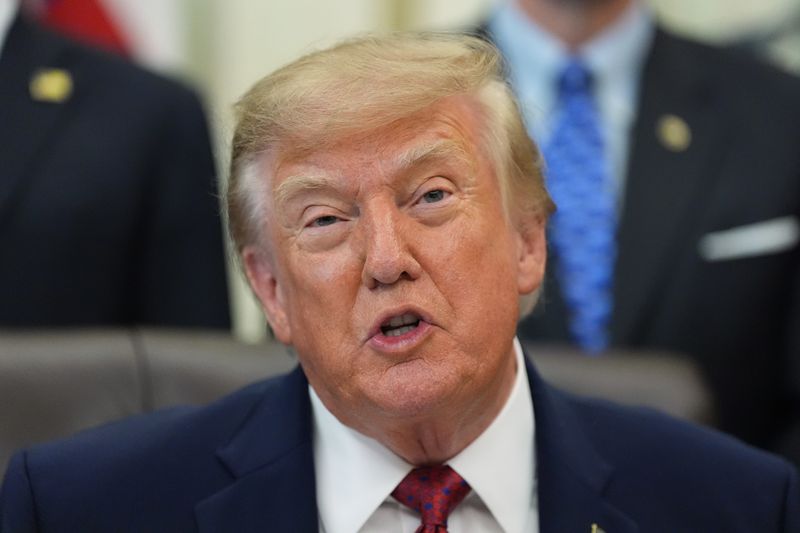
Han Jeoung-ae, secretary-general of the Democratic Party of Korea, categorically stated on social media on the 1st, "Investment in the Alaska LNG Project has not been finalized." Regarding President Trump's remarks, she said, "They are understood as emphasizing the U.S. position on the Alaska LNG Project." She continued, "We will decide whether to invest only after sufficiently reviewing the Alaska LNG Project in accordance with domestic legal procedures and the principle of commercial rationality," adding, "Our government has consistently treated commercial rationality as the core principle in reviewing investment projects in the United States."
Oh Gi-hyoung, the Democratic Party's ranking member on the National Assembly Finance and Economic Committee, emphasized that National Assembly approval is required to pursue a project whose commercial viability has not been secured. Oh stated, "The standard for deciding on investments in the United States is 'commercial rationality.'" He added, "The U.S. government must also propose a project structure that has commercial rationality."
Oh Gi-hyoung particularly cited an exception clause in the Korea–U.S. Strategic Investment Special Act. Although securing commercial rationality is the principle for investments in the United States, a project lacking commercial viability may proceed if unavoidable circumstances, such as national security or supply chain stability, exist. In such cases, however, the government must obtain the consent of the relevant National Assembly standing committee before beginning consultations with the United States. Oh stressed, "Our government must also present the grounds for determining whether a project has commercial rationality," adding, "The National Assembly will review and decide based on whether commercial rationality has been established."
Park Ji-hye, a member of the National Assembly's Trade, Industry, Energy, SMEs, and Startups Committee, warned that the Alaska LNG Project could become a stranded asset in the long term. Park stated, "If natural gas demand declines faster than expected in the future, we must also consider the possibility that the project could become a stranded asset because its massive investment costs cannot be recovered."
The Alaska LNG Project is a large-scale project that would transport natural gas from the North Slope in northern Alaska through an approximately 1,300-kilometer pipeline to Nikiski in the south, liquefy it there, and export it to Asian markets.
Regarding the $54 billion cited by President Trump, Park Ji-hye assessed, "It almost matches the total investment amount for the entire Alaska project that has been discussed so far, suggesting that it reflects the hope that South Korea will take responsibility for the investment." She emphasized, "In light of long-term global and Asian LNG demand forecasts, we must carefully assess whether the project will be commercially viable as infrastructure that will operate for more than 30 years."
[email protected] Song Ji-won and Kim Hyeong-gu Reporter