Adult endoscope used to unblock a child's bile duct... successful in 9 out of 10 cases [Health Check]
- Input
- 2026-10-01 09:05:09
- Updated
- 2026-10-01 09:05:09
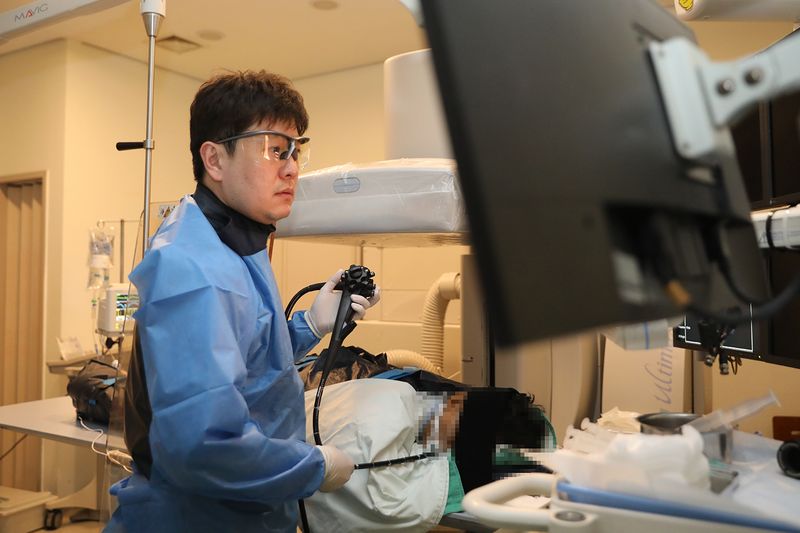
[Financial News] Few medical institutions are equipped with pediatric duodenoscopes. As a result, adult endoscopes are often used to treat children with blocked bile or pancreatic ducts. A study has analyzed the success rate and safety of this approach over 14 years.
A team led by Lee Tae-seung of the Department of Gastroenterology at Inje University Ilsan Paik Hospital analyzed 153 cases of endoscopic retrograde cholangiopancreatography (ERCP) performed with adult duodenoscopes on 82 patients under the age of 19 between 2011 and 2024. The team reported that the planned treatment was successfully completed in 91.5% of cases. The findings were published in a recent issue of the international journal BMC Pediatrics.
Children can also develop conditions requiring treatment, including stones in the bile or pancreatic ducts and narrowing of the ducts. In such cases, ERCP is performed by inserting an endoscope through the mouth to the duodenum, accessing the bile and pancreatic ducts, removing stones, widening narrowed sections, and inserting stents. However, the procedure is more difficult in children because they are smaller than adults and have narrower bile and pancreatic ducts.
The success rates by age group were 89.3% for children aged 1 to 6, 86.4% for those aged 6 to 12, and 95.1% for those aged 12 to 19. Notably, 28 ERCP procedures were performed on children aged 1 to 6, confirming the medical team's experience using adult duodenoscopes in young children.
The most common suspected condition leading to ERCP was bile duct stones, at 18.3%, followed by recurrent pancreatitis at 10.5% and bile leakage at the biliary anastomosis site after liver transplantation at 9.2%. Overall, 89.5% of the procedures were performed for therapeutic purposes rather than simple diagnosis.
However, the risk of complications after the procedure required caution. Adverse events occurred in 30.1% of all procedures, with post-ERCP acute pancreatitis being the most common complication at 14.4%. The analysis found that younger patients faced a higher risk of developing acute pancreatitis after the procedure. By contrast, there were no serious outcomes, such as severe complications requiring intensive care, organ failure, surgery, or death.
The research team stressed that the findings do not mean adult duodenoscopes can be used for every pediatric patient.
Lee Tae-seung said, "If a pediatric duodenoscope is available, it should be considered first. When dedicated equipment is unavailable, the decision to use an adult endoscope should be based on a comprehensive assessment of the patient's age and body size, the type of disease, and the expected difficulty of the procedure."
He added, "Because younger patients may face a higher risk of acute pancreatitis after the procedure, their condition should be thoroughly evaluated beforehand, and close attention should be paid to airway management during the procedure. It is also important to closely monitor patients afterward for any signs of complications."
[email protected] Jung Myung-jin, Medical Correspondent Reporter