Daegu Metropolitan City Pulls Out All the Stops to Address the Imbalance in Housing Demand and Supply
- Input
- 2026-10-01 10:07:47
- Updated
- 2026-10-01 10:07:47
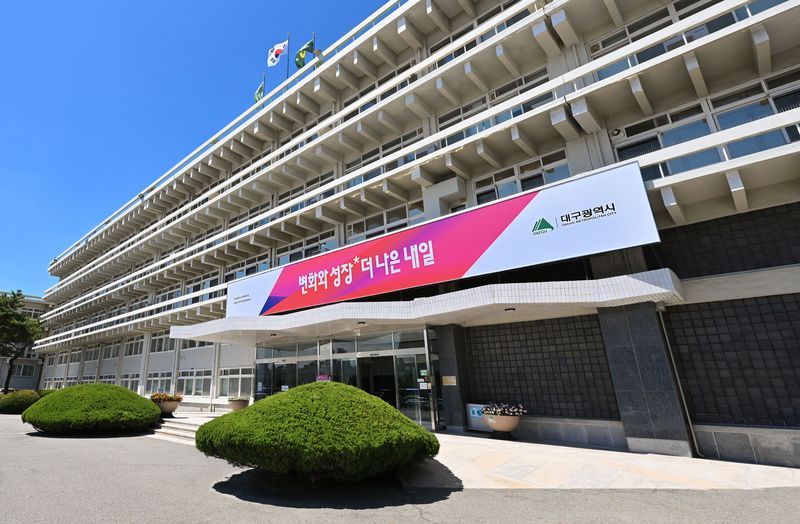
【Financial News, Daegu—Reporter Kim Jang-wook】Daegu Metropolitan City is pulling out all the stops to address the imbalance between housing demand and supply.
To that end, Daegu Metropolitan City has prepared comprehensive measures, including lifting the hold on approvals for new housing-construction projects and providing a package to revitalize redevelopment projects.
On the 1st, Mayor Choo Kyung-ho chaired the 6th Emergency Economic Measures Meeting at Daegu Architectural Association Hall and announced the "Daegu Housing Market Normalization Plan," a comprehensive policy designed to respond proactively to concerns about a housing supply shortage, including a decline in unsold homes and a sharp drop in the number of homes available for occupancy.
First, the city will lift the hold on approvals for new housing-construction projects and return to normal project-approval procedures for the first time in three years and eight months since late January 2023. However, to prevent another surge in unsold homes, it will comprehensively review location, scale and infrastructure conditions and approve mainly high-quality housing. It will also consider canceling approvals for projects that have remained unbuilt for a long time, if necessary.
Starting this month, the city will also expand integrated reviews so that sequential reviews, which previously took 20 to 90 days per committee, can be handled at once. The previous process of going through the architecture, landscape and transportation committees in sequence typically took more than one year and six months. By using integrated reviews, the city expects to shorten the process by up to about one year.
For general buildings, integrated reviews will cover three fields—architecture, landscape and transportation. For housing-construction projects, the coverage will expand from five to eight fields by adding fire protection, disaster prevention and education. For redevelopment projects, it will expand to nine fields: architecture, landscape, transportation, urban planning, urban renewal, environment, education, fire protection and disaster prevention.
Moreover, sunlight-review standards for multi-unit housing have been applied differently—100% for redevelopment projects and 80% for private-sector projects. By November, the standard will be unified at 80%, matching that for private-sector projects.
Mayor Choo emphasized, "We have managed housing supply in Daegu's housing market in response to unsold homes and other factors, but now is the time to respond proactively to concerns about a supply shortage. Through these measures, we aim to ensure a stable supply of high-quality homes that residents want, while also invigorating the local construction industry."
Daegu Metropolitan City will also devise measures to encourage greater participation by local companies in housing-construction projects expected to increase in the future. To improve project feasibility when local companies participate, the city will provide redevelopment projects with a floor-area-ratio incentive of 43 percentage points, among the highest levels nationwide. It will also reduce public contributions for aging planned-city projects according to participation rates.
In addition, projects involving local companies will be subject to integrated reviews to significantly shorten review periods, and Daegu Metropolitan City plans to actively encourage a local subcontracting participation rate of at least 70%.
The city also plans to convey to the central government requests in areas such as finance and taxation that local governments cannot resolve on their own, including a further deferment of the third phase of the stress DSR system for non-metropolitan areas, currently set at 0.75%, which has been temporarily deferred through December.
[email protected] Kim Jang-wook Reporter