"Launch of Serious Crime Investigation Agency Increases Total Volume of Corporate Investigations"... Competition Among Investigative Agencies Expected
- Input
- 2026-10-01 08:59:03
- Updated
- 2026-10-01 08:59:03
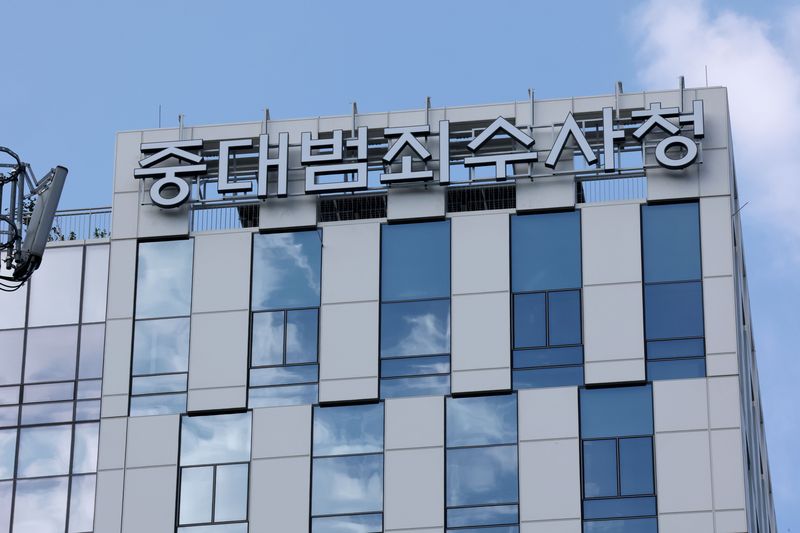
[Financial News] A major law firm has predicted that the total volume of criminal investigations targeting corporations could actually increase following the abolition of the Prosecutor's Office and the launch of the Serious Crime Investigation Agency and the Public Prosecution Office. The analysis suggests that as the Prosecutor's Office's direct investigation function disappears, investigative agencies such as the Serious Crime Investigation Agency, the police, the Financial Supervisory Service's special judicial police, and the Fair Trade Commission will operate independently, potentially leading to investigative competition among agencies.
Corporate Criminal Litigation Risk Expected to Increase
Kim Hu-gon, Managing Partner of Lee & Ko, emphasized at a seminar on the revised Criminal Procedure Act held on the 29th of last month at the Hanjin Building in Jung District, Seoul, that "the launch of the Serious Crime Investigation Agency represents a significant change to the investigation system." He added, "The police and the Serious Crime Investigation Agency may engage in investigative competition to strengthen their status as investigative agencies, and as the total volume of investigations increases accordingly, the risk of criminal litigation for companies could also grow."Representative Kim, a former Chief Prosecutor of the Seoul High Public Prosecutors' Office, paid particular attention to the organizational scale of the Serious Crime Investigation Agency and the expansion of personnel in the finance and fair trade sectors. According to the organizational plan released by the government last month, the Serious Crime Investigation Agency will launch with a structure consisting of a headquarters and six regional offices, with a total staffing of 2,874, of which 2,567 are investigators alone. 1,089 personnel will be assigned to the Seoul Regional Office.
Representative Kim predicted, "The roles of various investigative agencies, including not only the Serious Crime Investigation Agency but also the police, the Fair Trade Commission, and the Financial Supervisory Service's special judicial police, are expanding simultaneously," adding that "this will place a significant burden on companies."
Lee & Ko predicted that following the abolition of the Prosecutor's Office, the core of the response to corporate criminal cases would shift from the existing linear structure of 'police-prosecution-court' to a model encompassing multiple investigative agencies and the Public Prosecution Office.
Attorney Cha Ho-dong predicted, "While the existing structure involved the prosecution reviewing a case and deciding whether to indict after a police investigation, going forward, the Serious Crime Investigation Agency, the police, and various special judicial police forces will each initiate investigations independently," adding, "The very process of where a case begins and which agency it moves to will become more complex."
Attorney Cha emphasized that, particularly in corporate criminal cases, not only the outcome of the case but also the so-called "track of the investigation" must be designed from the very beginning. He explained, "In the future, criminal defense will become more about designing the pace and trajectory of the case than simply resolving it," adding, "From the early stages of the investigation, one must anticipate which agency the case will go to and how the Public Prosecution Office will make a judgment, and respond accordingly."
Small economic crimes can escalate into major financial scandals.
It has also been raised that investigations in the financial and fair trade sectors could significantly increase following the launch of the Serious Crime Investigation Agency.
Referring to the fact that departments related to financial crimes and fair trade account for a significant portion of the Serious Crime Investigation Agency, Attorney Cha stated, "As the number of personnel increases, the total volume of investigations is bound to increase," adding, "It is necessary to anticipate and prepare for an expansion of investigations in the fields of finance and fair trade."
He added, "When we think of corporate crime, we first think of violations of the Capital Markets Act or the Fair Trade Act, but in reality, investigations often start with general economic crimes such as fraud and embezzlement," and predicted, "There is a possibility that cases starting with small economic crimes could expand into violations of the Capital Markets Act or major financial crimes."
Analysis suggests that the role of the Public Prosecution Office will not simply be reduced following the abolition of the Prosecutor's Office.
Attorney Cha stated, "The identity of prosecutors at the Public Prosecution Office is shifting from being the primary investigator to a role that reviews and controls the results of investigations by investigative agencies," adding that "the function of judicial control may actually become more important in processes such as requesting warrants, deciding not to forward cases, and demanding supplementary investigations."
There are also predictions that the speed of investigations in serious accident cases could accelerate.
Attorney Hong Jeong-yeon emphasized that with the abolition of prosecutors' investigative command authority over special judicial police, labor inspectors can now file charges without a prosecutor's supervision. She stated, "Previously, there were processes such as preliminary investigations and prosecutor supervision before filing charges, but these stages could be reduced in the future," adding that "there is a possibility that the speed of filing charges and referral for serious accident cases will accelerate."
However, there are also predictions that the prosecutor's 'guidance and advice' system could effectively function similarly to existing investigative command. Attorney Hong explained, "There are still aspects that have not been specifically determined, such as under what circumstances a prosecutor can provide guidance and advice ex officio."
Companies, Response from Initial Investigation is Crucial
Observations have been raised that the timing of the initiation of investigations in the field of financial crimes could be brought forward.
Referring to the abolition of the prosecution's investigative command authority and the expansion of the investigative scope of the Financial Supervisory Service's special judicial police, Attorney Cheon Jae-in assessed that "there is a possibility that the total volume of investigations by the Financial Supervisory Service's special judicial police will increase significantly in the future." He particularly noted that coercive investigations, such as search and seizure, could be carried out starting from the stage of the financial authorities' investigation into unfair trading.
Attorney Cheon stated, "In the past, parties could anticipate the possibility of becoming targets of future investigation by providing explanations during the Financial Supervisory Service investigation process, but recently, cases of search and seizure are occurring from the investigation stage itself," adding, "It is necessary to respond as if it were a criminal case from the moment the Financial Supervisory Service requests the submission of materials."
Jeong Gyu-jong, a senior expert at Lee & Ko who worked at the Financial Supervisory Service for 29 years, also advised, "While Financial Supervisory Service investigations may appear to be administrative procedures, the content of the investigations often leads to actual criminal investigations," adding, "It is necessary to closely examine what materials and statements are requested during the initial investigation stage."
The legal community anticipates that corporate response structures will change significantly as investigative powers are dispersed from a single agency to multiple agencies following the abolition of the Prosecutor's Office. In particular, analysts suggest that if the Serious Crime Investigation Agency, the police, the Fair Trade Commission, and the Financial Supervisory Service's special judicial police expand their investigative capabilities regarding corporate, financial, and fair trade cases, companies must prepare for situations where a single incident leads to investigations by multiple agencies.
[email protected] Yoo Seon-jun Choi Eun-sol Reporter