U.S. House China Committee: “Closer South Korea–China ties pose a serious risk to the United States”—letter sent to the United States Department of State (State Department) [Lee Seok-woo’s Global 24]
- Input
- 2026-10-01 07:18:27
- Updated
- 2026-10-01 07:18:27
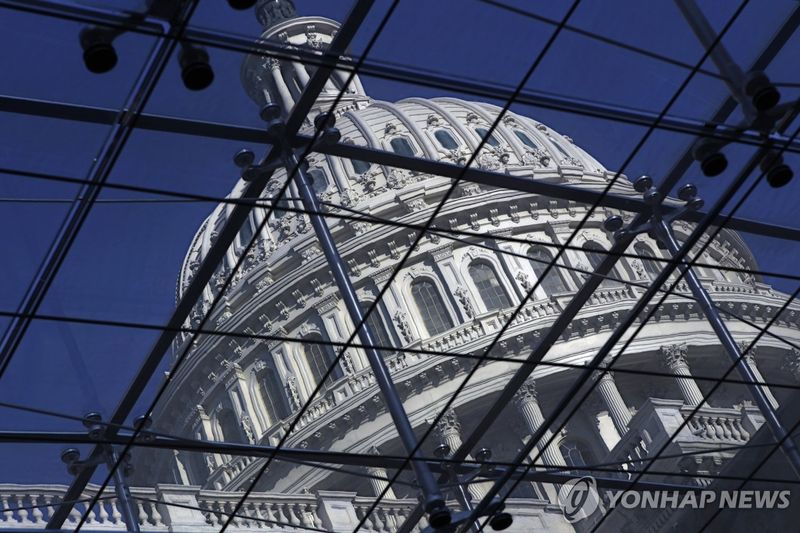
[Financial News] The U.S. Congress has begun moving to counter closer South Korea–China ties, arguing that South Korea is drawing closer to China and that action is needed.
According to U.S. congressional sources and other reports on the 30th of last month (local time), John Moolenaar (R-Mich.), chair of the House Select Committee on the Strategic Competition between the United States and the Chinese Communist Party, argued in a letter sent on the 28th of last month to Secretary of State Marco Rubio that “recent shifts in South Korea’s economic, technological and diplomatic posture toward China pose a serious risk to the United States.”
He wrote, “The U.S.–South Korea alliance remains indispensable. Precisely for that reason, close monitoring is required to assess whether friction between the two countries could develop into a structural shift in South Korea’s alignment, along with concerted action if necessary.”
The letter expressed concern over the unprecedented pace of high-level exchanges between South Korea and China over the past nine months, citing Chinese President Xi Jinping’s visit to South Korea last November and President Lee Jae Myung’s visit to China this January.
It voiced particular concern about the Chinese semiconductor plants operated by Samsung Electronics and SK hynix.
The letter stated, “Samsung’s NAND memory facility in Xi’an, SK hynix’s DRAM processing in Wuxi, and its NAND production in Dalian represent serious points of leverage for the Chinese Communist Party over the alliance’s global supply chains.”
It also argued that South Korea was discriminating against U.S. companies in favor of Chinese firms. The claim was that Chinese platforms such as AliExpress and Temu were not being properly regulated, while Coupang was being subjected to excessive restrictions.
Chairman Moolenaar argued, “When South Korea experienced a low-sensitivity data incident in which financial information or passwords were neither compromised nor exfiltrated, 11 South Korean regulatory agencies launched an aggressive, multifaceted offensive.”
He also criticized South Korea’s increase in defense spending and its efforts to transfer wartime operational control, both undertaken at the request of the Donald Trump administration, saying, “These measures have been publicly framed not as expanded contributions to the alliance, but as a reduction in dependence on the United States.”
Chairman Moolenaar added, “I request that appropriate State Department officials brief us by October 31 on developments in South Korea–China relations and the administration’s response.”
The letter was also sent for reference to Secretary of War Pete Hegseth, Secretary of Commerce Howard Lutnick, and U.S. Trade Representative Jamieson Greer of the Office of the United States Trade Representative (USTR).
[email protected] Lee Seok-woo, international affairs correspondent Reporter