"The PCE Price Index Couldn't Stop It": U.S. Treasury Yields Continue to Rise as Markets Closely Watch Employment Trends
- Input
- 2026-10-01 04:14:05
- Updated
- 2026-10-01 04:14:05
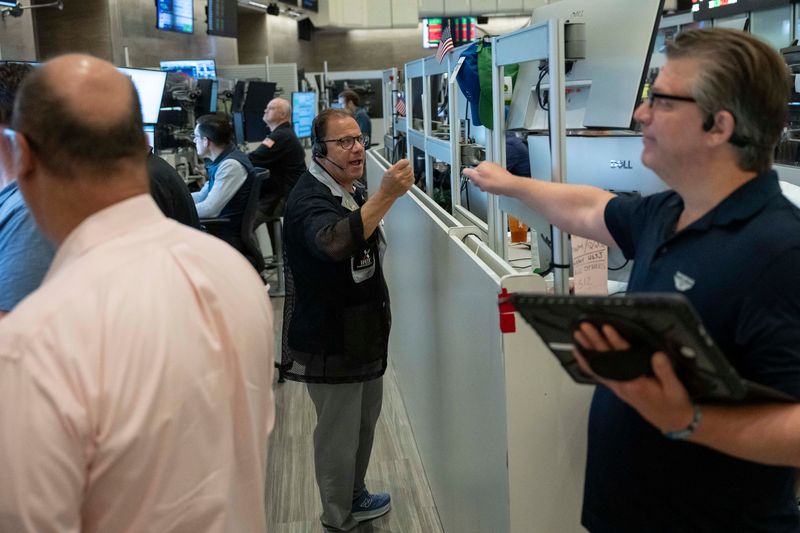
U.S. Treasury yields reversed their early weakness on the 30th of last month and turned higher again.
The United States Department of Commerce's August personal consumption expenditures (PCE) price index, released in the morning, came in below expectations. Treasury selling was subdued at first, but the trend later changed. Bond yields move inversely to prices.
The yield on two-year Treasuries, which reflects market expectations for Federal Reserve System (Fed) interest rates, fell 0.004 percentage points from the previous session to 4.855%.
By contrast, the yield on 10-year Treasuries, which serves as the global benchmark interest rate, rose 0.038 percentage points to 5.293%, while the yield on 30-year Treasuries, a long-term benchmark, jumped 0.046 percentage points to 5.64%.
Yields on 10-year and 30-year Treasuries continued to record their highest levels in 19 and 24 years, respectively.
The early market trend was different.
The PCE price index, the inflation gauge preferred by the Fed, rose 0.3% month over month and 3.4% year over year. Both figures were below market expectations. According to CNBC, economists in a Dow Jones survey had forecast increases of 0.3% and 3.7%, respectively.
The core PCE price index, which excludes energy and food to reduce monthly volatility, also rose 0.2% month over month and 3% year over year, below market forecasts of 0.3% and 3.3%, respectively.
Markets were initially encouraged by signs that U.S. inflation was lower than feared.
Christopher Rupkey, chief economist at Forward Bonds (FWDBONDS), said in an analysis note, "The actual inflation fire in August was not as hot as the market had expected," adding, "Investors reassessed exactly how much the Fed would have to raise interest rates to bring inflation down, and Treasury yields underwent an adjustment as well."
The market initially breathed a sigh of relief, but concerns over September employment data sent it lower again.
According to the ADP private-sector employment report released that day, the September labor market was hotter than expected. Rising employment can put pressure on wage growth and fuel inflation.
Markets expect the September employment report, to be released by the United States Department of Labor on the 2nd, to show that 84,000 new jobs were added during the month.
Meanwhile, expectations for another rate hike at this month's Federal Open Market Committee (FOMC) meeting on the 27th and 28th retreated rapidly.
According to CME Group's CME FedWatch Tool, the probability of an additional 0.25-percentage-point hike plunged to 37.1% from 70.9% a week earlier. By contrast, the probability of a hold rose sharply to 62.9% from 29.1% over the same period.
[email protected] Song Kyung-jae Reporter