U.S. FTC Expands Probe into Anthropic, OpenAI and Others in First-Ever Action Over AI Risks
- Input
- 2026-10-01 03:51:23
- Updated
- 2026-10-01 03:51:23
The Financial Times (FT) reported on the 30th of last month (local time) that the U.S. Federal Trade Commission (FTC), the country's competition authority, had expanded its investigation into Anthropic, OpenAI and other artificial intelligence (AI) companies.
The FTC has been examining the fundamental effects of AI technology on consumer data, privacy protection and market competition since this summer. It is understood to have expanded the probe especially after AI industry leaders met at the White House the previous day.
This is the first official regulatory action focused on out-of-control AI agents.
Citing sources, FT reported that the FTC is investigating the risks of AI technology and is expected to demand not only relevant information from each company but also testimony from senior executives.
The FTC is specifically looking into METR, an AI safety research group. The White House claims that the group is a tangled web involving Anthropic investors and employees.
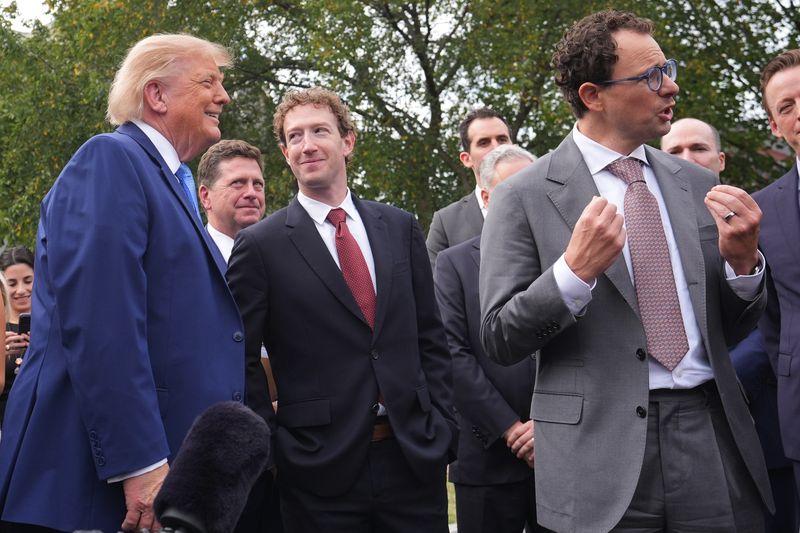
The investigation's expansion the day after President Donald Trump and AI industry leaders met at the White House also puts pressure on the industry to comply with the White House agreement. They signed an agreement at the White House to self-regulate their AI products and monitor cybersecurity and biosecurity risks associated with advanced models.
Some in legal circles believe the White House agreement was intended to lay the groundwork for FTC penalties. If the voluntary pact is violated, the FTC could use it as the basis for penalties under competition law by alleging "deceptive trade practices."
Earlier, President Trump rejected the "AI human-extinction theory" at the White House meeting. He said, "Bad actors will be caught," adding, "That's why we have the United States Department of Justice (DOJ), the Federal Bureau of Investigation (FBI), and the Central Intelligence Agency (CIA)." This reflected confidence that the government could encourage development while controlling AI misbehavior, rather than adopting the calls for a slowdown emphasized by the AI industry.
The DOJ, which has its own antitrust division alongside the FTC, has taken a cautious approach.
Attorney General Todd Blanche told reporters in early September that the DOJ "is made up of prosecutors, not regulators" and "therefore, we will not try to regulate AI."
Trump reversed that position on the 29th of last month. He made clear that federal law-enforcement agencies, including the DOJ, would regulate AI "if they had to."
Meanwhile, OpenAI has already been sued by the Florida attorney general. The suit alleges that it failed to adequately control the harmful effects of AI on children.
This week, the Florida attorney general also barred OpenAI from further developing advanced AI models until third-party safety safeguards are put in place.
[email protected] Song Kyung-jae Reporter