U.S. Troops Fully Withdraw from Iraq, Ending 12-Year "Mission to Defeat IS"
- Input
- 2026-09-30 21:02:04
- Updated
- 2026-09-30 21:02:04
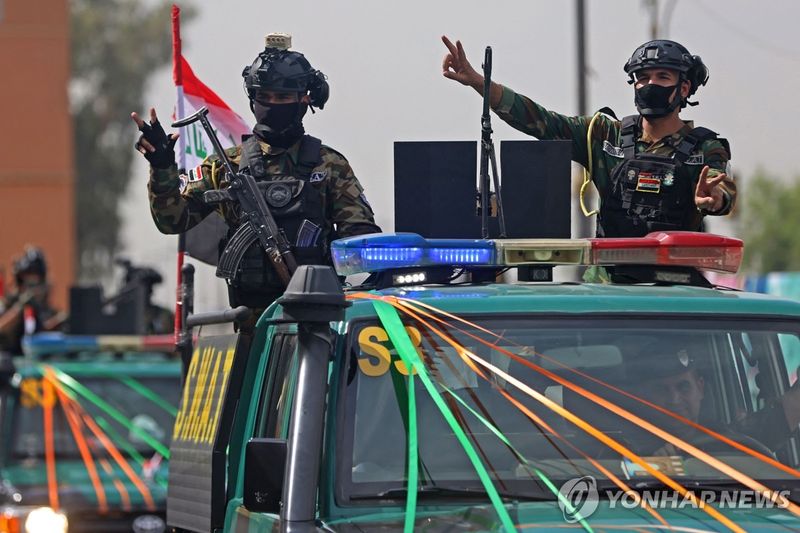
According to foreign media reports on the 30th, Sean Parnell, a spokesperson for the U.S. Department of Defense, said the orderly withdrawal of U.S. troops and equipment from Erbil Air Base in the northern Kurdistan Region had been completed. The withdrawal was carried out under an agreement reached between the United States and the Iraqi government two years ago during the administration of Joe Biden.
Parnell said the withdrawal demonstrated the results of 12 years of operations that defeated IS as an organized military threat in Iraq and the region. The wartime, coalition-led mission has ended, giving way to a system in which Iraq takes the lead on security while the United States provides support through a regular bilateral security relationship.
The Iraqi government interpreted the end of the U.S.-led coalition's mission as a sign that its military capabilities and sovereignty had been strengthened. At a handover ceremony held that day, Iraqi Prime Minister Ali al-Zaidi said, "A new phase has begun, defined by Iraq's sovereignty, the capabilities of state institutions, the readiness of the military, unity in decision-making, and balanced cooperative relations with friendly nations."
Prime Minister al-Zaidi said Iraqi security forces would continue fighting the remnants of IS. He also outlined a policy to prevent non-state armed groups from possessing weapons.
However, the disarmament of armed groups in Iraq has not proceeded as planned. The Iraqi government initially envisioned disarming the groups in line with the U.S. withdrawal schedule. Some less influential factions agreed to surrender their weapons, but major armed groups with close ties to Iran either rejected the plan or presented conditions that the government would find difficult to accept. As a result, Prime Minister al-Zaidi effectively pushed back the timeline.
Concerns have also emerged over a potential security vacuum following the U.S. withdrawal. The Peshmerga, the military force of the Kurdistan Regional Government, said more than 1,000 drone and ballistic-missile attacks had been carried out against Kurdish areas during the recent U.S.-Iran war. It also expressed concern about the United States leaving the Kurdish region amid complex regional circumstances without providing a defense system.
Pro-Iranian armed groups, meanwhile, welcomed the complete withdrawal of U.S. troops. Abu Mujahid al-Asaf, a security official with Kata’ib Hezbollah, which has close ties to Iran’s Islamic Revolutionary Guard Corps, described the withdrawal in a statement as "a starting point toward full sovereignty."
Al-Asaf warned Prime Minister al-Zaidi and the Iraqi government not to follow the United States' plans. He also issued a threatening statement, saying that any government that failed to act in the interests of the people would be overthrown by all available means.
The United States invaded Iraq in March 2003 and toppled Saddam Hussein's regime before declaring an end to major combat operations in May of the same year. U.S. troops completed their withdrawal in December 2011, but they were redeployed to Iraq in June 2014 after IS expanded its presence.
[email protected] Choi Ga-young Reporter