[Editorial] Even Freedom of Expression Cannot Cross the Wall of Truth
- Input
- 2026-09-30 18:38:10
- Updated
- 2026-09-30 18:38:10
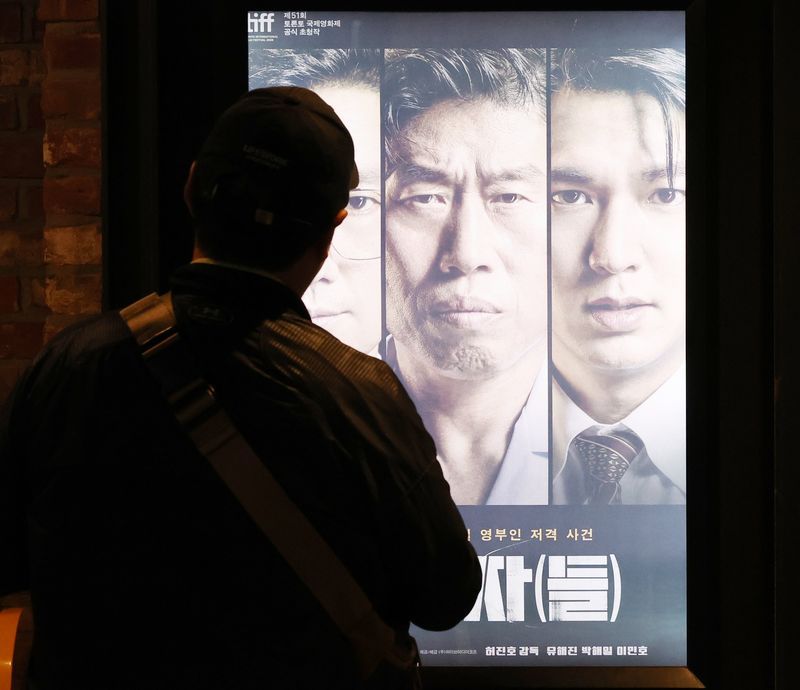
The investigation and trial conclusively established that the shooting of Yuk Young-soo was carried out by Mun Se-gwang, a second-generation Korean resident in Japan. That is the truth. By suggesting that Park Chung Hee's side or the Korean Central Intelligence Agency (KCIA) may have planned the incident, the film clearly distorted the truth. The production company claimed, "We have not presented the hypotheses and dramatic settings in the film as historical facts," but that argument comes close to sophistry.
Freedom of expression in literature and film must be guaranteed. That is why prosecutors who conducted a preliminary investigation into the novel 'Taebaeksanmaek' amid controversy that it praised leftists, partisans, and the People's Army concluded in 2005, under the Roh Moo-hyun administration, that there was no wrongdoing. However, freedom of expression is not unlimited. It does not include the right to distort facts as they are—in other words, the truth. Truth must be respected as the one and only absolute value.
Director Hur Jin-ho, who made the film, has previously distorted history in another movie: 'Princess Deokhye.' There is no denying that Princess Deokhye became a victim of an arranged marriage, but she never participated in an anti-Japanese independence movement or established a Korean-language school as depicted in the film. Although she was kept under surveillance, she lived comfortably with assistance from the Japanese colonial authorities. Princess Deokhye did return to Korea to attend her mother's funeral, but the film portrayed her as having never set foot on Joseon soil. The truth was distorted for dramatic effect.
The realm of artistic imagination should be limited to matters for which facts and truth cannot be known because no records or evidence remain. Fictionalizing a person or event about which almost no records exist cannot be called distortion. However, denying truths documented in records or photographs is no different from spreading fake news.
Emotion derived from lies has no meaning. Nothing is more precious than the truth. If denying the truth damages the reputations of those involved, it is clearly a violation of statutory law. In that regard, there is no reason to oppose or block 'Assassin(s)' from facing legal judgment after a complaint has been filed against it.
It would be undesirable for this controversy to escalate into a left-right ideological dispute or a political confrontation. However, the testimony of a North Korean defector that the film's content closely resembles that of the North Korean propaganda film 'Nation and Destiny' deserves careful consideration. This issue should be viewed not through an ideological lens, but solely by the standard of seeking the truth. If a film were made claiming that North Korean troops were involved in the May 18 Democratization Movement, it too would rightly face criticism for distorting the truth.