"United States, Japan and Europe Agree to Establish Joint Monitoring System for Chinese Steel Rerouted Through Third Countries"
- Input
- 2026-09-30 18:41:31
- Updated
- 2026-09-30 18:41:31
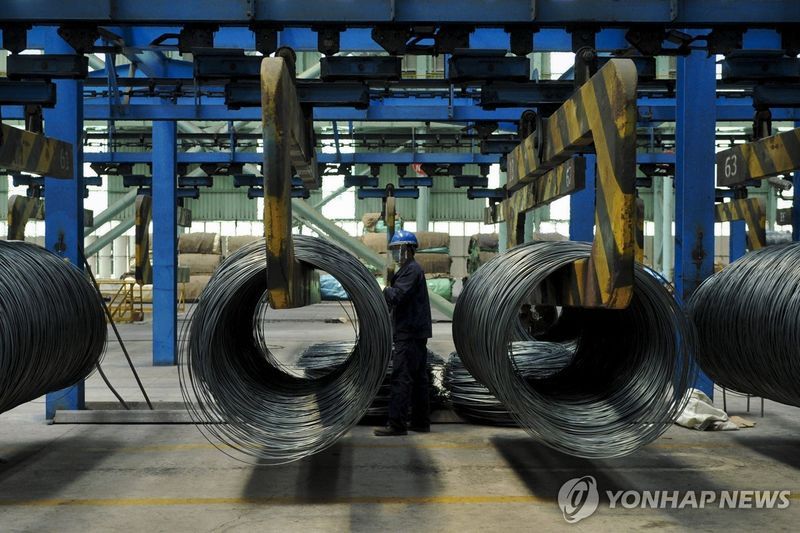
[Financial News] The United States, Japan, Europe and others have agreed to establish a system to strengthen monitoring of Chinese steel exported through third countries to circumvent trade measures.
Yomiuri Shimbun reported that member countries are expected to agree on establishing the joint system at a ministerial meeting of the Global Forum on Steel Excess Capacity (GFSEC), to be held on the 30th in Wisconsin, United States.
The GFSEC was officially launched in December 2016 under an agreement reached at the Group of Twenty (G20) summit held in Hangzhou, China, in September of that year, with the goal of addressing excess steel capacity. It currently has 28 member countries and regions.
The new joint system will center on countries collecting and sharing information, including the import routes of steel.
The move is aimed at strengthening international monitoring of steel entering markets after evading anti-dumping duties imposed on products exported at unfairly low prices. It is understood to target Chinese steel.
The countries will consider establishing systems to collect information from importers on where steel was melted and cast. They also plan to share information on trade suspected of involving rerouted exports.
The plan is to make it easier to identify the extent of rerouted exports and apply measures such as anti-dumping duties to products exported through such channels.
The move comes amid concerns that inexpensive steel subsidized by Chinese authorities is penetrating other countries.
According to the World Steel Association (worldsteel), China's crude steel production rose more than sevenfold, from about 130 million tonnes in 2000 to about 960 million tonnes last year.
China's share of global crude steel production also increased from 15% to 52% over the same period.
Meanwhile, as steel demand has stagnated in China, its surplus steel has flowed into other countries, damaging their production bases and related industries.
The United States, Japan, Europe and others have responded with trade measures such as anti-dumping duties on Chinese steel. However, concerns have emerged that it is difficult to trace the supply routes of steel processed in third countries and then exported through indirect channels.
[email protected] Lee Seok-woo, international affairs specialist Reporter