Korea Media and Communications Commission's First Vision: 'Media Basic Society'—Building Trust in AI and Overhauling Regulations
- Input
- 2026-09-30 17:49:17
- Updated
- 2026-09-30 17:49:17
[Financial News] The Korea Media and Communications Commission, marking the first anniversary of its launch, has presented a 'Media Basic Society' as its first-term vision to guarantee the public's rights to access, participate in, and choose media in the age of artificial intelligence (AI). The commission plans to shift the policy framework from one centered on broadcasters and telecommunications providers to one focused on people's media use, while pursuing both user protection amid the spread of AI and platforms and innovation in the media industry.
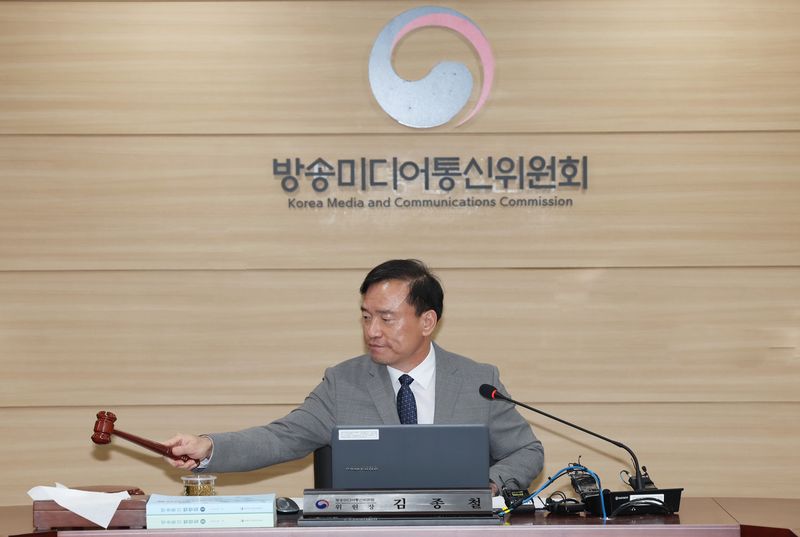
On the 30th, the KMCC held its 39th plenary meeting at Government Complex Gwacheon in Gyeonggi Province and approved its first-term vision and key initiatives, built around the vision of 'A Media Basic Society with the People,' four major goals, and 12 policy tasks. This is the first time the KMCC has established a first-term vision since its launch in October last year.
The 'Media Basic Society' proposed by the KMCC views people not simply as media users, but as active agents who express their views, participate in society, and make their own choices through media. It defines ensuring the public's access to, participation in, use of, and enjoyment of media across the entire media ecosystem as a responsibility of the state and society.
To achieve this, the KMCC established four major goals and 12 policy tasks: strengthening universal access for all; expanding active, people-led participation; ensuring autonomous choices based on safety and trust; and creating a sustainable ecosystem founded on innovation and mutual growth.
The commission will first improve media and AI accessibility for people with disabilities and older adults while revitalizing local and community media. It will also strengthen universal access to disaster information and events of public interest. In addition, the KMCC will expand AI and media literacy education tailored to each stage of life and develop Viewer Media Centers as local media hubs, broadening opportunities for people to create content and participate in policymaking.
The user protection framework will also be strengthened in response to the growing influence of AI and platforms. The KMCC will improve labeling for AI-generated content and enhance the transparency of recommendation algorithms while addressing new digital risks such as deepfakes. It will establish a Transparency Center to support the development of a voluntary private-sector fact-checking ecosystem and improve the existing linked-information system (CI), which is difficult to change after a leak, so that it can be updated. Inspections concerning the leakage and misuse of location information will also be intensified.
The commission will also pursue institutional reforms to ensure the sustainability of the media industry. In response to the blurring boundaries between broadcasting and online platforms, it plans to enact an integrated media law and improve systems related to broadcast relicensing and reapproval, pay television, programming, and home shopping. The KMCC will support innovation in content production and distribution using AI and data, help over-the-top media services (OTT) expand overseas, and support the digital and AI transformation of local, small, and micro-sized broadcasters.
The KMCC will also work to secure the funding and implementation framework needed to support its newly assigned promotional functions. In consultation with the financial authorities and the National Assembly, it will secure the necessary resources and pursue the establishment of the Korea Broadcasting, Media and Communications Promotion Agency, which will provide specialized support for implementing policies in broadcasting, media, and communications.
Kim Jongcheol, chairman of the KMCC, said, "Based on the four major goals, we will continue to develop specific initiatives that enable people to experience tangible changes in their daily lives." He added, "We will also faithfully carry out follow-up tasks, including the establishment of comprehensive and basic plans."
[email protected] Choi Hye-rim Reporter