Tether U.S. CEO: "The Next Frontier for Stablecoins Is AI-Agent Transactions" [KBW2026]
- Input
- 2026-09-30 16:36:49
- Updated
- 2026-09-30 16:36:49
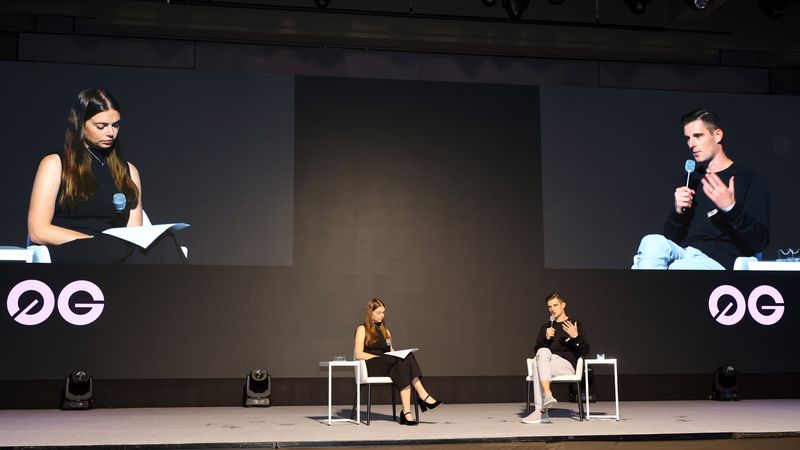
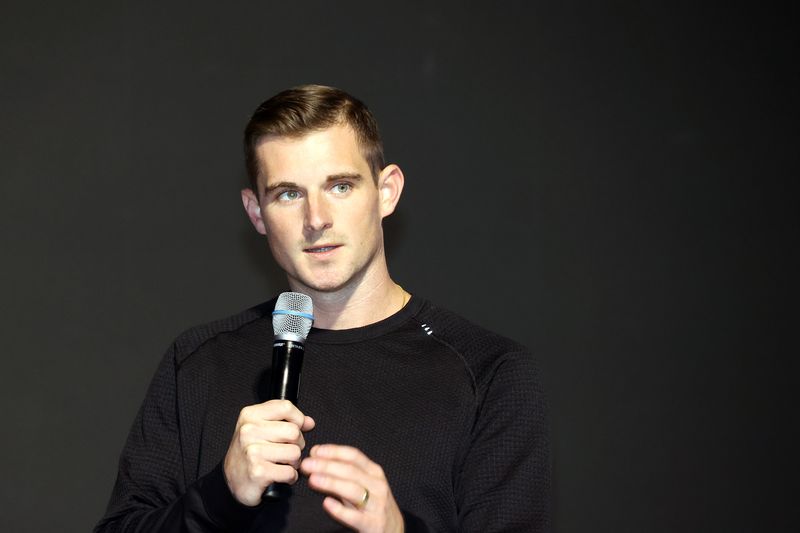
[Financial News] "We are approaching an era in which artificial intelligence (AI) agents share information with one another and make payments. Stablecoins will play an important role in agentic commerce."
Bo Hines, CEO of Tether's U.S. entity, made the remarks during a discussion with Lindsey Fraser, chief policy officer of the Korea Blockchain Association, at KBW 2026, an event held at WALKERHILL HOTELS & RESORTS in Seoul on the 30th. "AI agents will look for the most efficient means of payment when they transact with one another," he said.
Hines said cost efficiency will become important for micropayments between AI agents. "Agents could exchange amounts smaller than one cent billions of times a day while sharing or purchasing information," he said. "It will be fascinating to see blockchains compete over how cheaply they can process these transactions."
"Information has a cost, and it is important to determine how agents share it and what means they use to pay for it," he continued. "Not only stablecoins, but also the blockchains through which information moves, will play a major role." Hines expects technologies that revolutionize blockchain efficiency to emerge over the next several years.
He explained that Tether's two stablecoins, USDT and USAT, differ in their intended users and purposes. "USDT provides people who need access to dollars, including those in emerging markets, with a means of hedging against currency volatility and making payments," Hines said. "USAT is a product focused more on institutions."
He added, "We aim to position USAT as a neutral means of payment between banks and traditional financial institutions." Given Tether's global distribution network and ample liquidity, he emphasized that it could become the choice of large financial institutions and exchanges seeking efficient payments.
Tether is also targeting an expansion in trading of tokenized securities. "When tokenized stocks and securities emerge, financial institutions will need a neutral means of settling with one another," Hines explained. "We believe Tether's products could be used to move into and out of tokenized securities."
He also added, "We are ready for markets that operate 24 hours a day, seven days a week." He said, "We are ready to invite traditional financial institutions into these markets."
Hines cited demand for dollars and real-world needs as the reasons behind Tether's growth into global financial infrastructure. "Tether began with the simple idea of providing people with a way to keep their assets stable," he said. "It was used in several emerging countries as a means of hedging against volatility in local currencies."
Hines said, "Many fintech companies look for ways to persuade customers to use their products rather than consider what customers actually want." He added, "Tether provided products that people needed."
He continued, "What customers truly want and what problems we can solve are the most important considerations." He added, "We are focusing on long-term solutions that improve people's lives rather than products that offer temporary assistance."
[email protected] Joo Won-gyu Reporter