AI-Copied Celebrity Voice... Japanese Court Rules It Is "Legally Protected"
- Input
- 2026-09-30 16:27:27
- Updated
- 2026-09-30 16:27:27
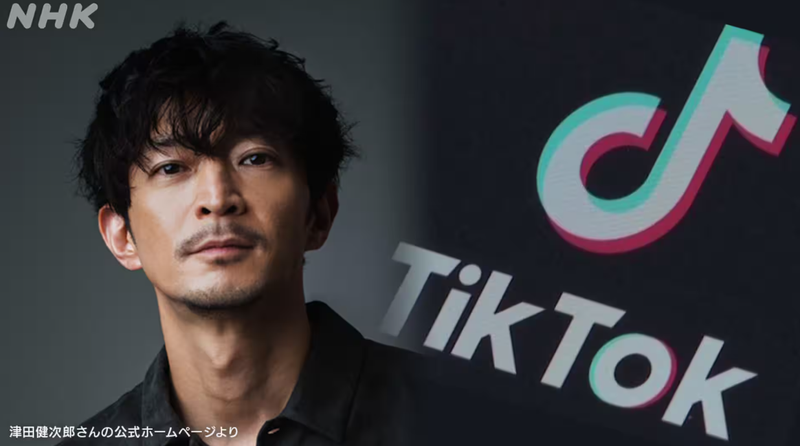
【Financial News | Tokyo—Correspondent Seo Hye-jin】A Japanese court has issued the country's first ruling recognizing that a celebrity's voice, like their name or face, can have economic value deserving legal protection. It said that using generative artificial intelligence (AI) to imitate a celebrity's voice and attract viewers may constitute an infringement of publicity rights. The ruling is drawing attention for defining the scope of legal protection for voices as AI voice cloning becomes increasingly widespread.
According to NHK and Nihon Keizai Shimbun (Nikkei) on the 30th, the Tokyo District Court issued the ruling that day in a lawsuit filed by popular voice actor Kenjiro Tsuda, 55, against TikTok's operator seeking the removal of videos. However, the court dismissed the deletion request because the video in question had already been removed. It also did not determine whether the video had actually infringed Tsuda's rights.
■ "The voice, too, is a symbol of an individual's personality"
Tsuda is an actor and voice actor known for playing Kento Nanami in the anime Jujutsu Kaisen and Hyakunosuke Ogata in Golden Kamuy. He filed the lawsuit last November, alleging that a video imitating his voice with AI had been posted on TikTok without his permission.
According to the complaint, an unidentified poster had uploaded at least 188 videos since July 2024 introducing urban legends, paranormal phenomena and other topics through narration imitating Tsuda's voice. The account had more than 210,000 followers when the lawsuit was filed. The plaintiff claimed that the poster earned between 500,000 and 750,000 yen per month from the videos.
Tsuda's side argued that the poster exploited his popularity by misleading viewers into believing that he had provided the narration himself, thereby infringing his publicity rights and violating the Unfair Competition Prevention Act. TikTok countered that the likelihood of confusion with Tsuda's voice was low, citing the poster's explanation that the voice had been created using AI trained on a friend's voice.
Presiding Judge Aya Takahashi ruled, "A person's voice, like their likeness, can be regarded as a symbol of the individual's personality." She found that unauthorized use of a voice to capitalize on its ability to attract customers constitutes an infringement of publicity rights. In doing so, she extended to voices the protection afforded to the economic value associated with a celebrity's name or face.
Japan's laws do not explicitly recognize a "right to a voice," and related litigation is rare, so the case attracted considerable attention ahead of the ruling.
Although the ruling confirmed that voices can be protected, it did not find that every AI-generated imitation of a voice is unlawful.
The issue surrounding the deletion request was separate. The poster deleted the account in May this year. Tsuda's side argued that it could not confirm whether all the data had disappeared and that the videos might be made public again, and it sought an order requiring their deletion. TikTok maintained that no data remained on its servers, while the court dismissed the request, citing the fact that the account had already been deleted among other reasons.
■ "Even if one is deleted, another is generated": Limits of the response
As advances in generative AI make it easier to replicate celebrities' voices, concerns about potential harm are also growing. Political statements a person never made, sexual remarks and even songs they never sang can be produced and distributed as if they were made in the person's real voice.
A survey conducted last year by Japan's nonprofit Portrait and Publicity Rights Advocacy and Monitoring Organization found more than 40,000 social media posts suspected of using celebrities' likenesses or voices without permission. The posts were estimated to have received approximately 335 million views, while the resulting economic losses were estimated at between 2 billion and 4.5 billion yen.
The Ministry of Justice of Japan also established an expert review panel last April and prepared a report proposing that voices capable of identifying individuals be included among legally protected subjects. Its interpretive guidelines state that voices are also entitled to "the right not to be used arbitrarily" as well as publicity rights.
However, it is not easy for victims to identify the poster, gather evidence and take the case to court. Even if one video is deleted, another can be created using the same voice. Voice actor Yuko Kaida told The Asahi Shimbun, "If you do not turn off the faucet at the source, it will keep pouring out," and called for regulations on AI businesses that train models on voices without permission.
In an opinion submitted to the Ministry of Justice of Japan, Japanese voice actors called for a system allowing talent agencies to respond on behalf of those affected, as well as a framework that would make it easier to enforce rights against AI developers, service providers and platforms.
[email protected] Seo Hye-jin Reporter