Yonsei University Team Led by Professor Kim Won-seok Uncovers Secrets of Dokdo's 600,000-Year Undersea Evolution
- Input
- 2026-09-30 16:08:56
- Updated
- 2026-09-30 16:08:56
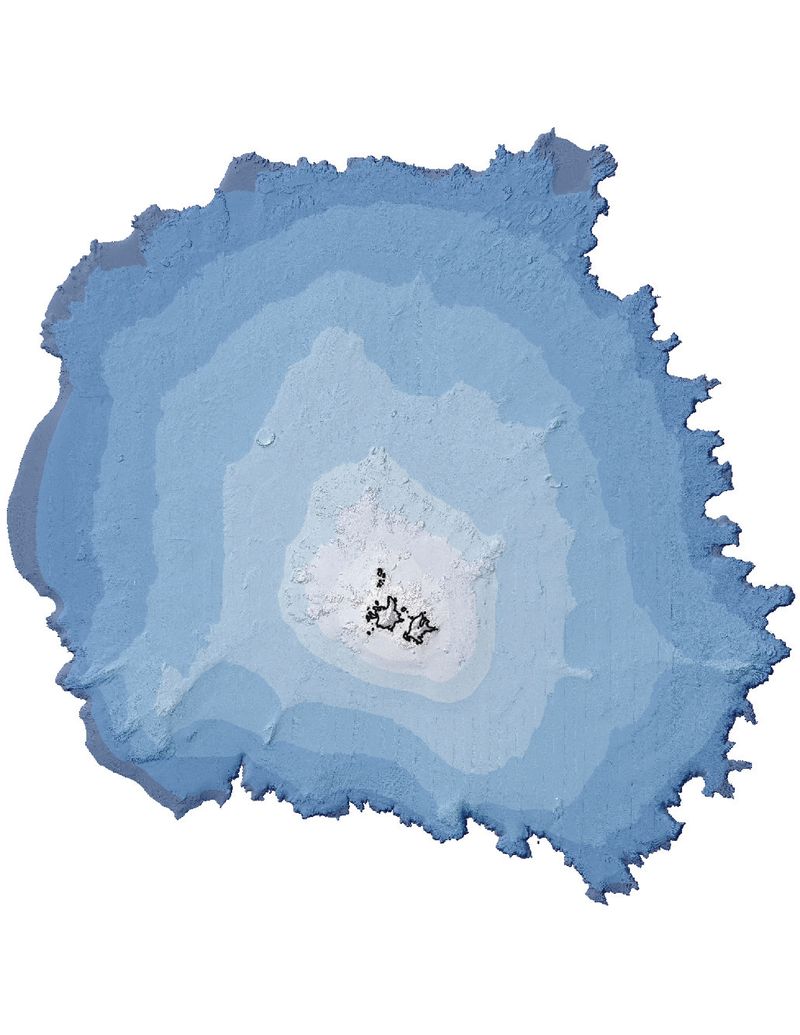
[Financial News] South Korean researchers have uncovered how the submarine step-like terrain, or terraces, of Dokdo, a volcanic island gradually sinking into the sea, formed and was preserved. The prevailing view in academia was that the terraces formed in a one-to-one correspondence with changes in sea level. The new findings, however, show that the seafloor around Dokdo underwent complex erosion and reshaping processes.
A research team led by Kim Won-seok of the Department of Earth System Sciences at Yonsei University announced on the 30th that precise simulations of changes in the seafloor north of Dokdo revealed why only six submarine terraces remain preserved today out of approximately 35 sea-level stillstands that occurred over the past 600,000 years. The findings were published in the international journal Geophysical Research Letters.
Dokdo is an isolated volcanic island that has been slowly sinking beneath the sea at a rate of approximately 0.13 meters every 1,000 years since volcanic activity ended about 1 million to 500,000 years ago. The research team's analysis showed that, in a subsiding environment, terraces formed during periods of lower sea level are likely to descend with the sinking ground into deeper waters beyond the reach of wave erosion, allowing them to remain preserved rather than being destroyed.
In particular, the terrain was repeatedly eroded and reshaped as sea levels rose and fell through successive glacial and interglacial periods. The study also confirmed that deeper submarine terraces can be completed later than those in shallower waters, resulting in an inversion in the order of formation.
Kim Won-seok, a professor at Yonsei University, said, "The submarine terraces of Dokdo retain information about environmental changes in the East Sea over the past hundreds of thousands of years." He added, "As this study has revealed the process by which landforms develop on a sinking submarine volcanic island, it will be useful in a variety of ways for future research on submarine landforms and the reconstruction of past sea-level changes."
The study was conducted with support from the Ministry of Oceans and Fisheries (MOF), the Ministry of Education, and the National Research Foundation of Korea (NRF). Domestic and international research institutions, including KIOST and the German Research Centre for Geosciences (GFZ) in Potsdam, also participated.
[email protected] Kim Man-gi Reporter