National Council of Police Workplace Associations: "'Yacha Rule' spreading even among youths... measures needed for violent content"
- Input
- 2026-09-30 16:28:01
- Updated
- 2026-09-30 16:28:01
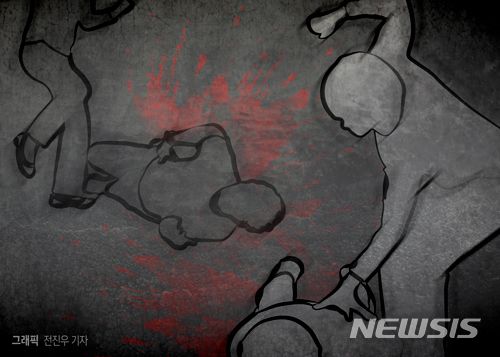
[Financial News] The National Council of Police Workplace Associations said that so-called 'Yacha Rule' and other violent content are spreading online and leading even to imitation by youths. It called on the government and relevant agencies to devise effective measures. It also argued that illegal violence should be met with a firm response, while the state must protect frontline police officers who lawfully enforce the law.
The National Council of Police Workplace Associations issued a statement on the 30th titled "A Society Where Violence Becomes a Means of Making Money—Where Is Public Authority?" It said, "Violence in which people punch one another and knock their opponents down has become online content and has even degenerated into a means of making money through views and revenue."
It particularly criticized the spread of the so-called 'Yacha Rule' among youths, saying it was creating a culture that treats violence like a game or sporting match. The council noted that the Korean National Police Agency and education authorities had taken steps to prevent and respond to the issue, emphasizing that it could not be viewed merely as misconduct by a small number of individuals but was a broader social problem.
The National Council of Police Workplace Associations also referred to reports that the Yacha Club YouTube channel, which had approximately 550,000 subscribers, had been deleted for violating community guidelines. It explained that the organizers had announced plans to hold the event as scheduled on October 11 at KINTEX in Ilsan and were selling tickets costing up to 1.8 million won.
The National Council of Police Workplace Associations asked, "What is the state doing while acts that could seriously threaten people's lives and physical safety are being publicly turned into content and their influence is spreading to imitation by youths?" It continued, "Can the state be said to have fulfilled its responsibility merely by launching an investigation only after someone is seriously injured or loses their life?"
The council called on the government and relevant agencies to devise effective measures against the spread of violent content and imitation by youths. For publicly held events, it recommended checking safety-management systems and the potential for legal violations in advance. It also said that if crimes such as assault, injury or coercion were confirmed, authorities should respond in accordance with the law and established principles. In addition, it stressed that the authority of investigative police and the law-enforcement powers of frontline officers who directly protect the public's lives and physical safety should be considered separately.
"Investigations require a high degree of expertise. As investigative powers grow, appropriate checks and controls are also necessary," the National Council of Police Workplace Associations said. It added, "What frontline police officers need when they are the first to stand before the public at scenes involving armed rampages, group violence and serious crimes is the courage to enforce the law without hesitation, along with the state's protection to support them."
The council also criticized the blanket application to frontline officers of the so-called 'Dinosaur Police' argument, which has been raised in connection with the expansion of police investigative powers. The point was that if police officers at crime scenes become reluctant to enforce the law out of concern over complaints, lawsuits, internal audits or disciplinary action, public protection could also be affected.
"If the state demands only accountability from frontline police officers while failing to protect legitimate law enforcement, what will ultimately be weakened is not the police but public safety," the National Council of Police Workplace Associations said. It added, "Illegal violence must be met with a firm response, and the state must protect to the very end police officers who have lawfully exercised public authority."
The council concluded, "Investigations should become more specialized and powers should be strictly controlled, while frontline law-enforcement capabilities that protect the lives and safety of the public must be established more firmly." It added, "A country where police officers can step forward when citizens are in danger represents the public authority we must rebuild and the duty of the state to protect public safety."
[email protected] Kim Ye-ji Reporter