"Samsung Electronics and SK hynix: 'Sell Half Without Fail If They Break This Price'... Expert Pinpoints Exit Signal"
- Input
- 2026-10-01 04:40:00
- Updated
- 2026-10-01 04:40:00
[Financial News] Experts have advised retail investors whose portfolios are excessively concentrated in Samsung Electronics and SK hynix, two leading semiconductor large-cap stocks on the Korean stock market, to reduce their holdings once they reach certain target prices. They also recommend diversifying their funds into semiconductor materials, parts and equipment, which are expected to benefit from a trickle-down effect, as well as the power-equipment sector.
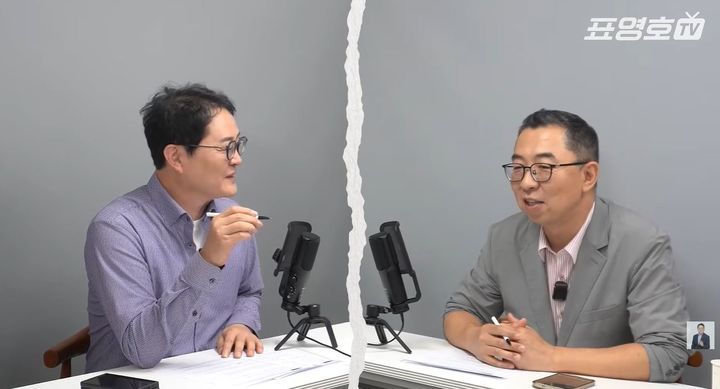
According to Newsis on the 30th, Kwon Hee Lee, CEO of investment advisory firm Wizwave, appeared on the 'Pyo Young-ho TV' YouTube channel on the 29th and presented a semiconductor portfolio-restructuring strategy for retail investors.
Lee warned against excessive concentration, with the two stocks accounting for 70–80% of some investors' accounts, and offered specific guidelines for converting holdings into cash. He identified 300,000–320,000 won for Samsung Electronics and 2.2–2.4 million won for SK hynix as key profit-taking ranges. "Since it may take some time to break the previous highs, investors need to reduce their holdings to around 30–40% in those ranges," he said.
He then pointed to semiconductor materials, parts and equipment and the power-equipment sector, which stands to benefit from AI infrastructure investment, as alternative destinations for the recovered cash. "After a surge led by large-cap stocks, the market's warmth spreads down the value chain," Lee explained. "By diversifying into these industries, investors may achieve higher returns than they would from the large-cap stocks themselves."
Lee offered a measured assessment of the advances being made by China's semiconductor industry, which have recently raised concerns in the market. Regarding reports that ChangXin Memory Technologies (CXMT) had produced samples of third-generation high-bandwidth memory (HBM), he drew a clear distinction: "It is merely a pre-mass-production testing phase, and a gap of roughly 18 months to two years still exists between Chinese and South Korean companies."
In particular, he highlighted the difference in the key competitive factor of yield. "While CXMT's DRAM operating profit margin remains at around 50%, SK hynix's is approximately 85%," Lee pointed out. "A 50% margin means that the defect rate is equally high." He also cited the clear structural limitations on expanding facilities and automating processes as the United States' export restrictions on advanced semiconductor equipment continue over the long term.
However, Lee warned that the pace of China's advance in the NAND flash market warrants greater concern than its progress in DRAM. "For the time being, investors should pay closer attention to NAND producer Yangtze Memory Technologies (YMTC) than to CXMT," he said. "YMTC is expanding its market share enough to threaten KIOXIA and SanDisk, but it has not yet entered the high-value enterprise SSD (eSSD) market for servers."
He also offered a specific selling criterion from a technical and industrial perspective. Lee recommended selling half of one's holdings first to manage risk if the five-day moving average crosses below the 20-day moving average—a so-called dead cross—on a short-term chart without any clear negative catalyst.
From the perspective of the industry cycle, he identified a change in the nature of AI infrastructure construction as a selling signal. "The point at which physical infrastructure investment by big tech companies, such as data-center construction, winds down and software companies enter a full-fledged profit-generating phase will be the turning point at which semiconductor demand begins to slow," he forecast.
Finally, Lee urged retail investors to adopt a serious approach to learning. "The purpose of studying is not to predict tomorrow's short-term stock price. It is to build the stamina to hold your stocks with confidence over time and distinguish between those worth accompanying for the long term and those that should be sold," he said.
[email protected] Moon Young-jin Reporter